Fish Surveys - Minnow Traps
Revision History
Revised on 05/10/26 to address rope type and length, deployment location identification for maintenance and retrieval, and fish handling concerns
Background
Fish surveys are a big part of NFC’s Holistic Stream Assessment/Restoration methodology. This includes NFC sponsored trapping and netting, and agency sponsored electro-fishing where NFC assists. These surveys are usually performed under a Scientific Collection permit issued by a state fish and game agency.
Goals
Minnow traps are a cheap, non-lethal, effective, and efficient method for surveying fish. Unlike sein and cast nets which have to be actively maintained, minnow traps can be set and left in place for a period of time.
Policy
Below are the rules pertaining to the use of minnow traps:
Administrative
Chapters must obtain a scientific collection permit from the appropriate government agency before setting traps
Do not operate under the guise of legal bait trapping as that is not what we are doing
Where applicable, landowners should be notified in advance of your intent to trap with a request for permission to do so
Municipality owned land
State-owned land
While this is often covered under a state-issued scientific collection permit, notifying state fish and game lets them know what we are doing where and when
Organization owned land
Business owned land
Private land
Equipment
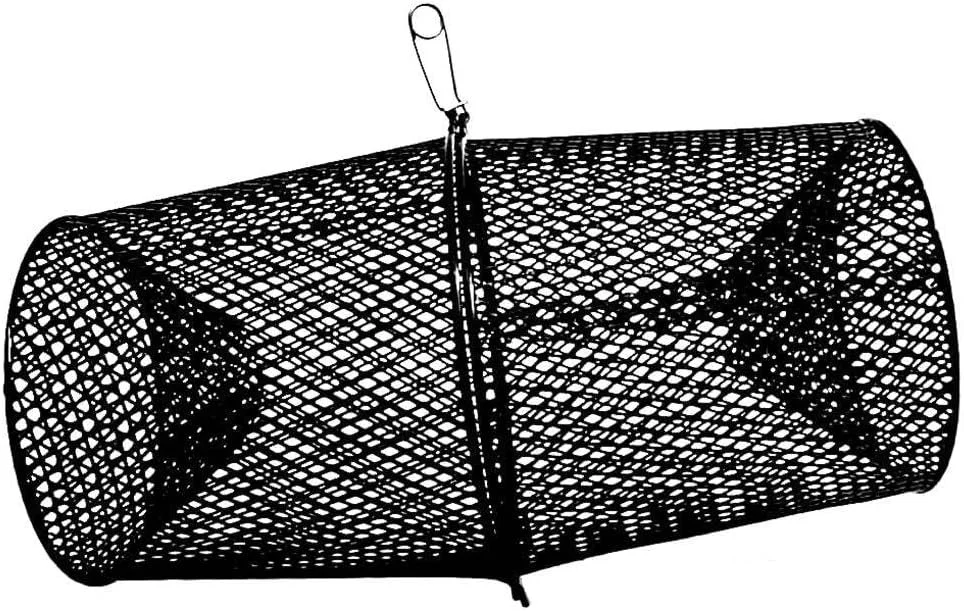
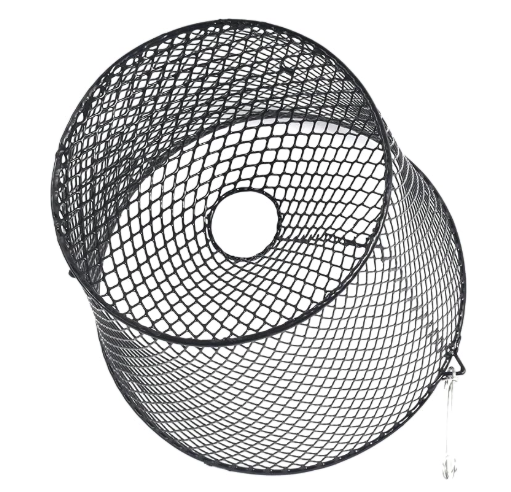
Black traps are recommended as they are harder to detect and less likely to stolen, vandalized, or removed from the water
Vinyl dipped traps are preferred as they resist rusting and last a bit longer than painted traps
Traps should be equipped with ringed versus barbed entry holes to prevent injury to fish
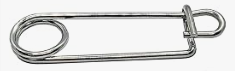
Traps should be equipped with a quick-release clip for fast and easy opening and closing
Identification
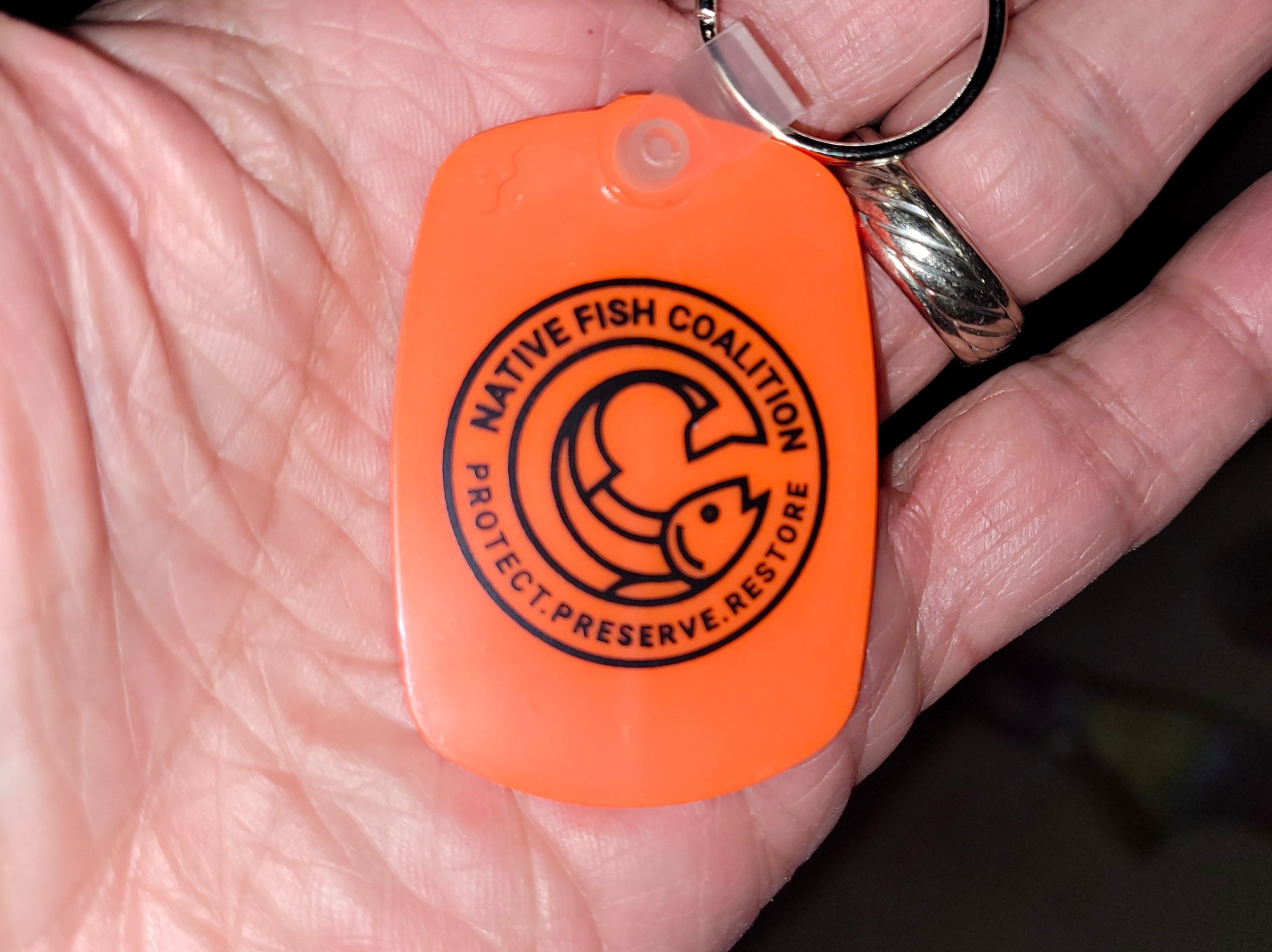
Traps must have an NFC ID tag affixed for identification
National NFC will provide these upon request
Deployment
Traps should have a 30-foot dull colored, ideally camouflaged, sinking rope attached to them
Ropes should be tied off to a tree, root, bush, or tent stake before throwing the trap in the water to prevent loss
Excess rope should be coiled up and secured with a twist tie, zip tie, or short length of string or cord so that it does not get in the way or pose a hazard to humans or wildlife
Trap locations should be marked with a short piece of surveyors tape with “NFC” on it for easy identification and retrieval.
Marking tape should be placed within 5-feet of the trap on either side but not right at the trap so as not to draw attention
If a trap is accidentally lost or manages to come unsecured, it needs to be retrieved within 24 hours
Ghost traps can kill fish and amphibians due to stress, oxygen depletion, lack of food, etc.
If found by someone outside of NFC, this is a poor reflection on the chapter and the organization as a whole and can result in a refusal to allow trap deployment in the future
Bait
Traps can be baited with bread, pet kibble, perforated cans of cat food or tuna, capsules or nets with worms or other insects, fish flesh, poultry or meat, etc.
Bait should be adjusted based on the targeted species, or mixed to attract multiple species
Location
Traps should be set away from high traffic areas wherever possible
Traps should be set near inlets and outlets
Traps should be set in shallow and deep water to increase your odds of finding fish, as well as varying species
Duration
Traps should be set for no more than 24 hours to lessen the chance of stress or mortality
Sets of 6-12 hours are preferred and often equally as affective
Handling
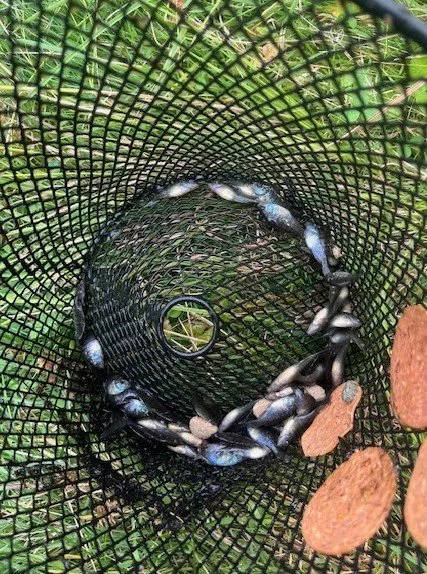
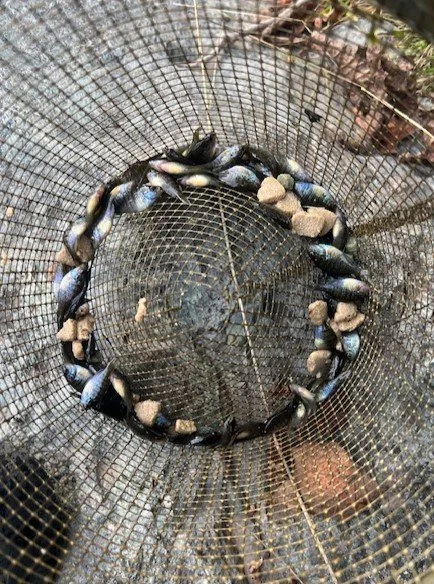
Traps containing fish should not be placed on the ground
Fish should be removed from the trap by hand and placed in a 5-gallon bucket of fresh water as quickly as possible to lessen stress
If fish will be kept in a bucket for more than 5 minutes, a small battery powered aerator should be used
Miscellaneous
Dead, visibly stressed, and diseased fish should be removed from the trap and disposed of properly
Nonnative fish should be disposed of rather than released when doing so would have a positive impact
Rare or protected native species should be photographed, released immediately and unharmed, and reported to the proper authorities within 24 hours
Unusual nonnative species and those not known to be present should be contained and reported to presented to the proper authorities within 24 hours
All fish trapped should be identified, measured, cataloged, and photographed for reference
Like sized fish of the same species do not need to be photographed more than a couple of times