Vermont NFC to Study Native Trout and Nonnative Trout Overlap...
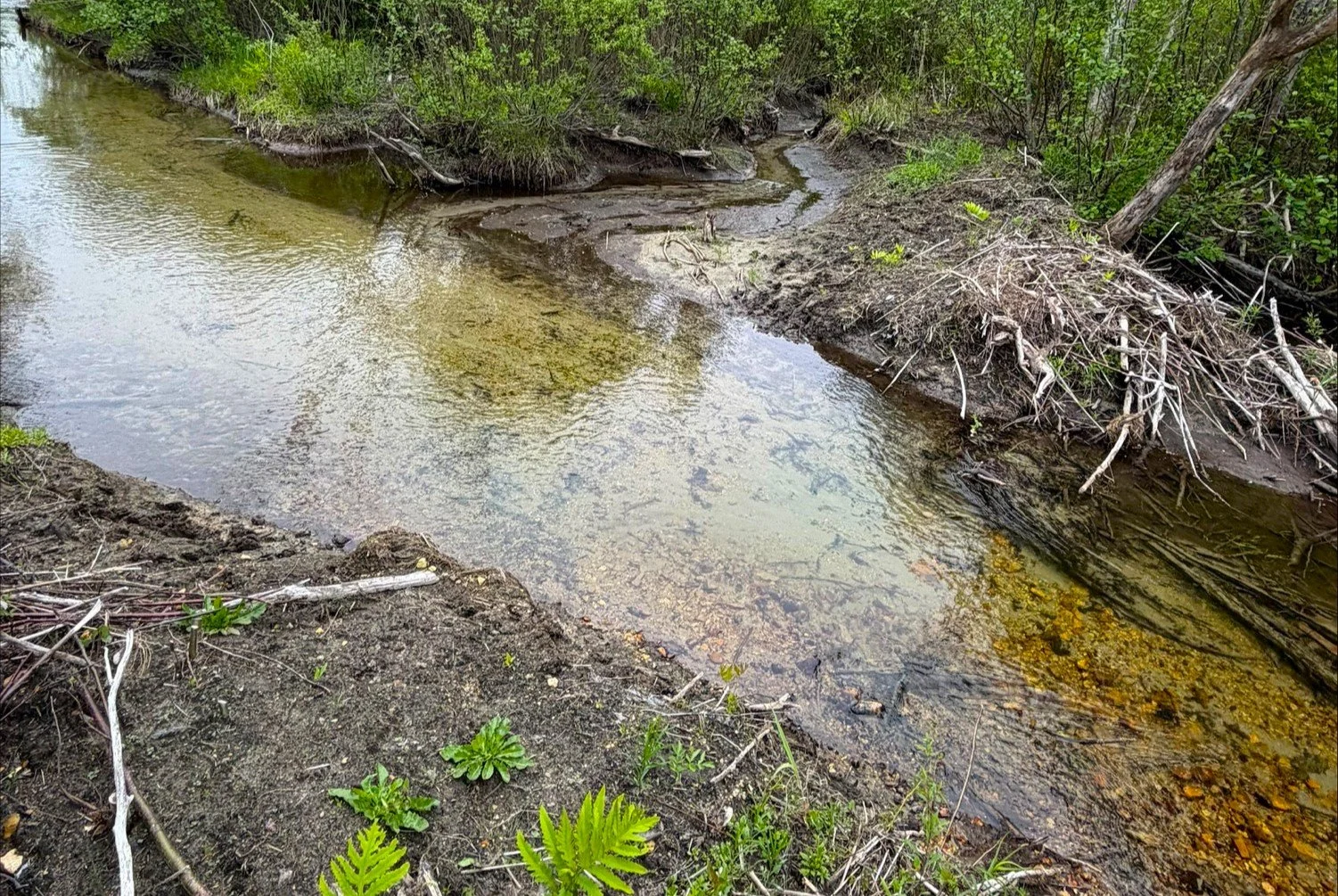
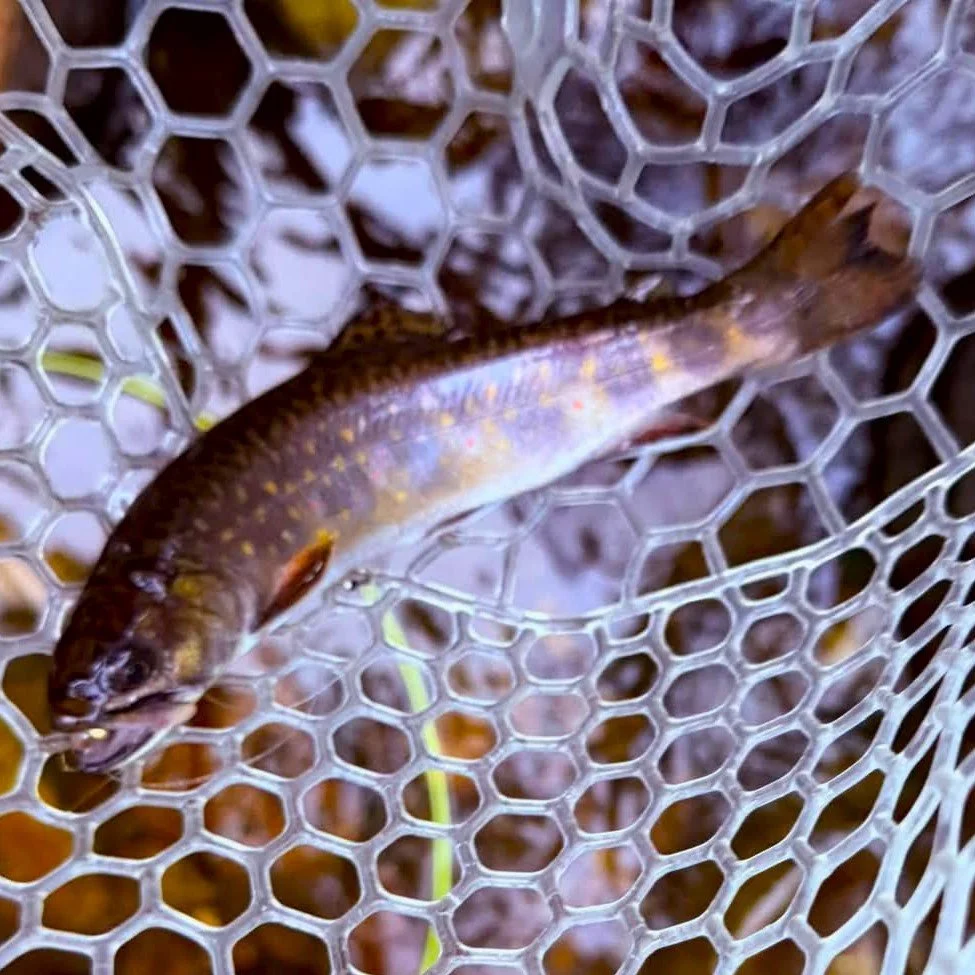
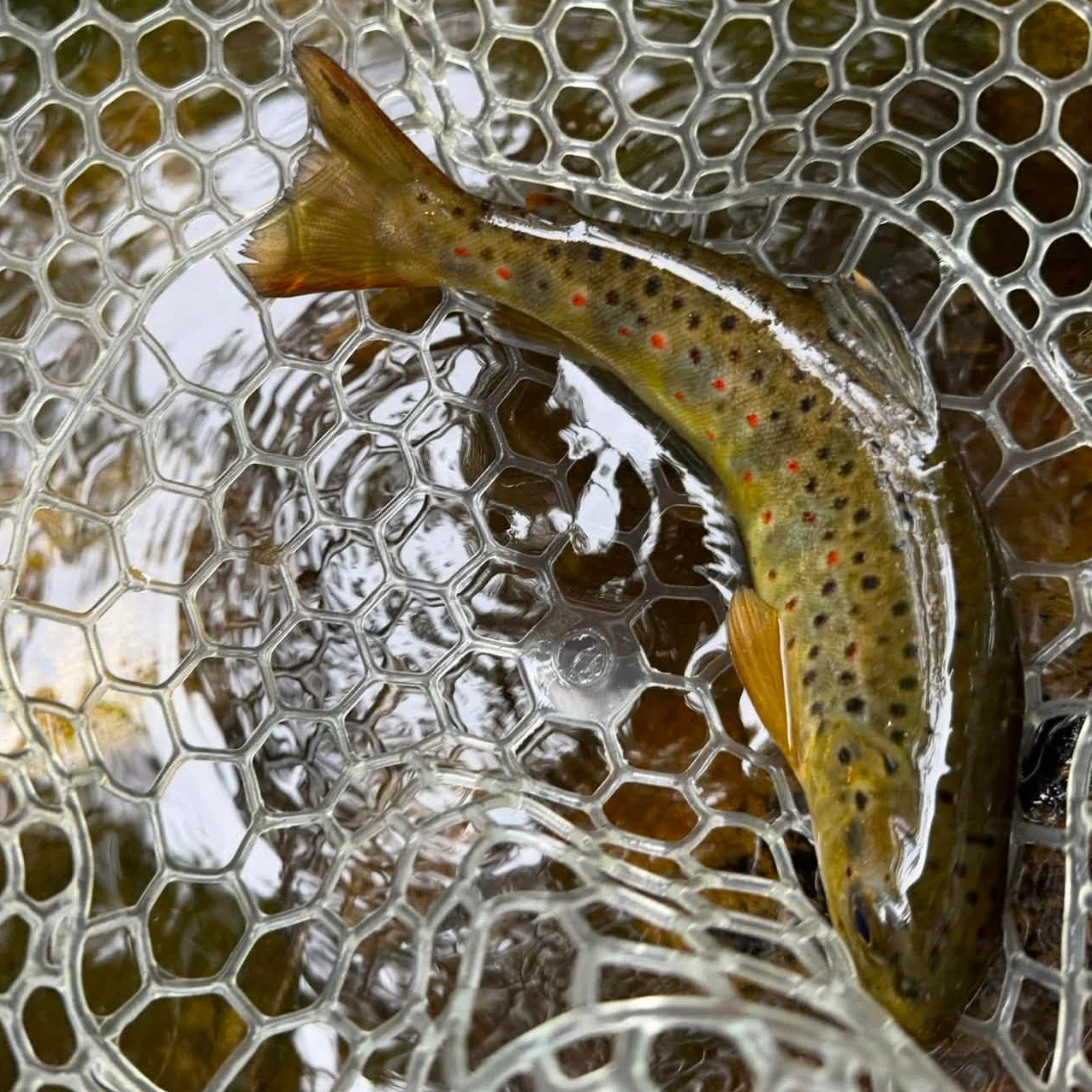
The Vermont chapter of NFC is working with Vermont Fish & Wildlife on a unique project to better understand species interactions. Part of the Walloomsac River watershed in southwestern Vermont, the project stream is home to both wild native brook trout and self-sustaining nonnative brown trout. While some stocked fish may gain access from a secondary source, the stream is not stocked.
Previous fish surveys conducted by VTFW have shown that while brook trout and brown trout overlap in some sections of the stream, they do not overlap in all areas. While native brook trout can be found throughout the stream, nonnative brown trout were not always present in surveys.
As is often the case where native brook trout and nonnative brown trout are present in the same stream, while brown trout are the dominant species in the lower reaches, native brook trout are the dominant species in the upper reaches.
Are the less aggressive native brook trout being pushed upstream by the more aggressive nonnative brown trout? Is water water temperature dictating what species is where? Is the type of habitat the delineating factor? Or is it due to physical barriers?
The goal of the project is to determine where, when, and why native brook trout and nonnative brown trout do and do not overlap. This information could be invaluable in regard to managing multi-species streams where both native and nonnative trout are present..
visual inspection…
The first thing VT NFC did was to visually inspect the stream. The goal was to try to identify impediments to fish passage. It is possible that nonnative brown trout populated the project stream from a downstream source. If something is preventing them from getting upstream of a certain point, that could explain the lack of species overlap.
While to date, nothing concrete has been identified as far as fish passage goes. But the habitat varies greatly, ranging from stepped pools, to sandy runs, to areas with dense shoreline vegetation, to impounded water resulting from beaver activity.
fish surveys…
VT NFC and VTFW are planning to survey the stream via e-fishing several times over the course of the year. Unlike typical surveys where you test liferent areas and different times, the plan is to survey several specific sections several times during the year. This will show whether the species and/or abundance changes from one month to the next.
Preliminary citizen science fly fishing showed a ratio of 2-to-1 in several sections with nonnative brown trout being the predominant species. We will also survey the stream using seining nets and minnow traps under a Scientific Collection permit issued by VTFW .
Water Temperature Monitoring…
One of the most important things is to monitor stream temperature at various locations throughout the season. To accomplish this, VT NFC deployed 5 loggers over a couple miles of stream. The data will be downloaded monthly and consolidated at the end of the season. The data will be used in conjunction with fish survey data to see if we can ascertain what species of trout are where, when, and why…
Special thanks to the landowners who have allowed us to access their property, Vermont fish & wildlife for helping with fish surveys, and VT NFC Chair David Wein, VT NFC board members Noah Wein and Paul Bugeja, and MA NFC board member Jeff Moorefor their boots on the ground efforts.
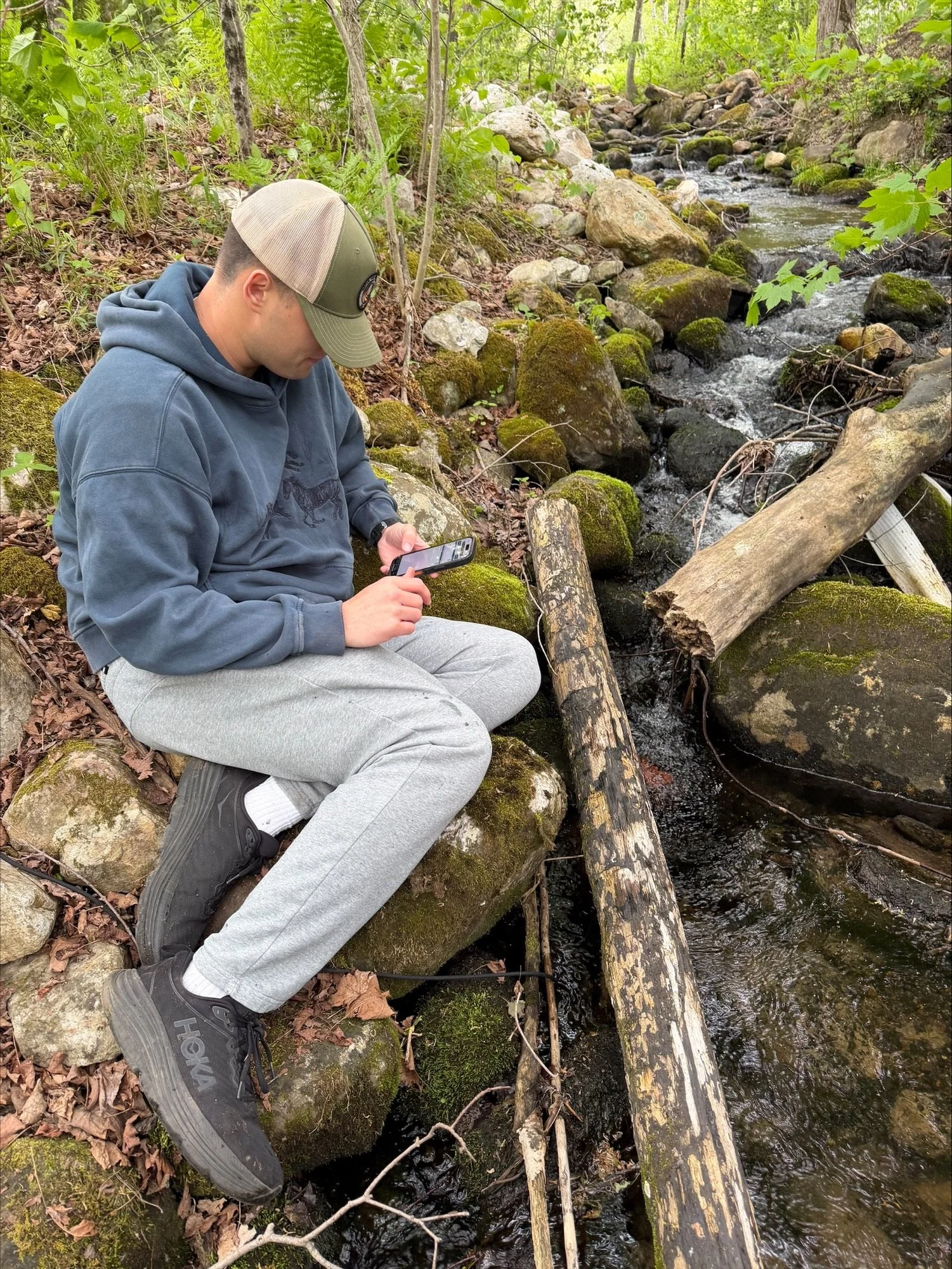
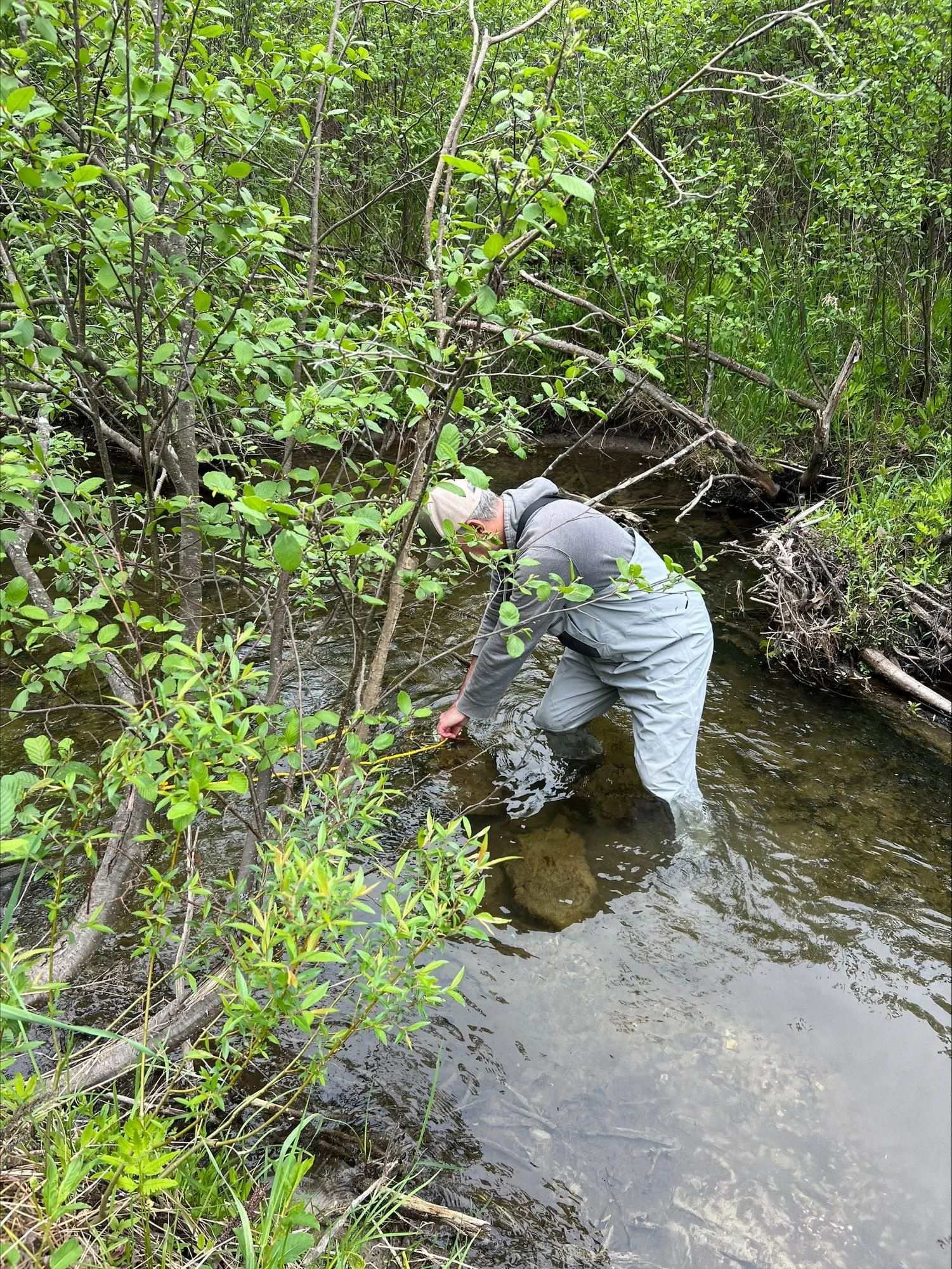
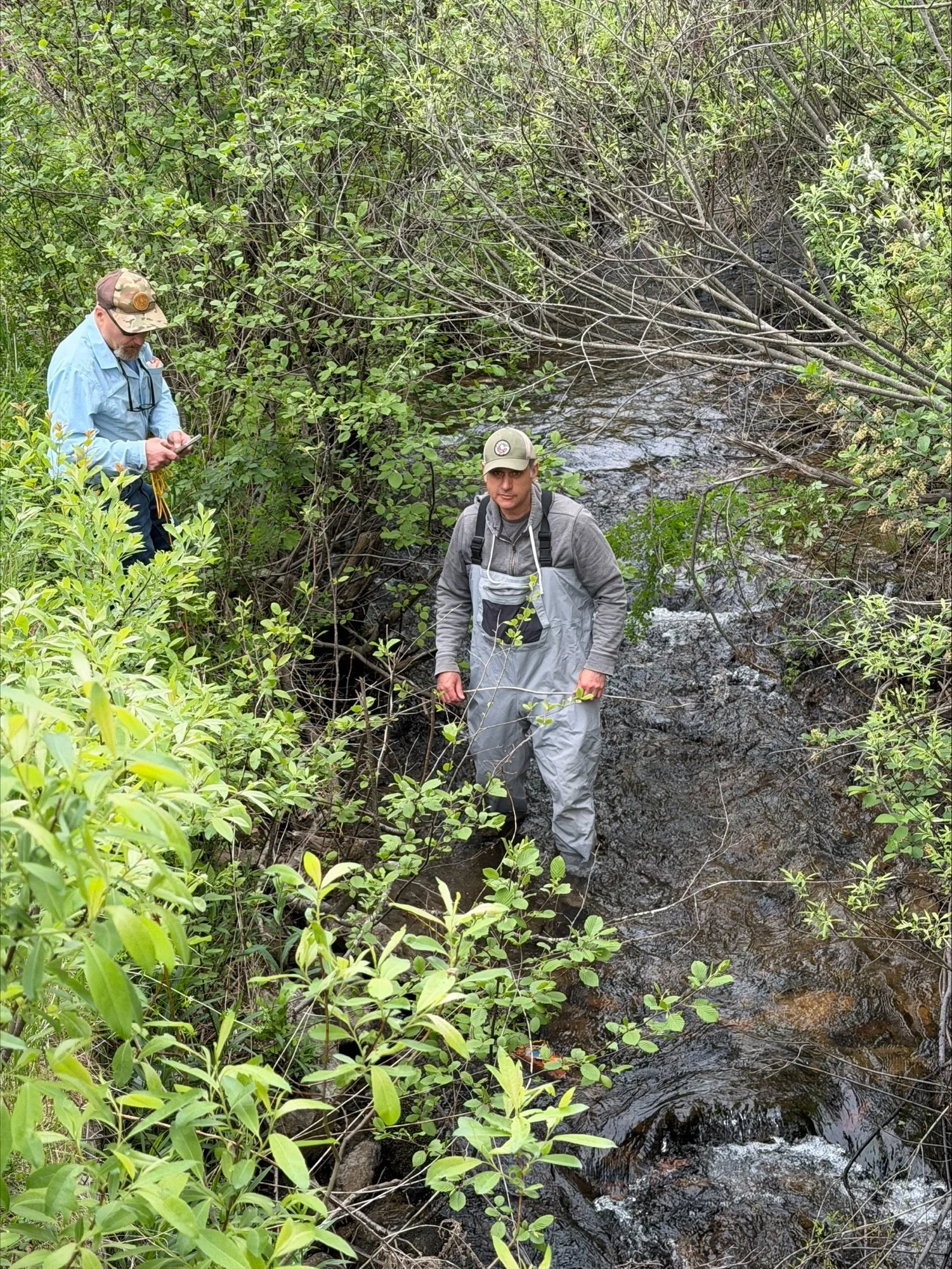
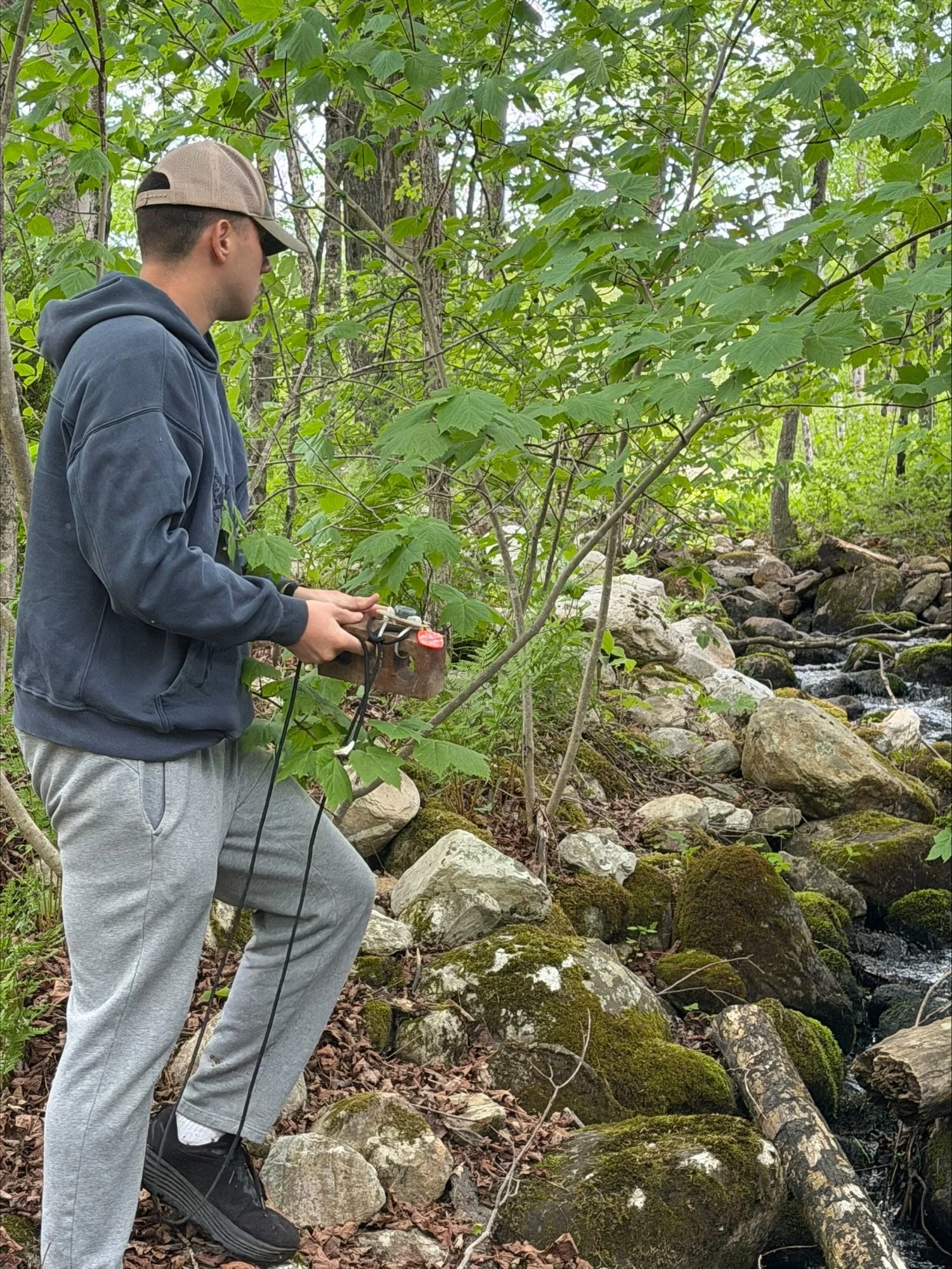
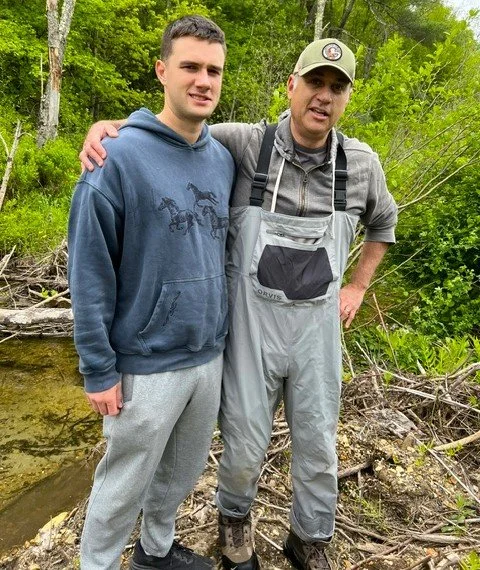
Noah and David Wein at the project stream…