Holistic Stream Assessment/Restoration: Cheescake Brook - Newton, Massachusetts

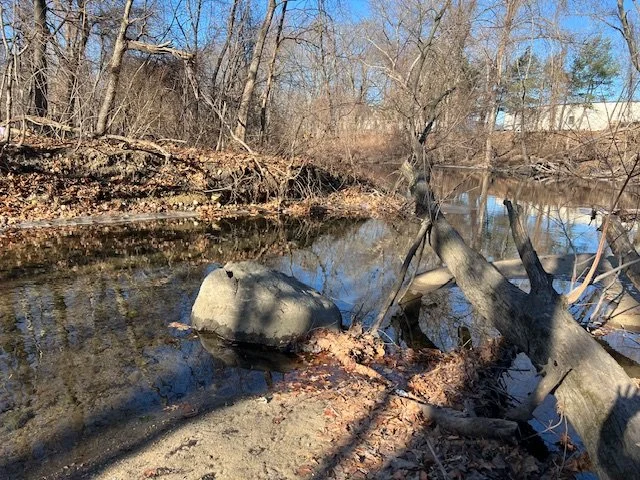
A relatively intact section on upper Cheesecake Brook (Charles River Watershed Association)
Expanding on our recent interest in suburban and urban streams, the Massachusetts chapter of NFC has undertaken a full-blown Holistic Stream Assessment and Restoration at Cheesecake Brook in Newton, Massachusetts. Part of the city’s extensive network of partially buried and heavily altered waterways, Cheesecake Brook is one of the larger and more visible streams in the city.
NFC sees Cheesecake Brook as having the highest wild native fish potential of any stream we have worked on in Newton to date. This includes anadromous river herring. Cheesecake Brook is unique as it is directly connected to the Charles River and the furthest downstream 1.5 miles of stream is above ground.
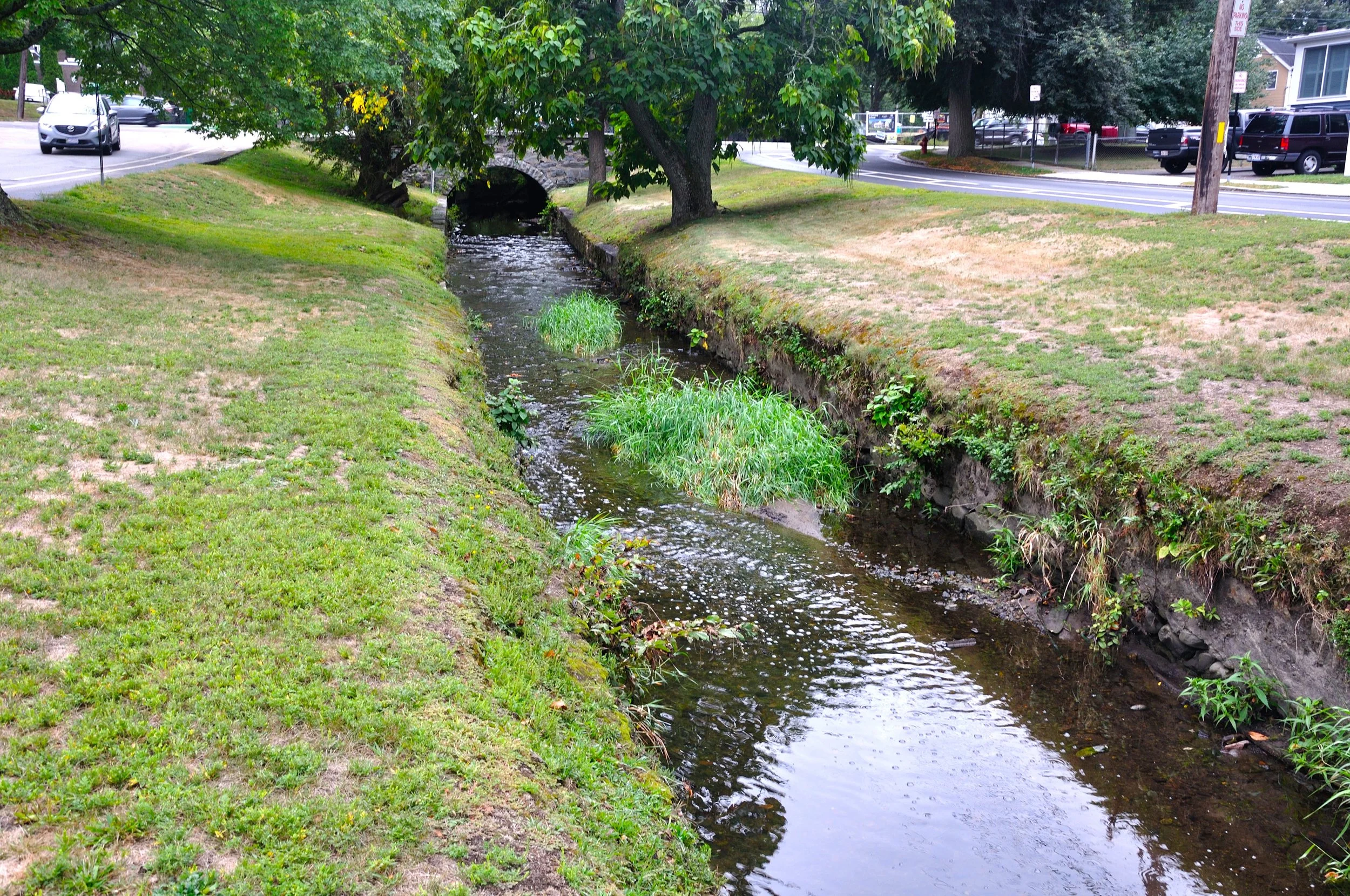
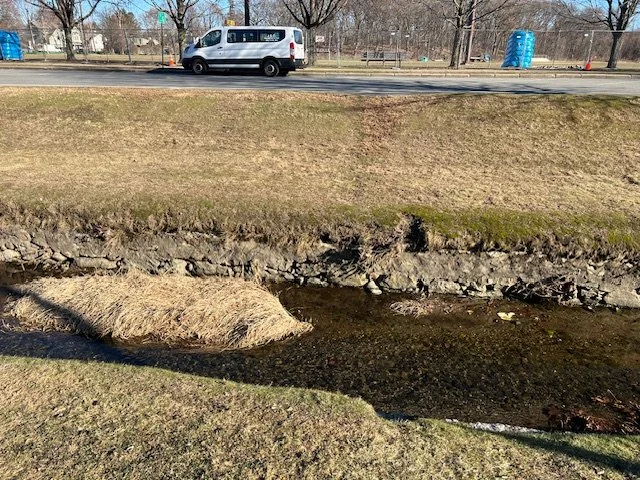
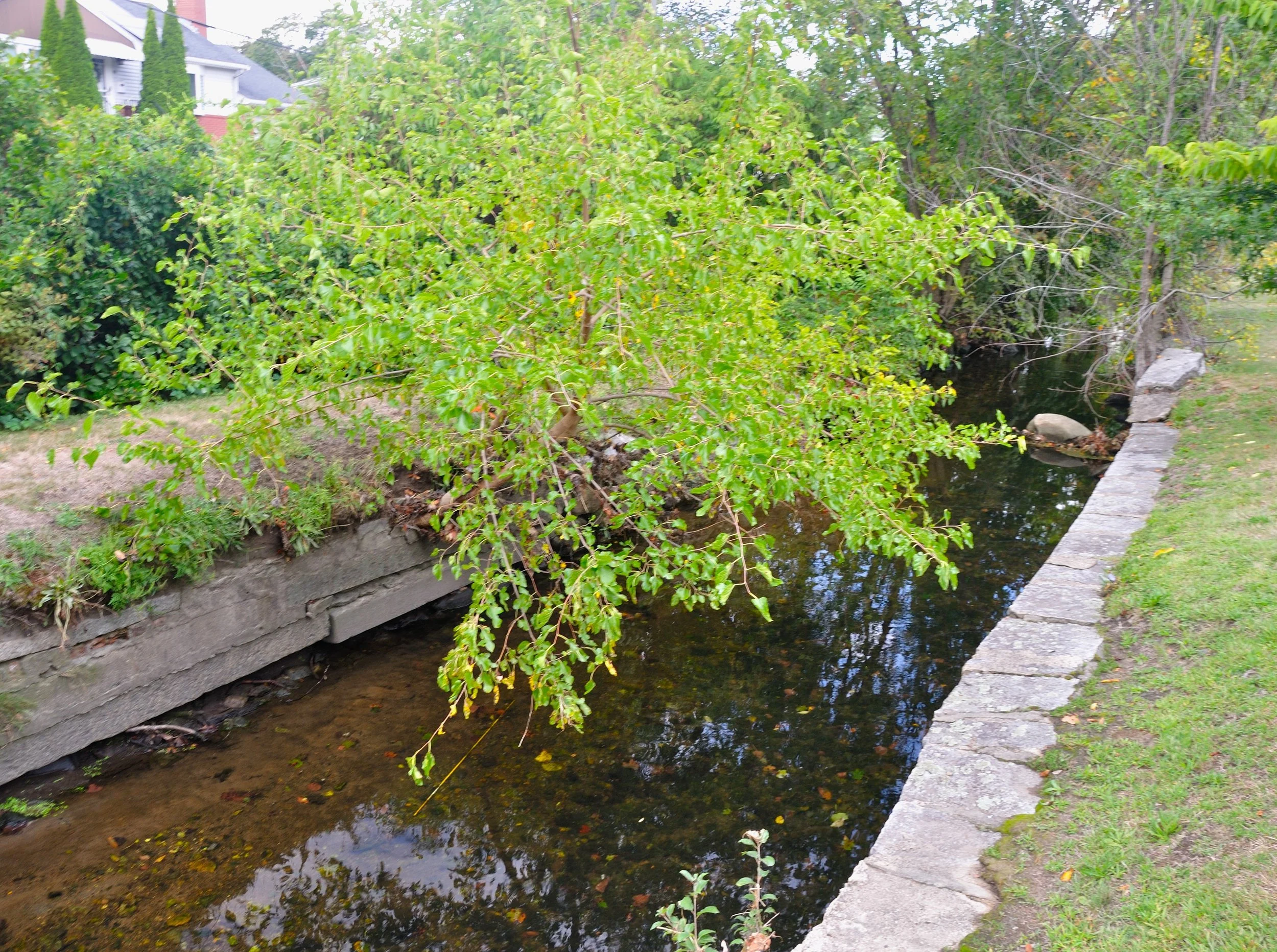
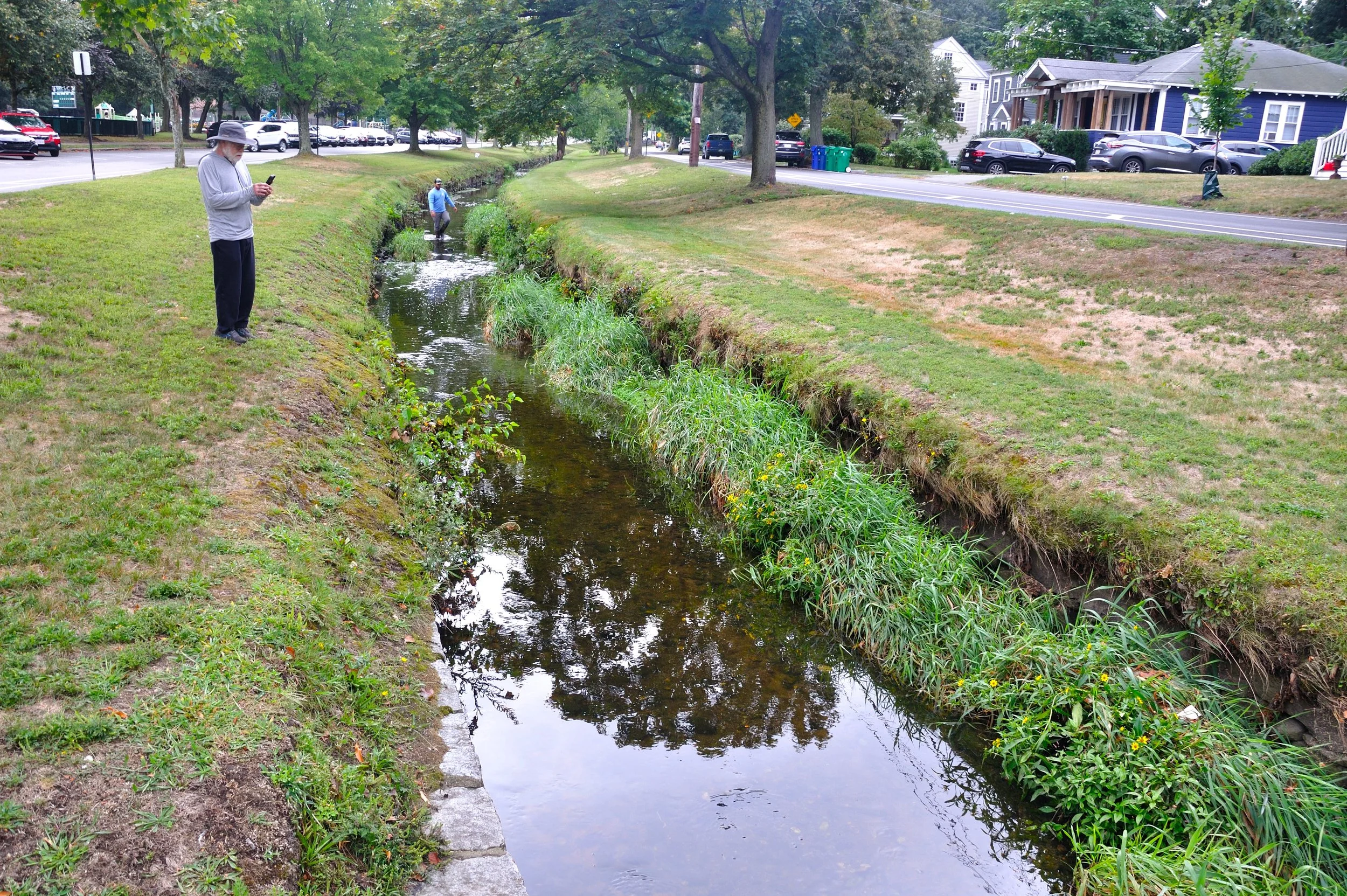
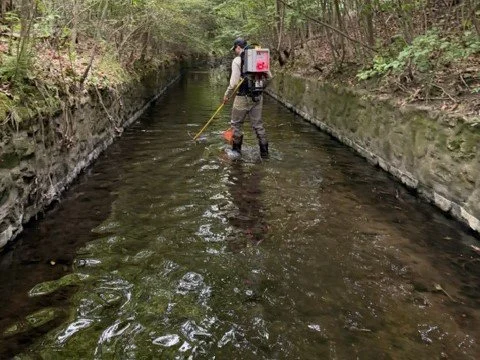
Like many suburban streams, however, Cheesecake Brook was straightened, dug down, and walled in under the guise of flood control and to promote development. As we now know, straightening streams speeds up the flow which can cause problems during rain events.
Cheesecake Brook made news in summer 2020 when it overflowed its walled-in channel, flooding roads and greenbelts. It happened again in summer 2021, floating a car downstream and taking out a small foot bridge in popular Albemarle Park.

A straightened, dug down, and walled-in section of Cheesecake Brook in Albemarle Park. (Jeff Moore)
When NFC learned that Charles River Watershed Association (CRWA) was looking to improve storm run-off to help filter contaminants, we reached out to then project leader Max Rome to see if we could help in regard to fish. After several emails and a Zoom meeting, the group agreed to meet streamside to see things firsthand.
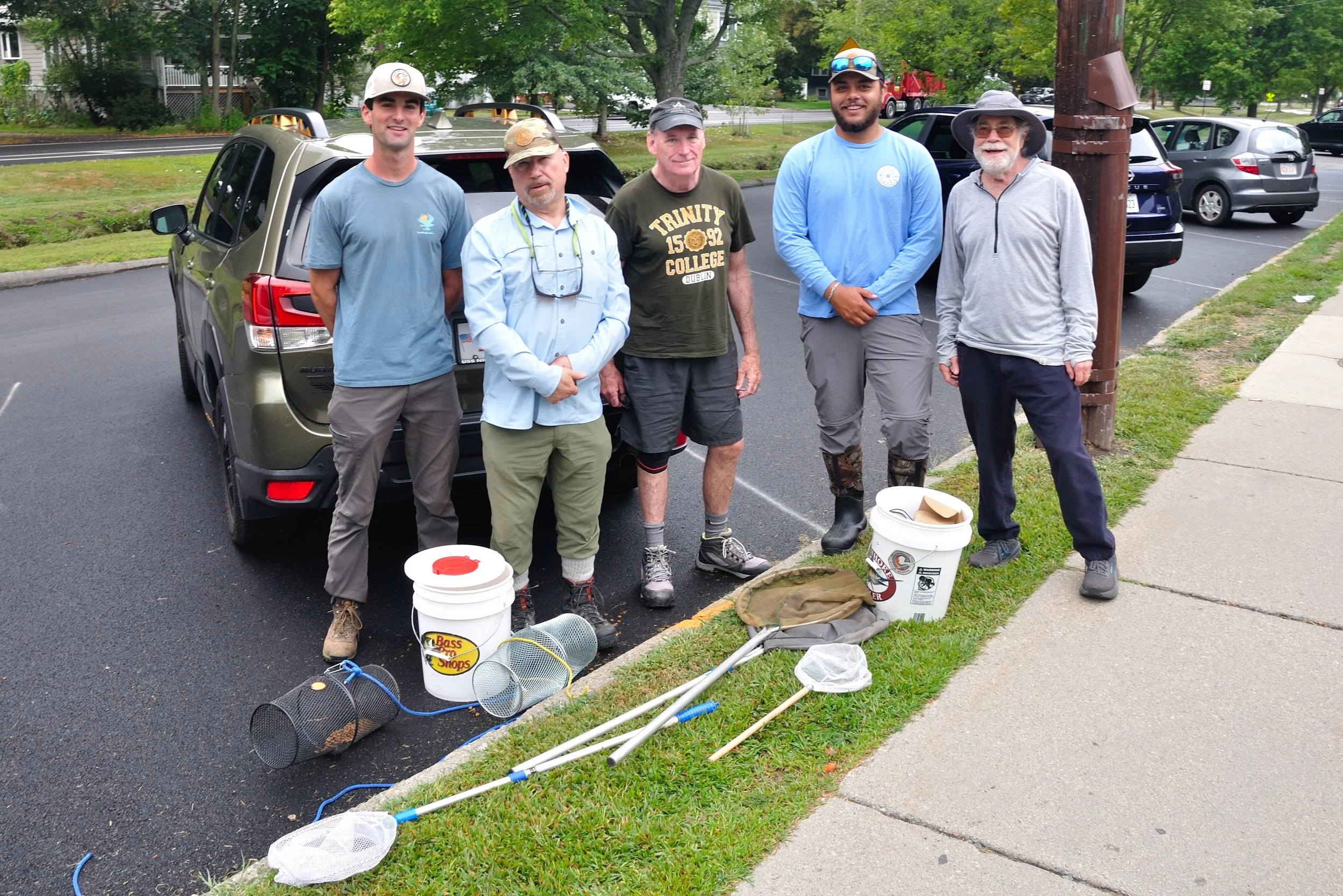
Members of NFC and CRWA met 2 days after a snowstorm and on what was one of the coldest days of the year to date. On hand for NFC were Executive Director Bob Mallard, National Chair Emily Bastian, and MA board member Jeff Moore. Max was joined by CRWA Restoration & Engagement Associate Emilia Del Fabro.
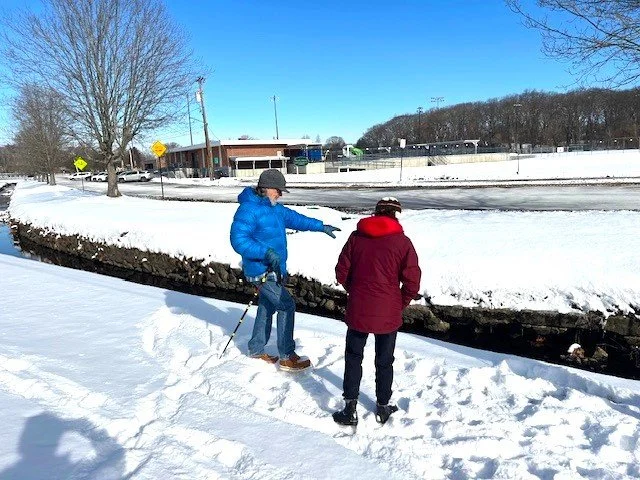
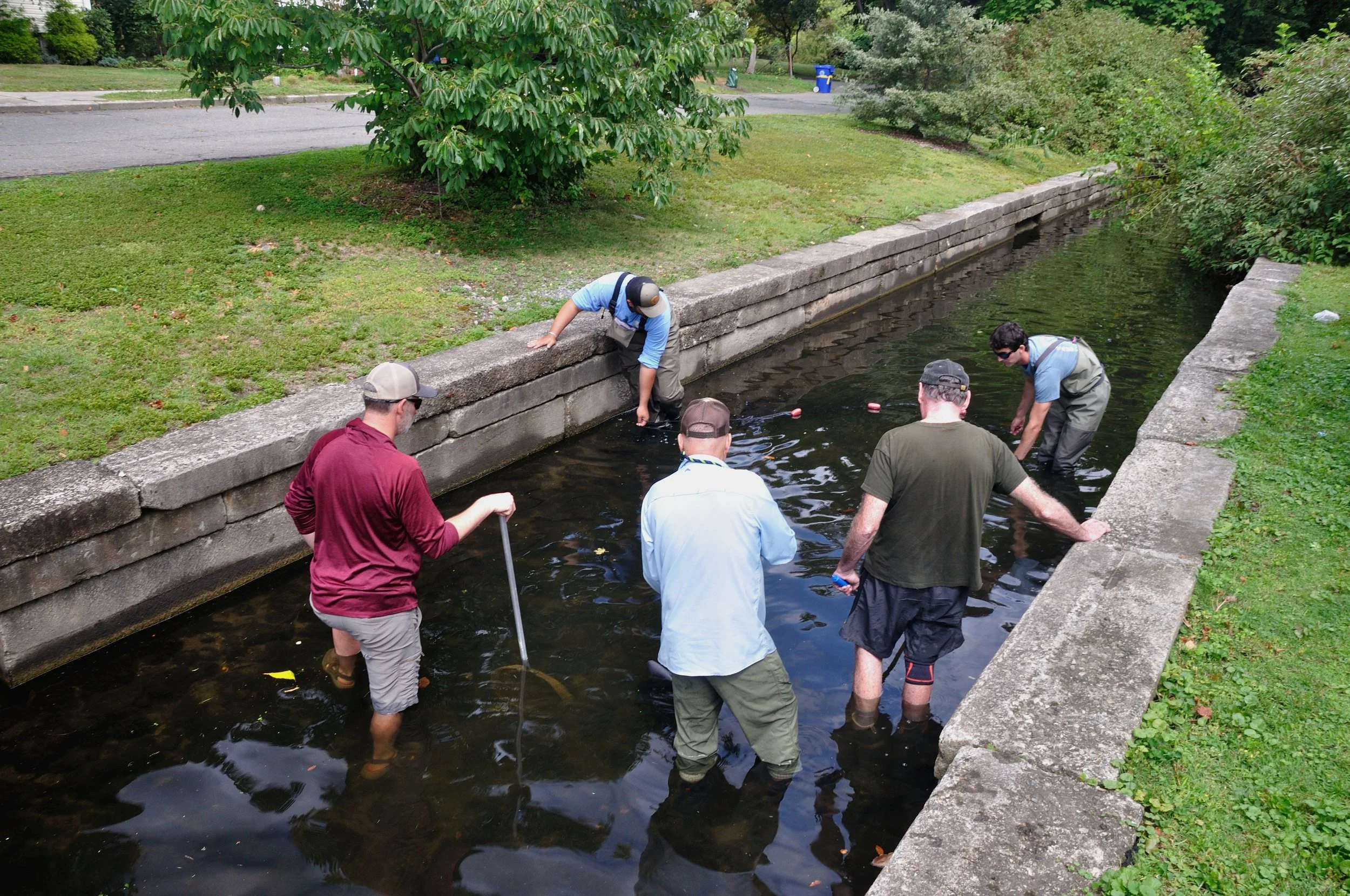
NFC Executive Director Bob Mallard and Emilia Dick Fiora del Fabro of Charles River Watershed Association inspecting a section of Cheesecake Brook where the retaining wall has been undermined creating one of the deeper pools in the lower stream. (Jeff Moore)
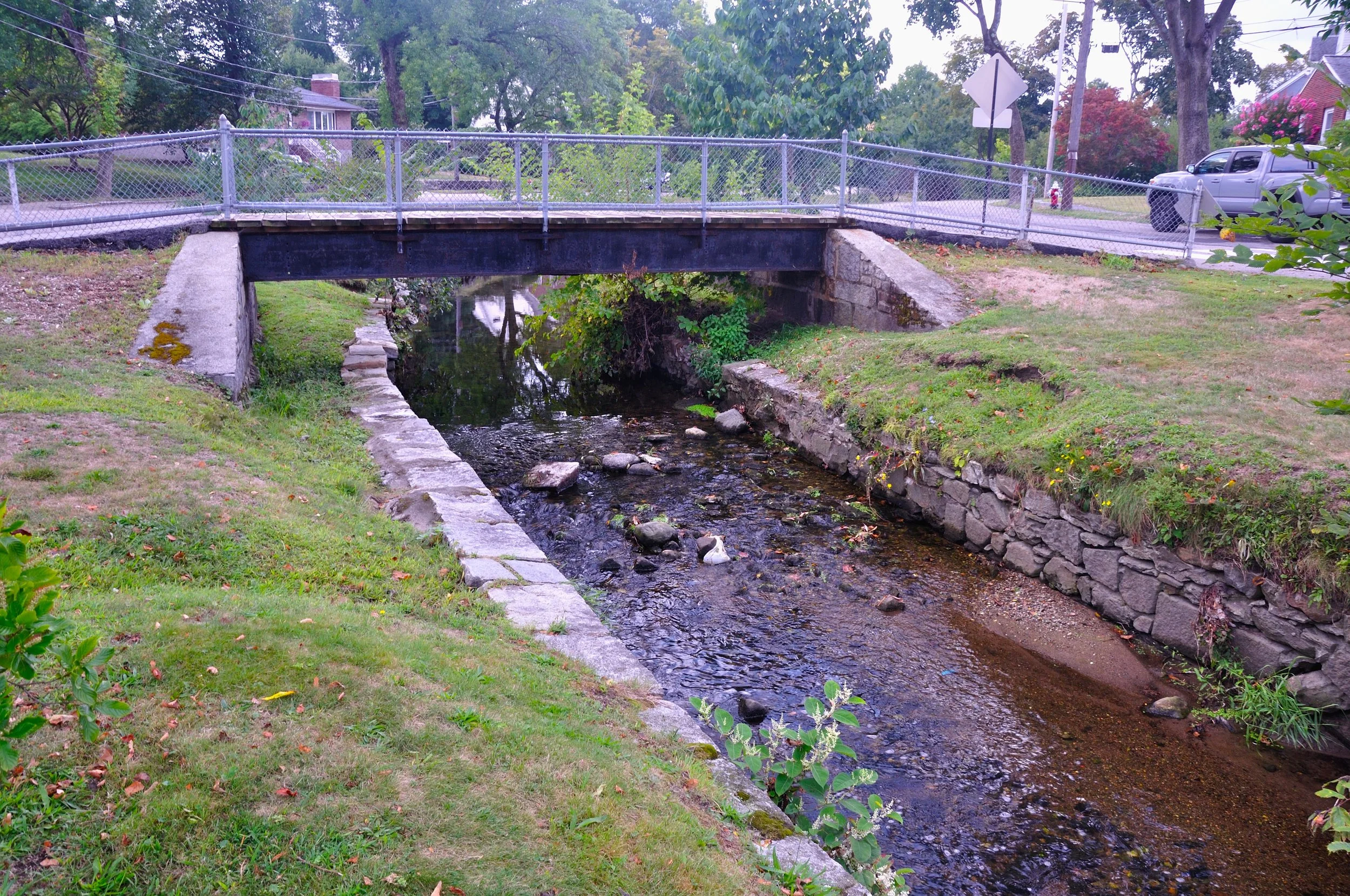
Meeting at Albemarle Park, the group toured the lower end of the longest section of daylighted, or above ground stream. While walled-in and obviously straightened and dug down, we were pleasantly surprised to see a good volume of clear water, a clean sand and gravel bottom, and a notable lack of trash or other debris. Many of the suburban streams we have seen suffer from low water levels, an unusually high amount of decaying organic matter, and trash and other debris that doesn’t belong there.
The upper end of the section at Albemarle Park had some in-stream rocks as well as a level of gradient that helps replenish dissolved oxygen and cool the water. In a number of places, large clods of soil and grass have fallen off the top of the walls creating small islands, grassy edges, narrow chutes, and some level of sinuosity. In one place a short section of wall has been undermined creating one of the deeper pools in that section of stream.


an impedement to fish passage…
Unfortunately, the fish-blocking structure is just upstream of where Cheesecake Brook empties into the Charles River. While the stream appeared to be devoid of fish, and the only report of fish we have heard came from Max who photographed what might have been a released pet comet, the river has a diverse and abundant population of fish. And with the next downstream dam slated to come out, fish from downriver, including anadromous species such as alewives, blueback herring, rainbow smelt, and American shad are likely to move further upriver.
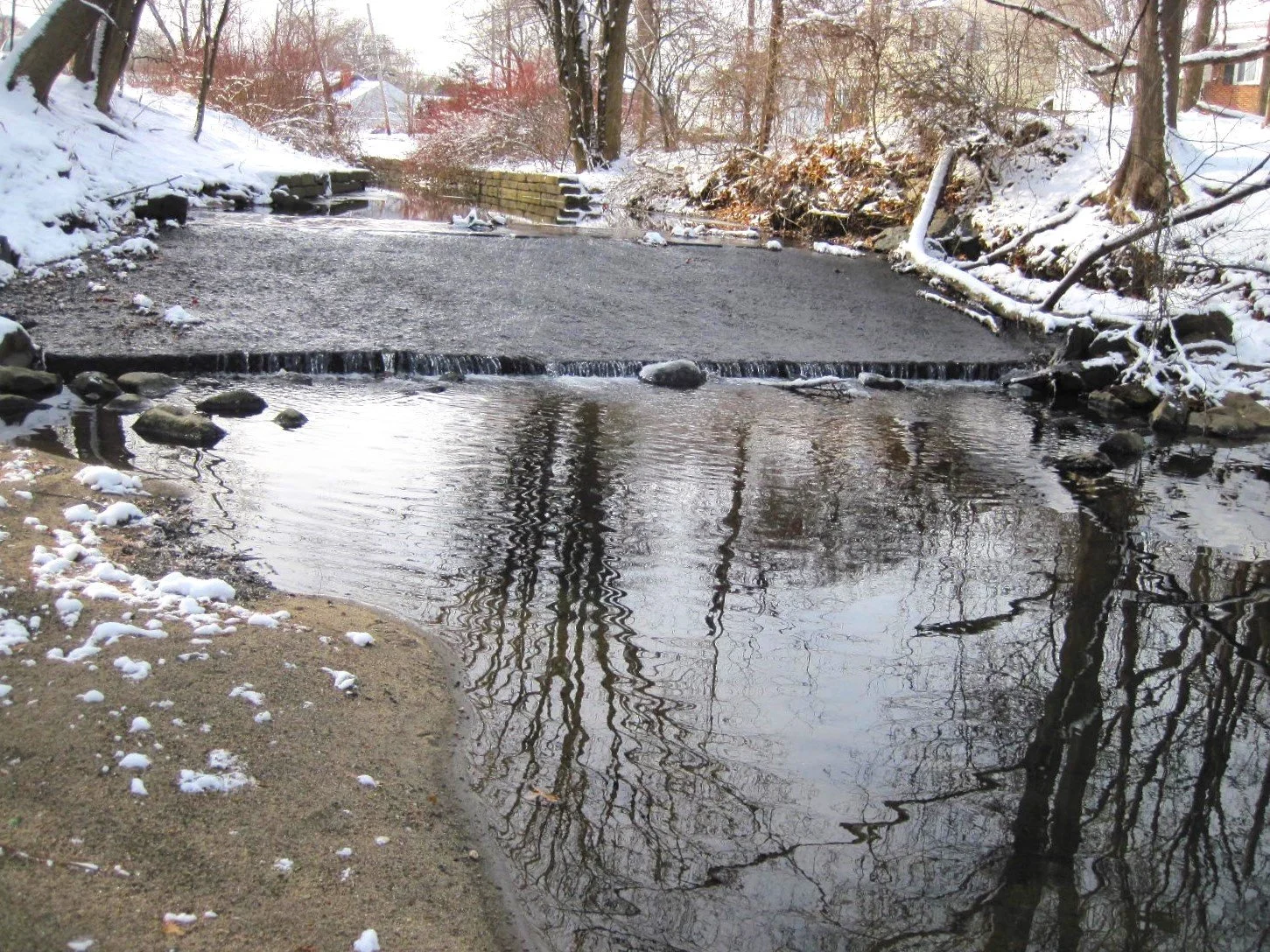
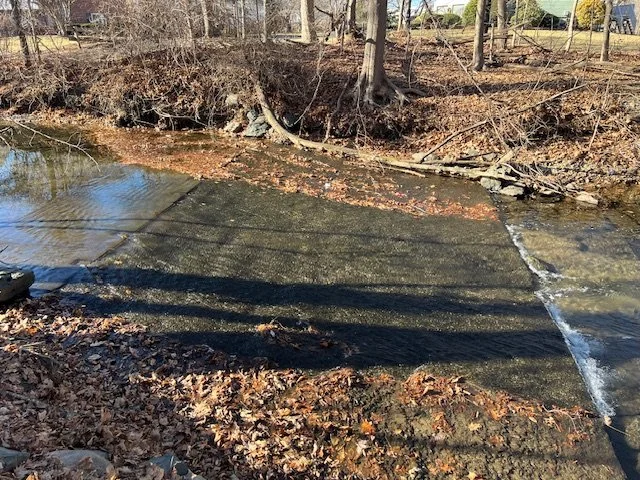
The group moved downstream to take a look at what is believed to be a fish-blocking structure. The structure was found to be a roughly 10-foot wide horizontal cement slab with a sloped cement slab of equal size that terminates in a 10-inch perched drop.
The structure was built to protect a municipal sewer pipe. While some level of fish are likely to be able to navigate the structure during high water periods, it is doubtful that any fish can pass during low water due to the perch, pitch, and length of the sloped slab. The structure also impounds water upstream in a slow deep pool for 75 feet or so.




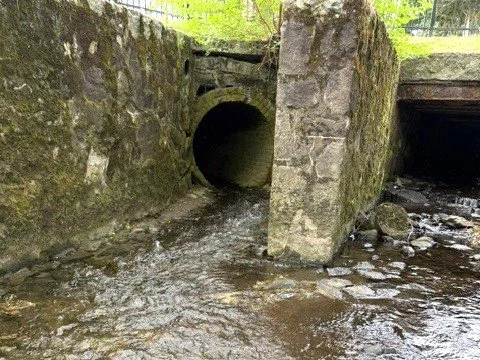
The group moved upstream a mile and a half or so from Albemarle Park. While Cheesecake Brook goes underground at the heavily developed intersection of two busy streets, and then beneath the Massachusetts Turnpike, it resurfaces briefly roughly 3/4 of a mile upstream at a spot not shown on any maps. This shows just how much we don’t know about these suburban and urban streams, and how much we will need to learn to restore them where possible.


What we noticed right away was the notably lower volume of water between Albemarle Park and the short daylighted section upstream of the buried section. While most suburban and urban streams receive water input from storm drains, the single-digit temperatures and lack of recent rain made it unlikely that this was where the increased flows were coming from. We believed that another buried stream entered Cheesecake Brook between the two daylighted sections.
Using a variety of maps and tools, NFC was able to confirm that Dolan Pond was connected to Cheesecake Brook via a stream that flowed underground. Below is a map showing a buried stream from Dolan Pond denoted by a blue broken line entering Cheesecake Brook underground. This once again shows just how little we know about these suburban and urban streams.
Several months later, NFC got a report of a video taken in 2001 showing a great blue heron eating a large eel on Dolan Pond north of Cheesecake Brook. While said to have been likely released by a child who caught it elsewhere, NFC believed that the eel got there on its own as no fish is more capable of negotiating obstructions than American eels.
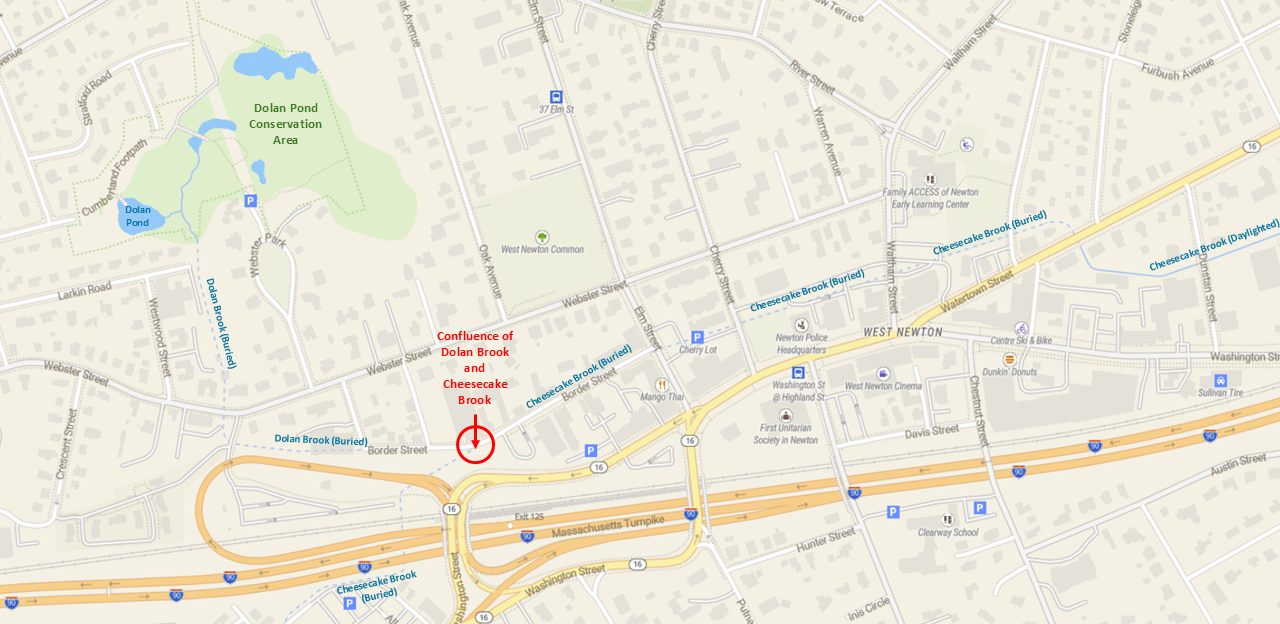
A map showing a buried stream denoted by a blue broken line entering Cheesecake Brook
the fish that changed everything…
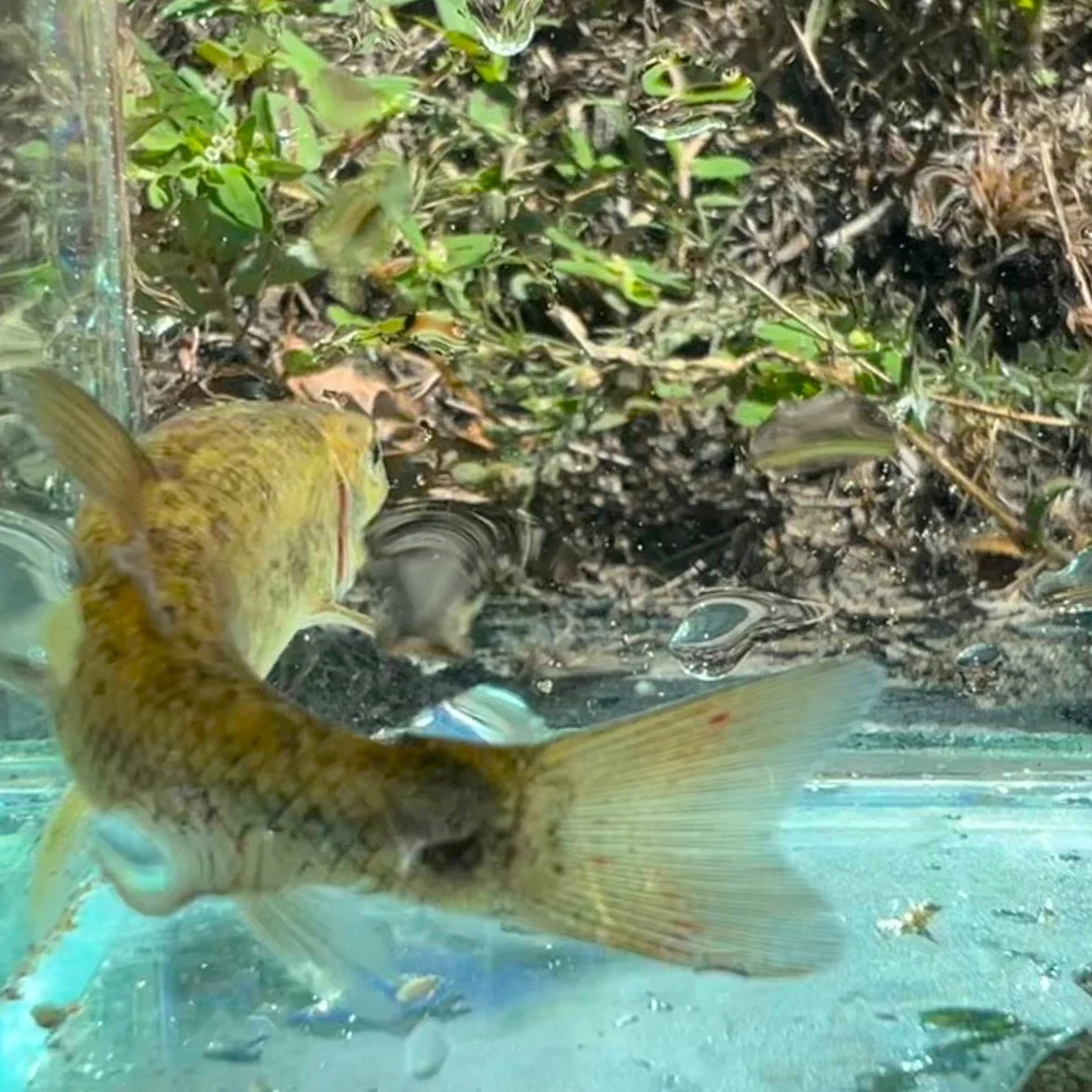
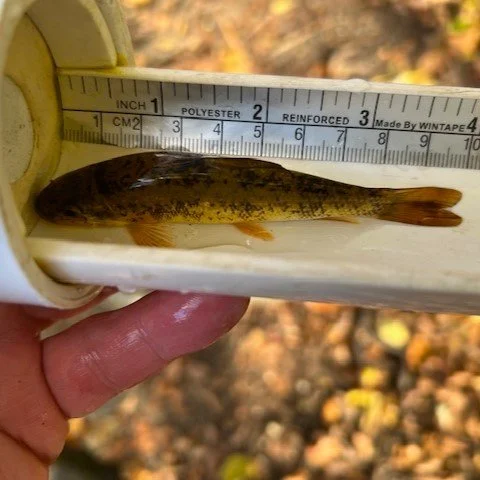
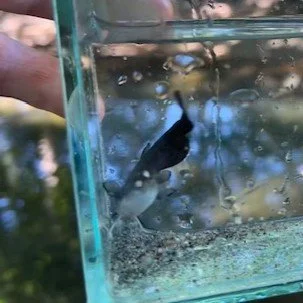
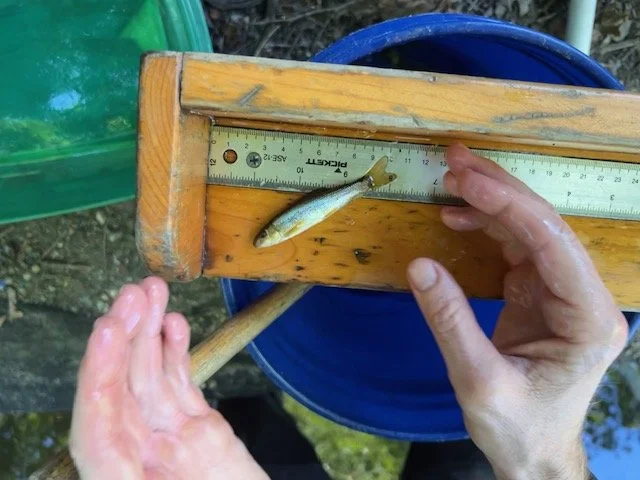
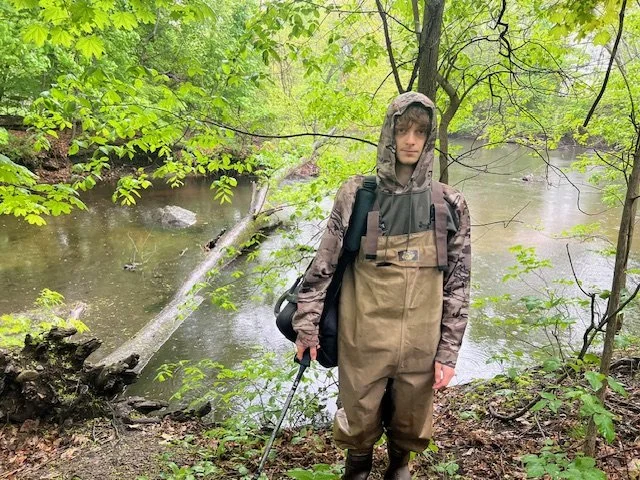
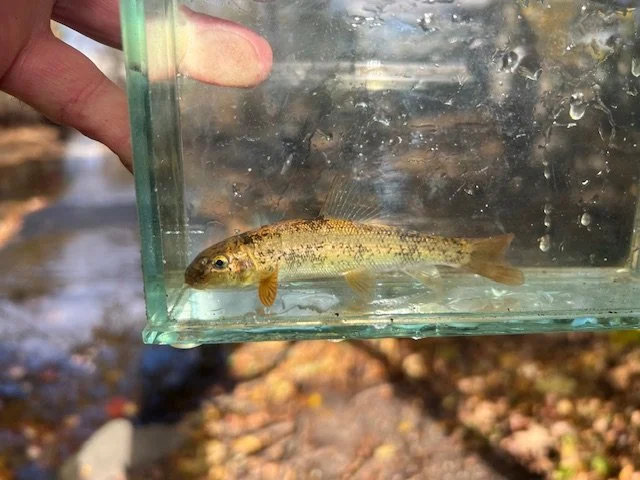
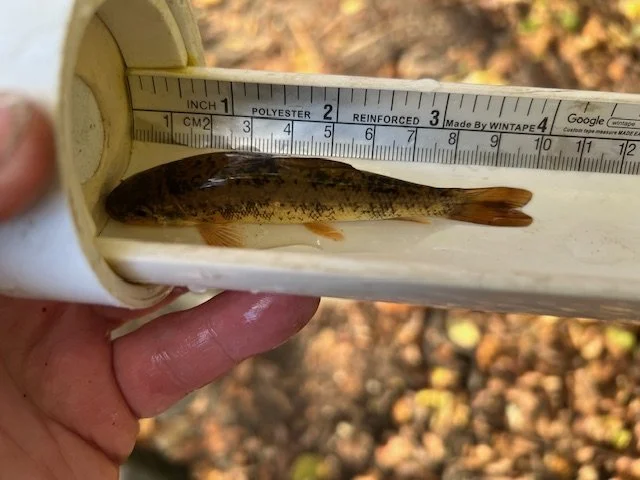
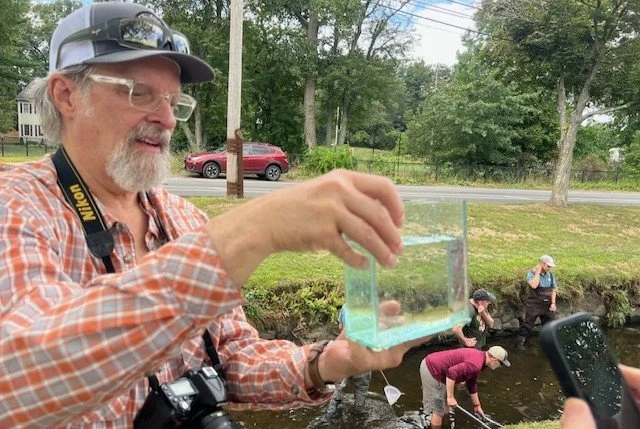
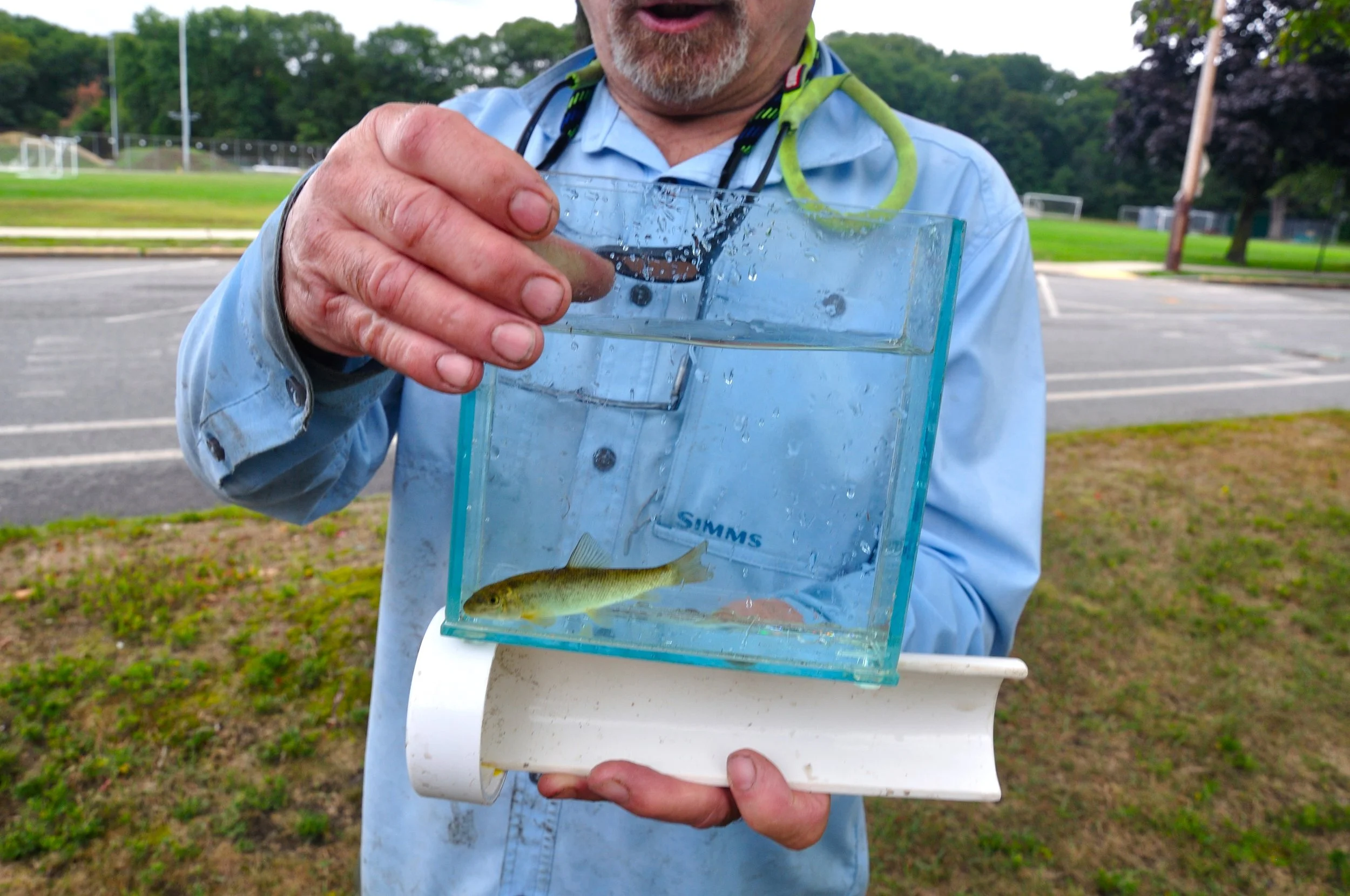
MA NFC board member set a minnow trap under the most downstream Watertown Street bridge on Cheesecake Brook. When he came back a day later, Jeff was shocked to find a lone wild native juvenile white sucker in the trap.
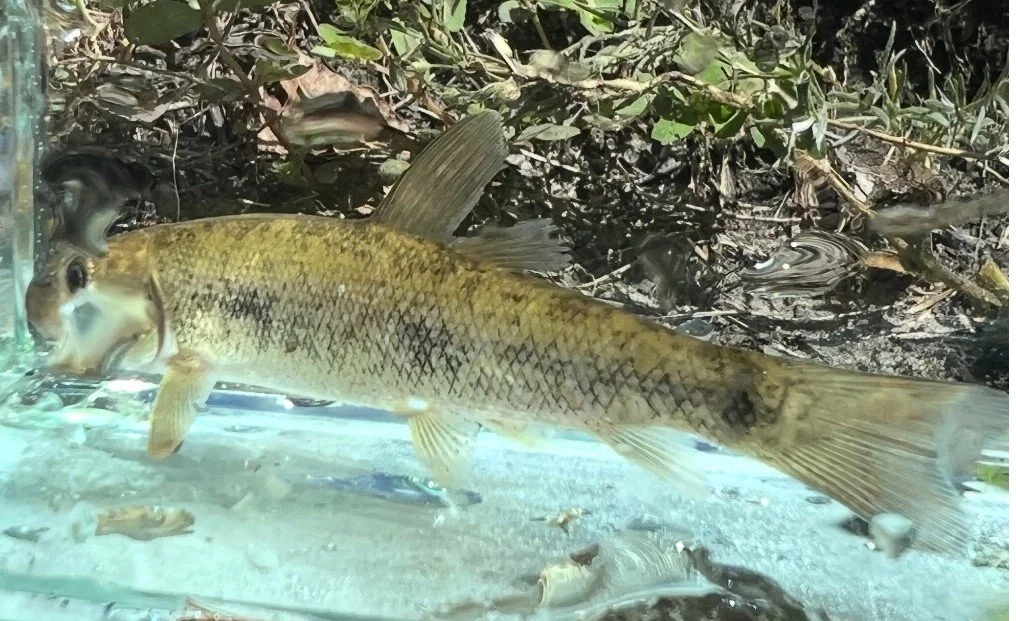
The first wild native fish confirmed in Cheesecake Brook upstream of the cement slab…
finding fish where fish were not supposed to be
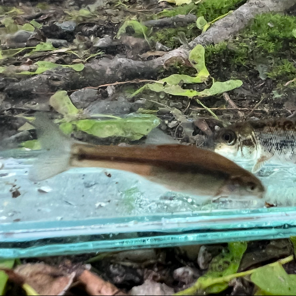
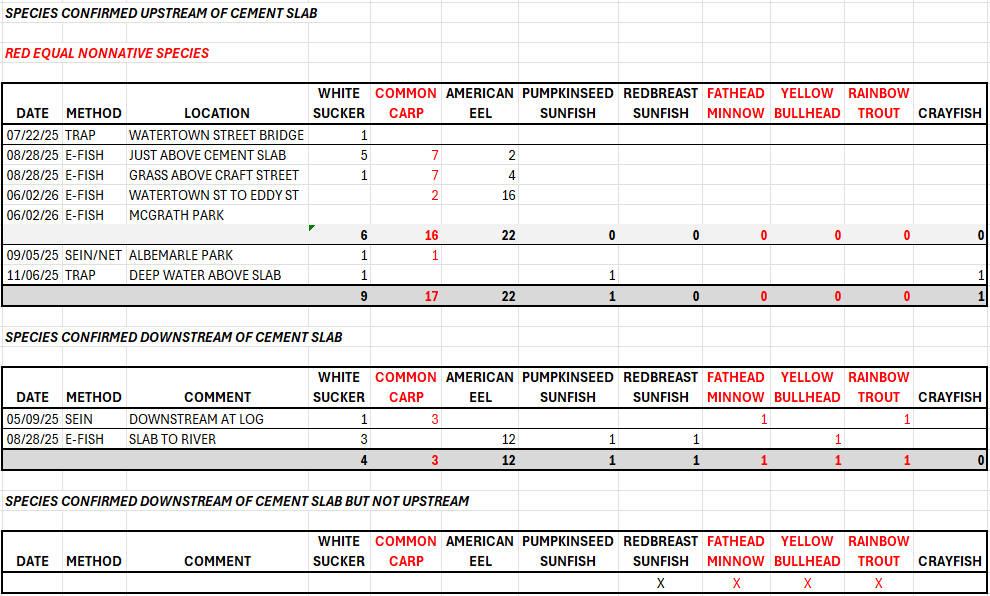
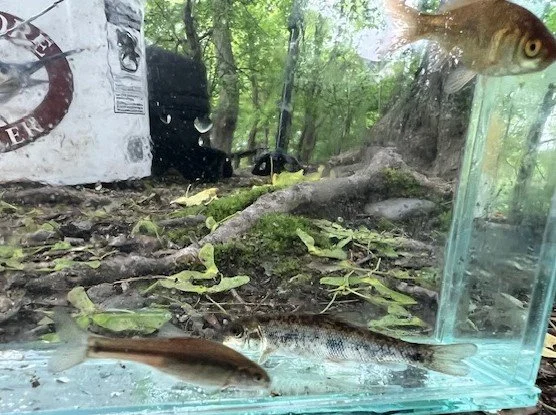
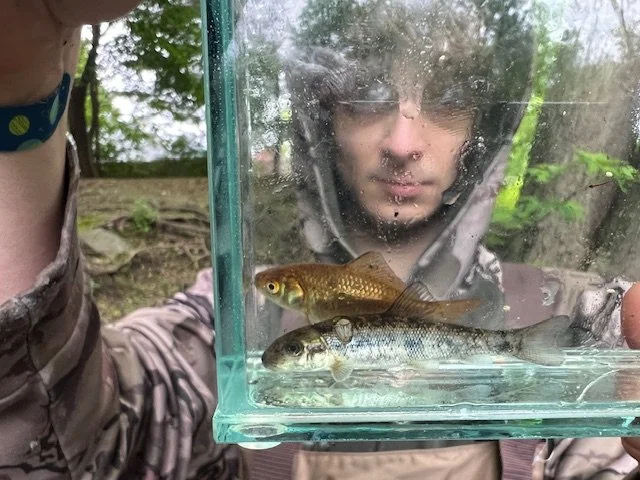
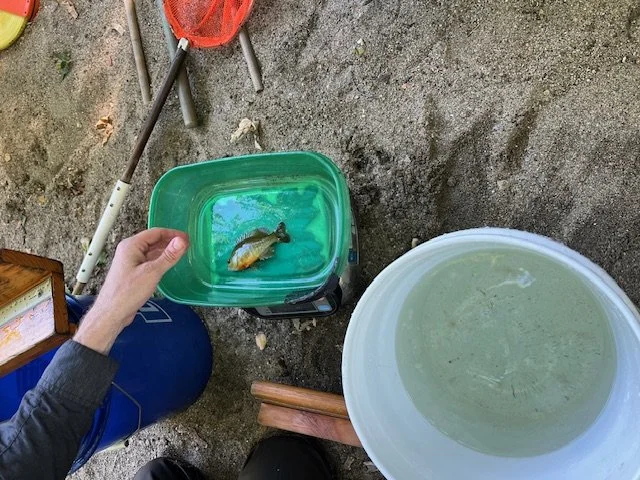
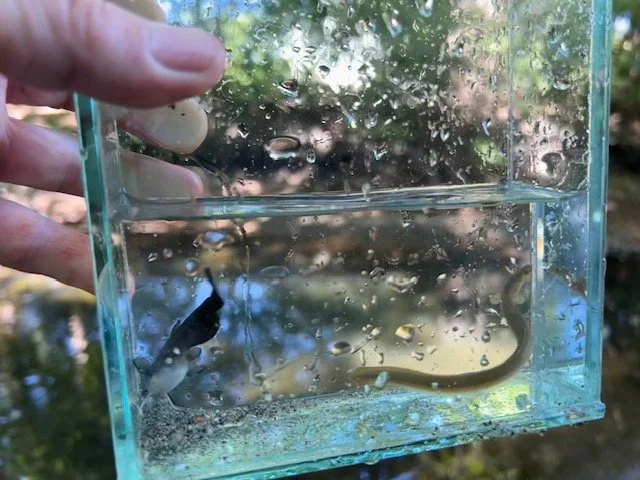
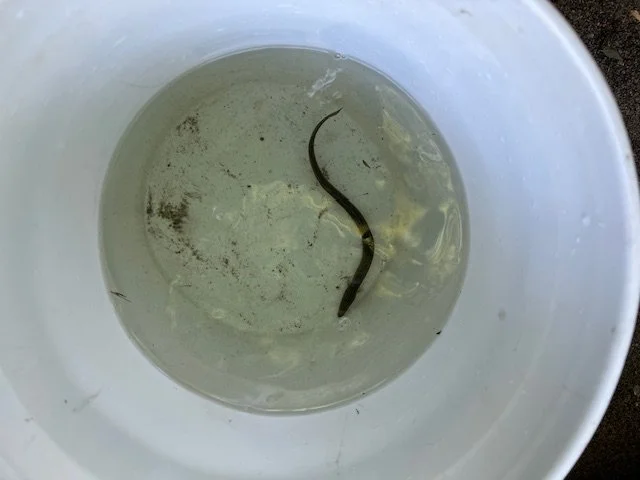
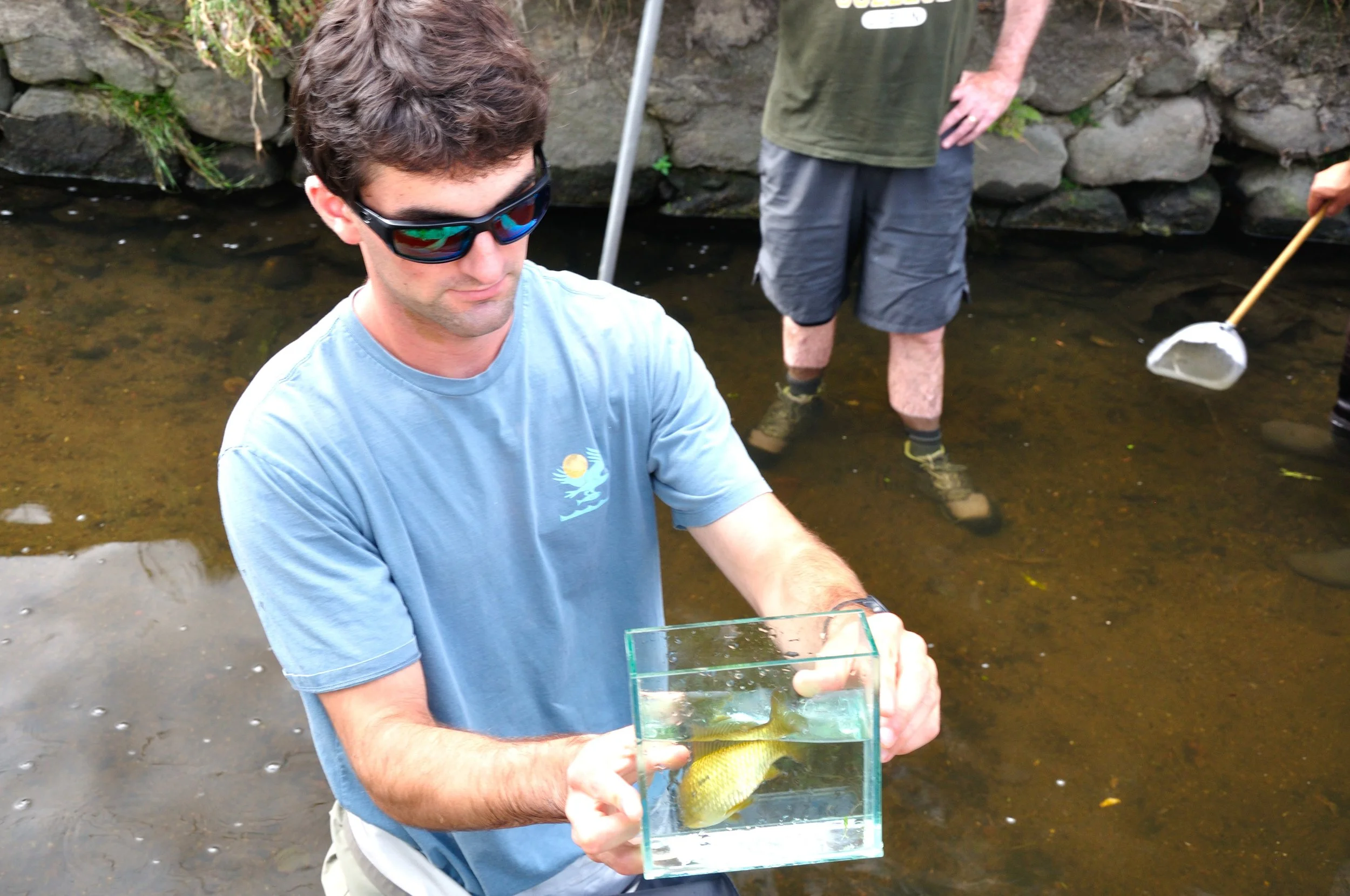
As a result of trapping, seining, and e-fishing, NFC and our partners have been able to confirm the presence of 4 species of fish in Cheesecake Brook in Cheesecake Brook upstream of the cement slab. This includes native white sucker, pumpkinseed sunfish, and catadromous American eel, as well as nonnative common carp.
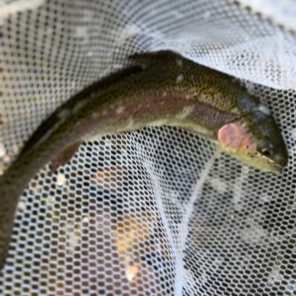
We found several other species of fish downstream of the slab including native redbreast sunfish, and nonnative fathead minnow, yellow bullhead, and a stocked rainbow trout.


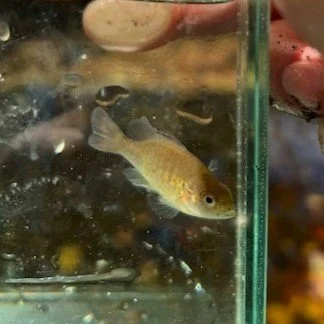
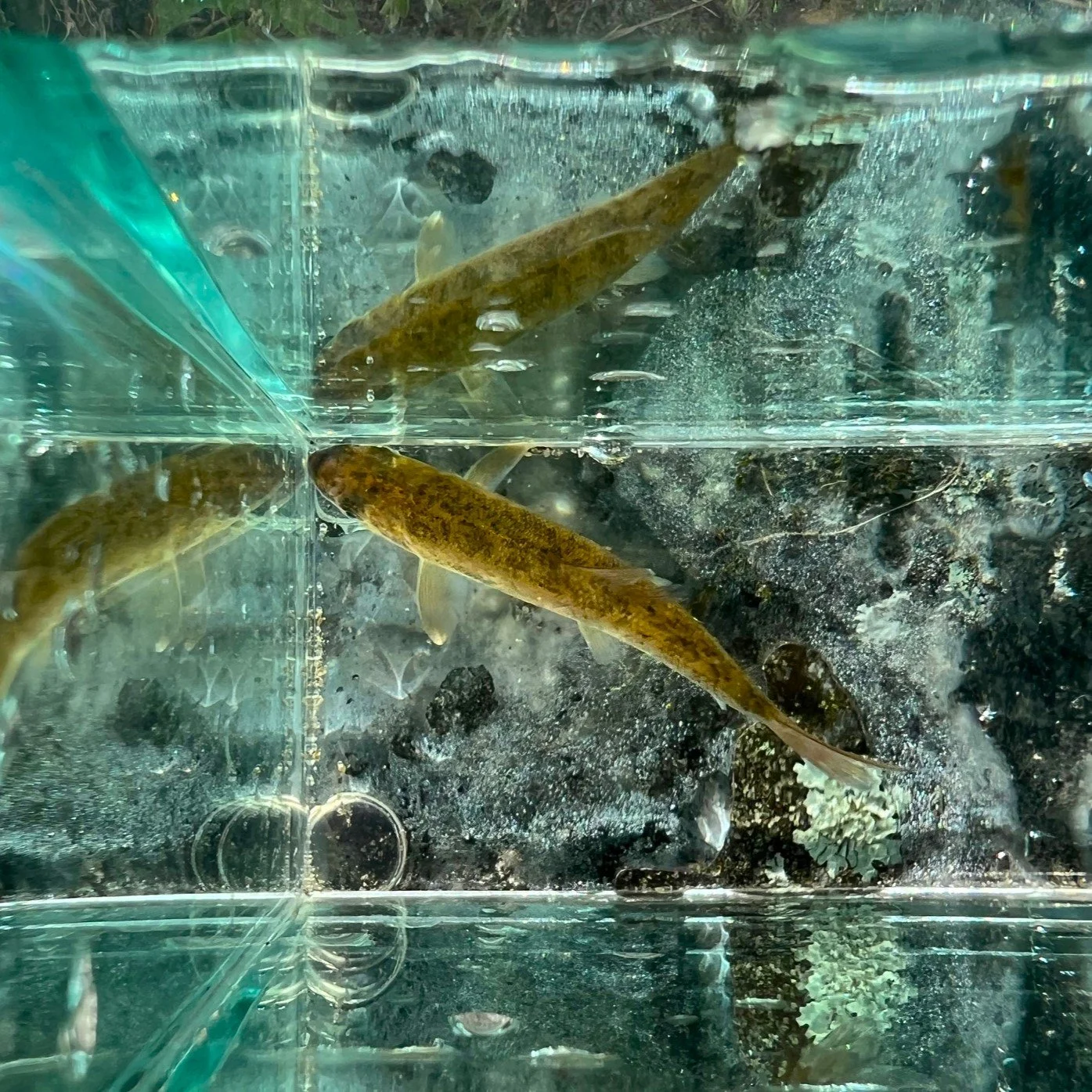

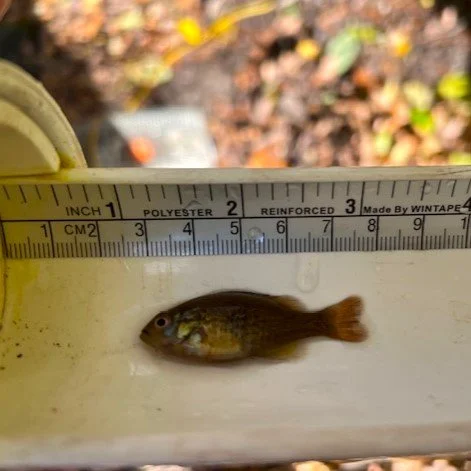

the fish species count rises…
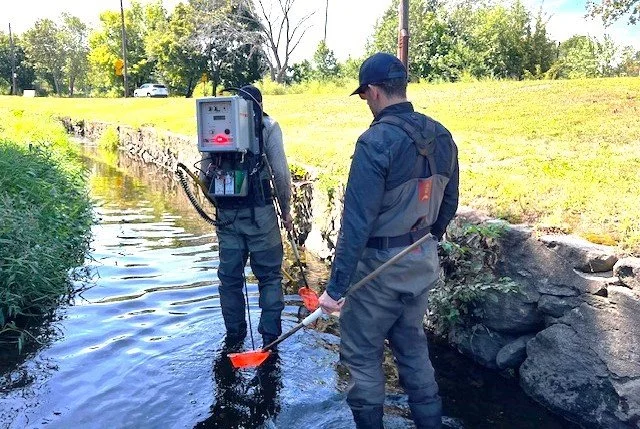
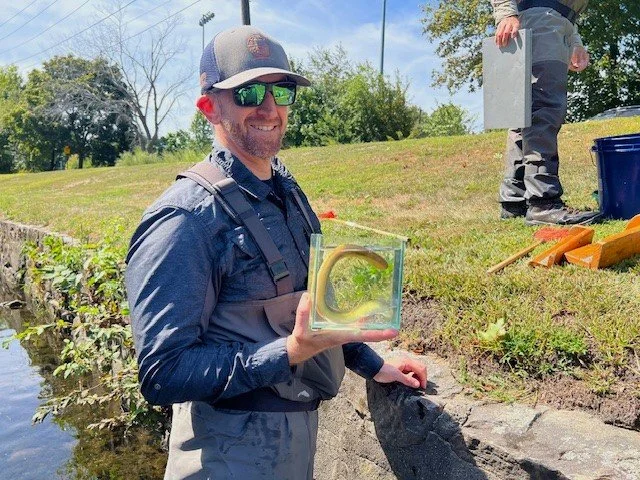
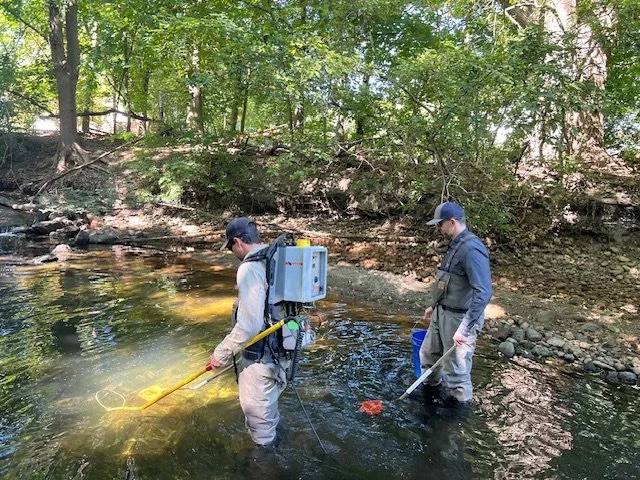
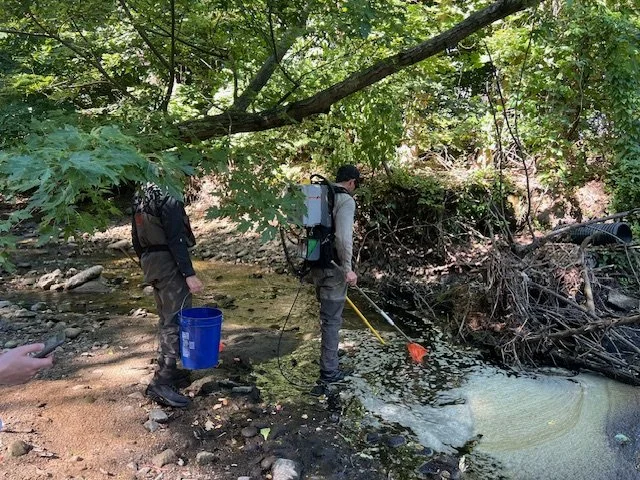
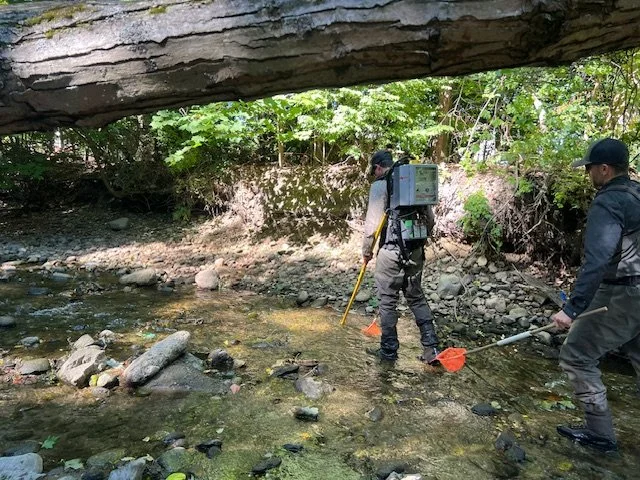
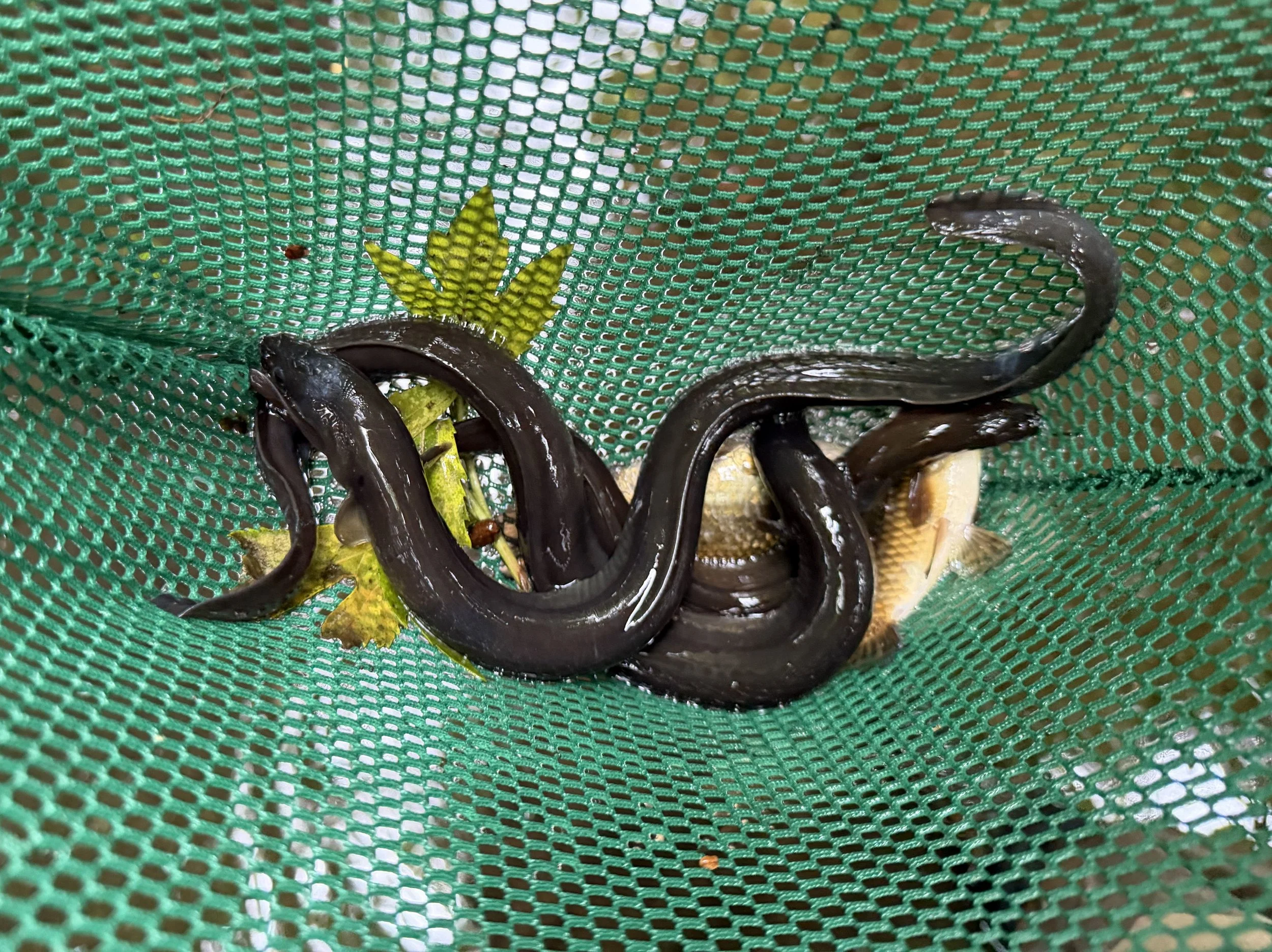
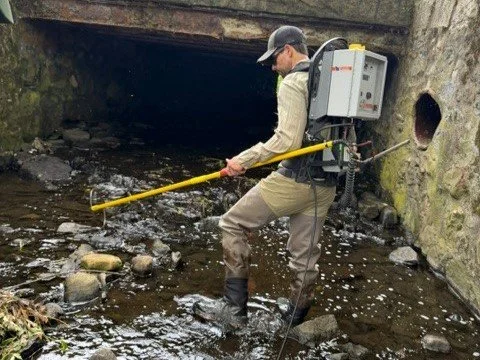
With support from MassWildlife, MA NFC board members helped e-fish Cheesecake Brook upstream of the cement slab. Not only did the group capture more white suckers, but they also caught 7 catadromous American eels.
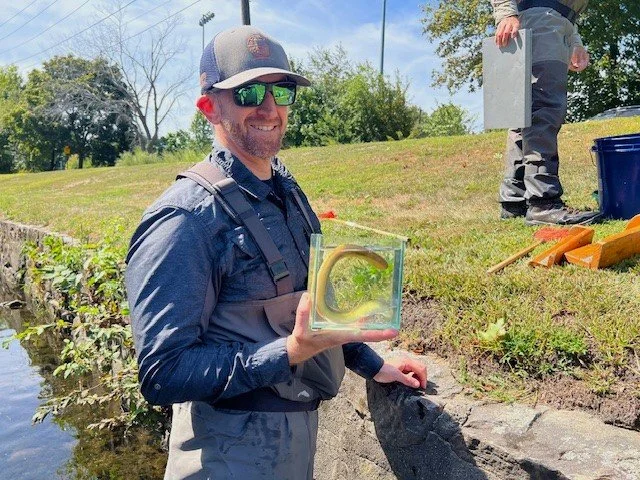
A member of MassWildlife with an American eel captured from Cheesecake Brook…
seeking the public’s help to learn more…
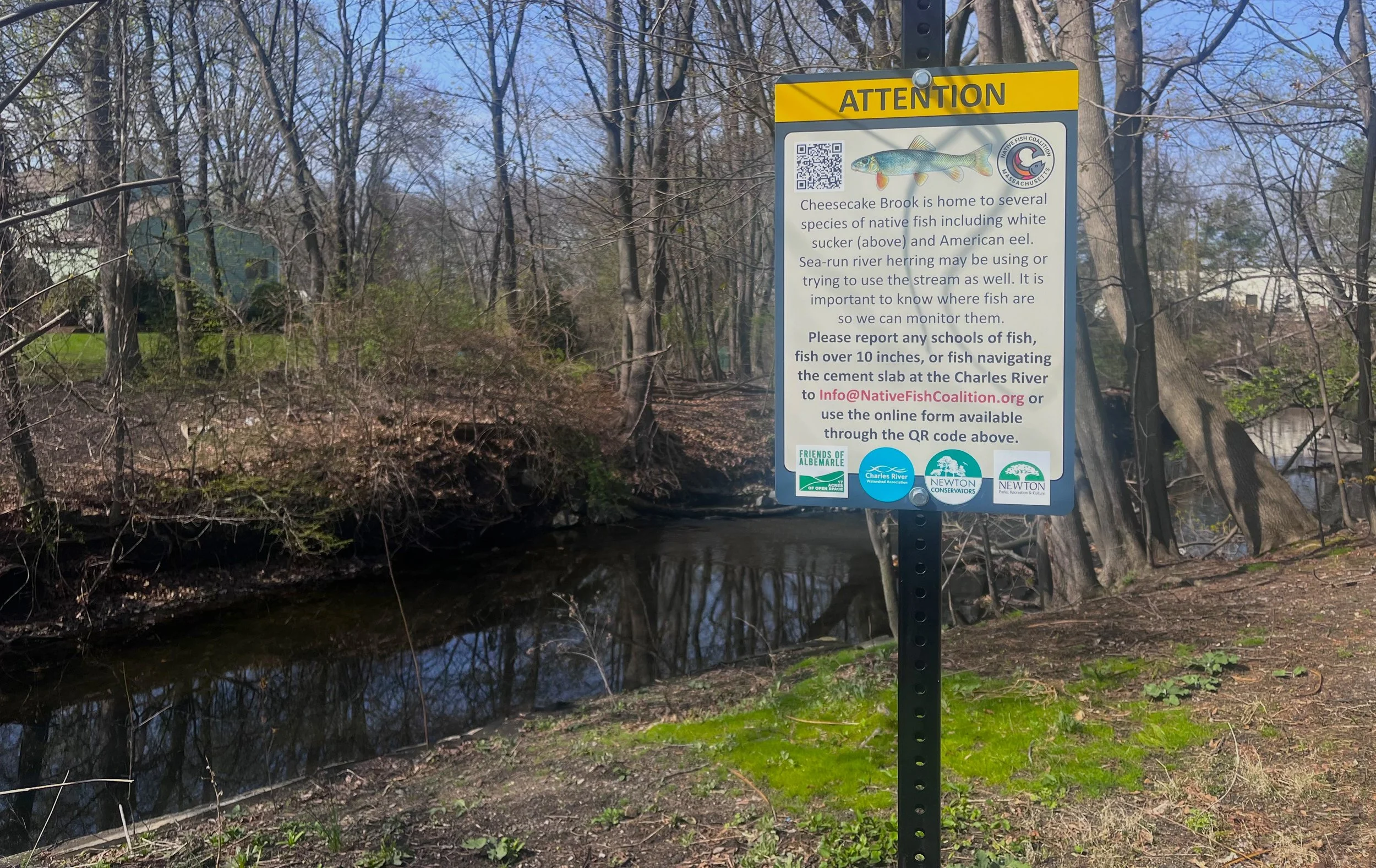
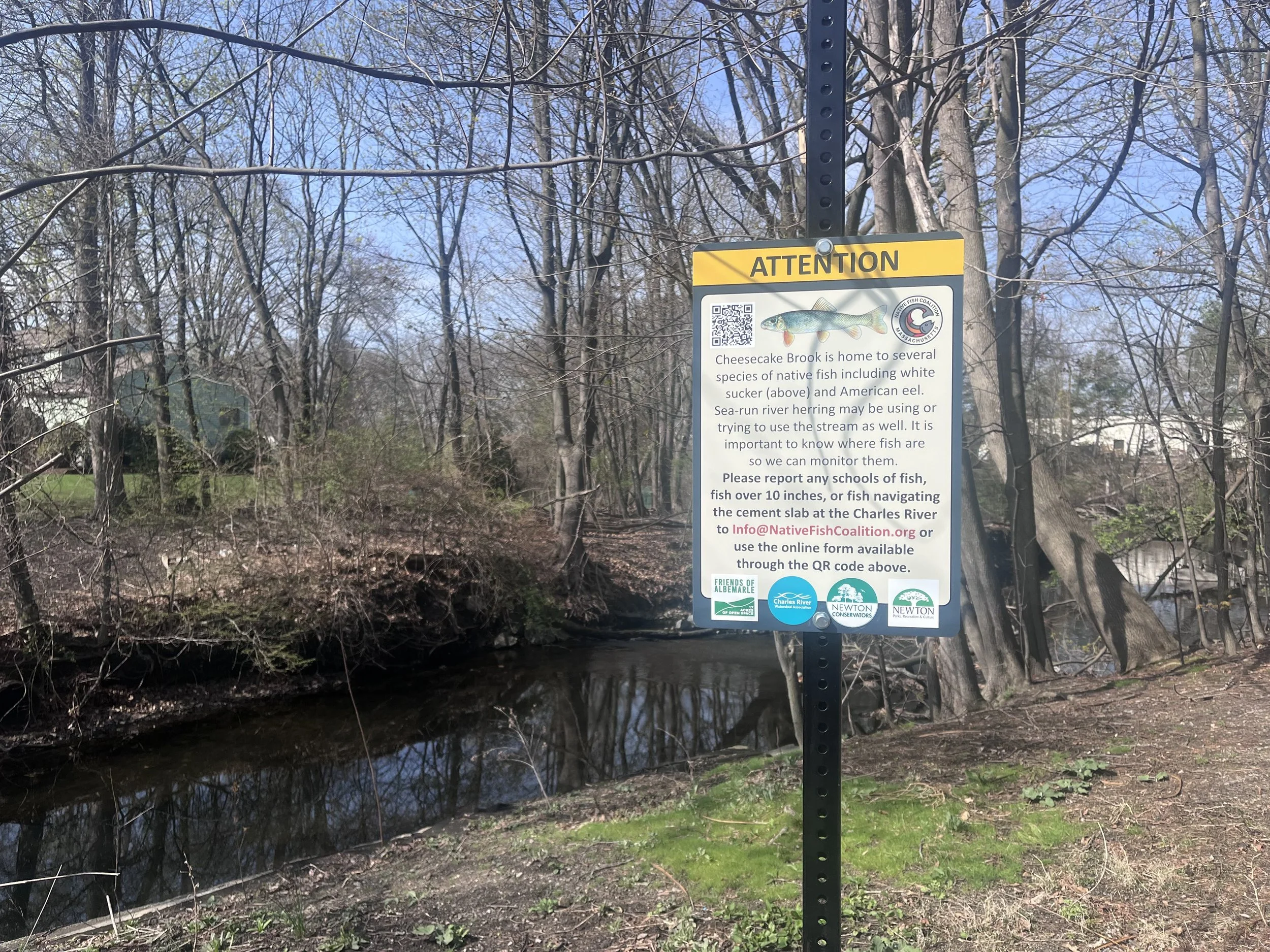
NFC is looking for volunteers to report any unusual fish sightings in Cheesecake Brook. This includes fish over 6-inches long, groups of 5 or more fish over 6 inches, or fish navigating over the cement slab just upstream of the Charles River, or attempting to do so. We have created an informational sign and an online form to make it easy to report your observations.
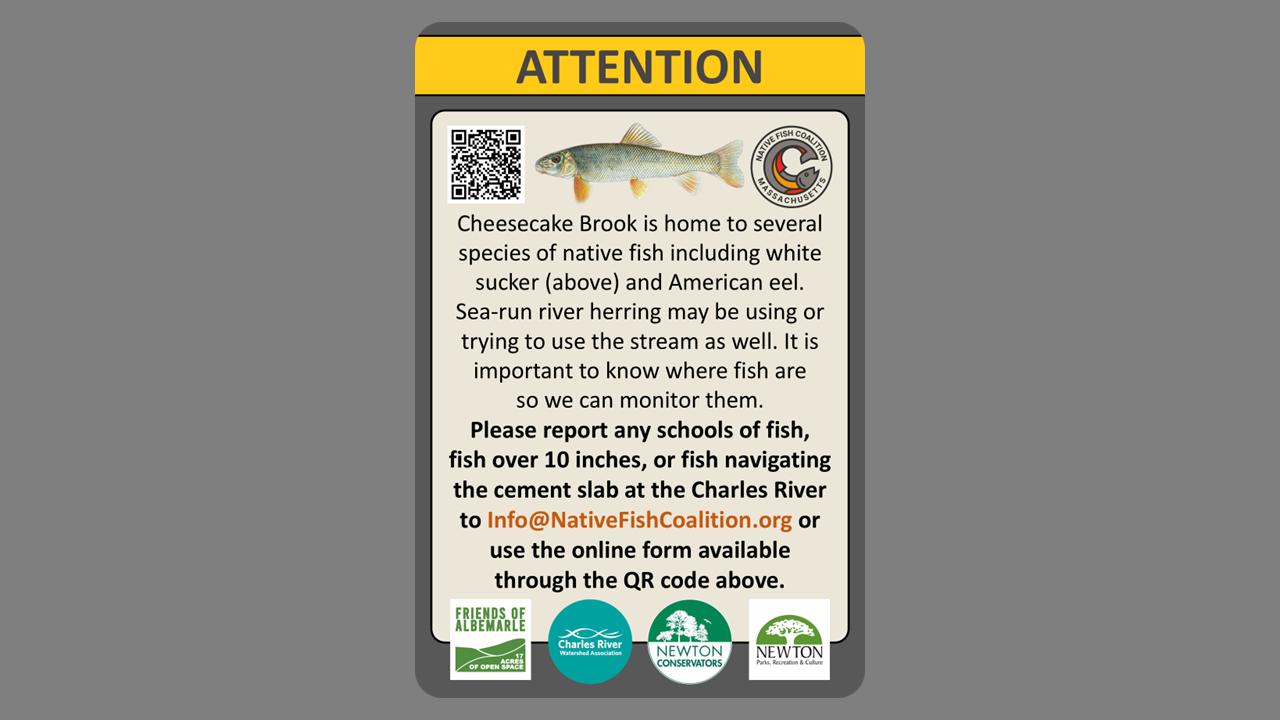
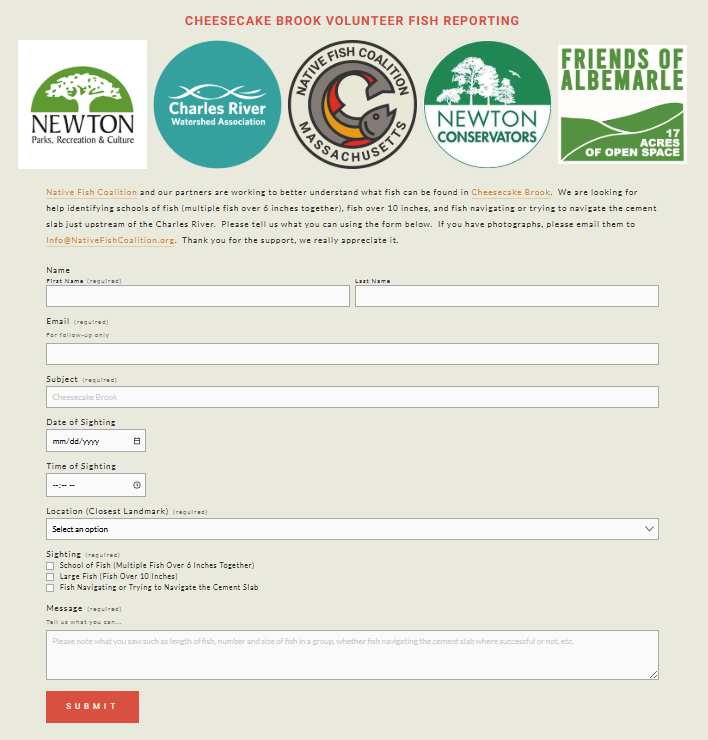
Work to Date…
NFC has worked with Charles River Watershed Association and MassWildlife to ascertain what if any fish are using Cheesecake Brook today, as well as what fish could utilize the stream if reliable passage was available. To accomplish this, we have done the following:
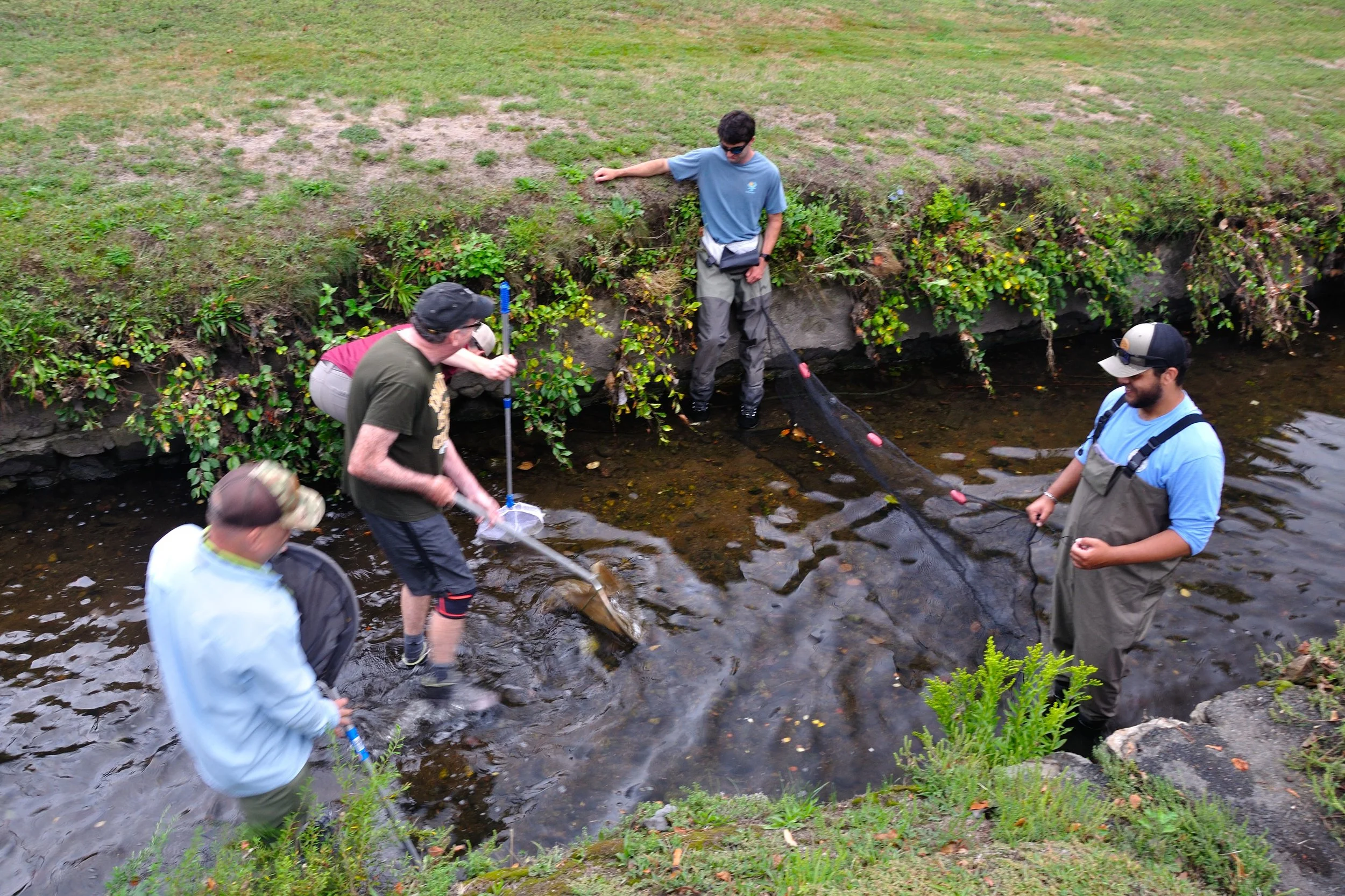
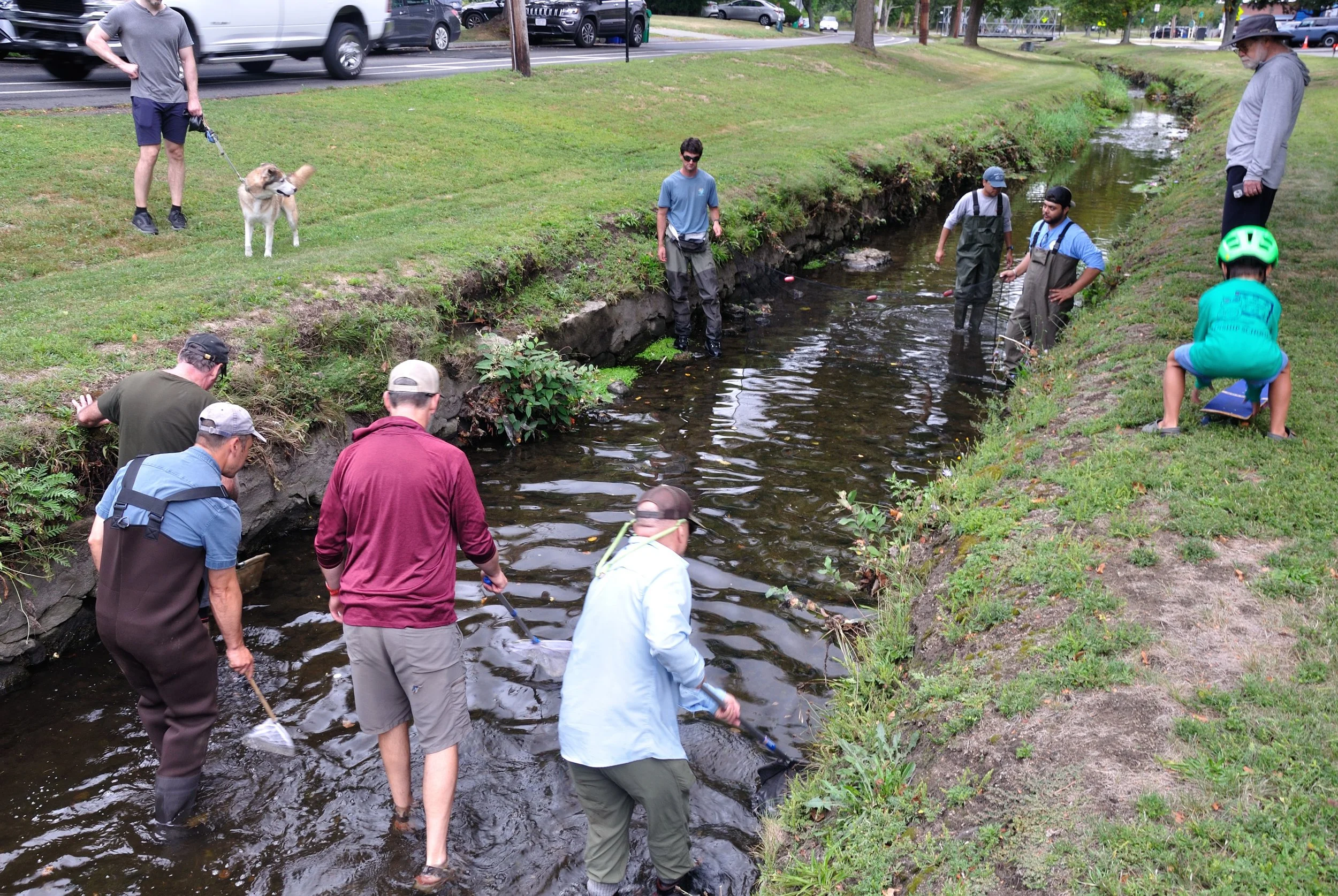
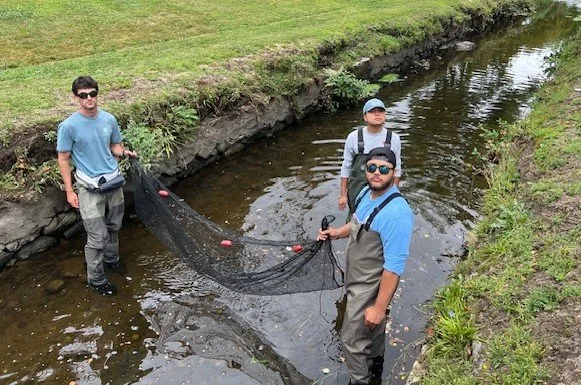
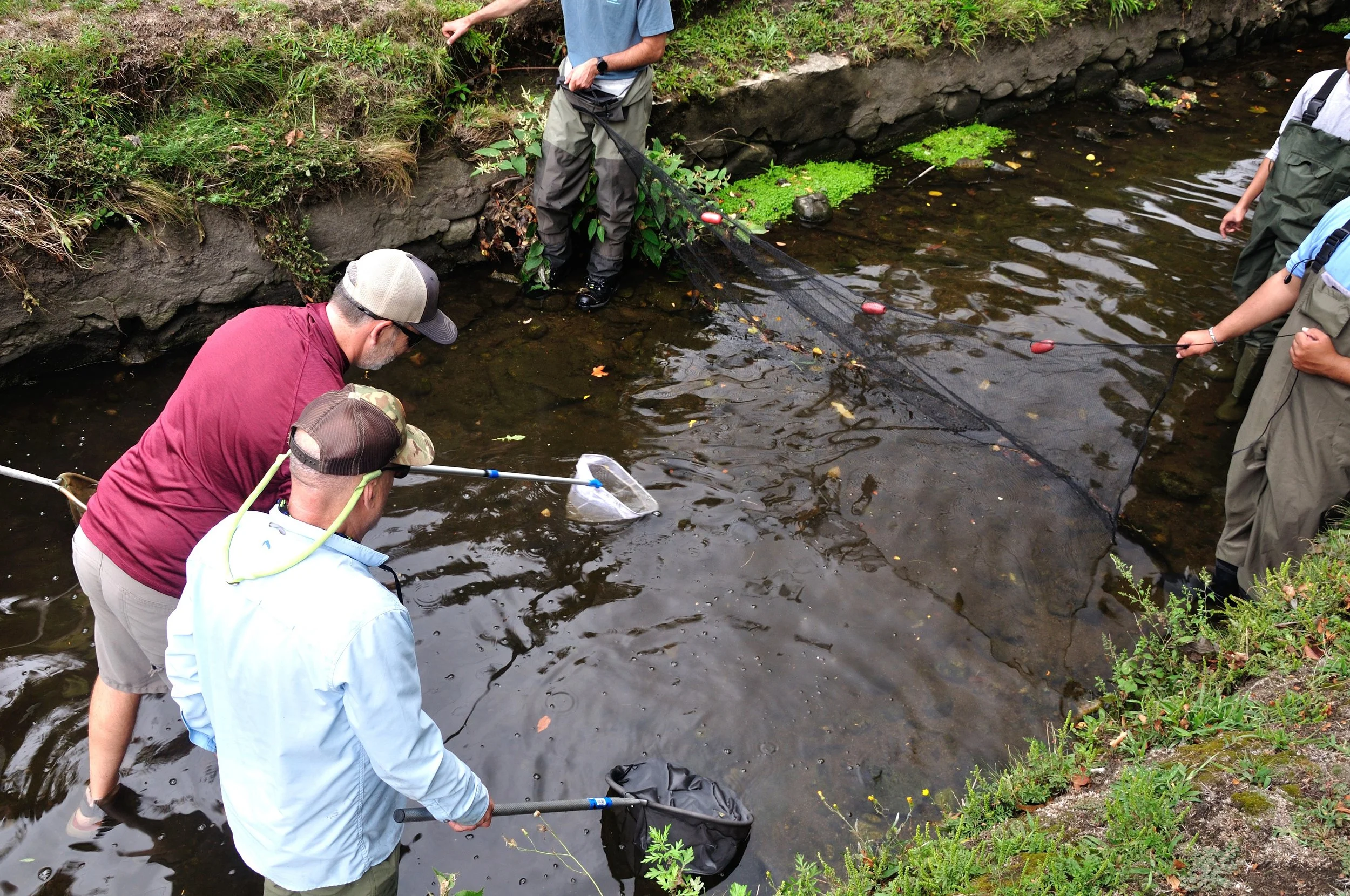
Seined the large pool on Cheesecake Brook immediately downstream of the sloped cement slab. This determined what species of fish are moving out of the Charles River and into the lower end of Cheesecake Brook.
Seined and trapped Cheesecake Brook upstream of the cement slab to determine what species of fish are using the stream.
E-fished upstream and downstream of the cement slab to see what we missed seining and trapping.
NFC looks to work with our partners to do the following:
eDNA metabarcoding testing throughout Cheesecake Brook to identify fish species missed during seining, trapping, and e-fishing.
Season-long temperature monitoring in both Cheesecake Brook and the Charles River to understand thermal stress issues.
Periodic dissolved oxygen (DO) testing to determine if Cheesecake Brook can support fish.
Periodic chemical testing to determine the impact of point source and nonpoint source pollution.
Discuss existing in-stream structure in Cheesecake Brook in Albemarle Park. The structure, mostly mounds of dirt and grass, are good for fish and other aquatic life.
Discuss adding additional in-stream structure in Cheesecake Brook in Albemarle Park.
Determine if sea-run fish and/or fish from the Charles River are able to ascend the cement slab or trying to.
Improve fish-passage.
Discuss translocating wild native fish from the Charles River into Cheesecake Brook if the conditions warrant doing so.
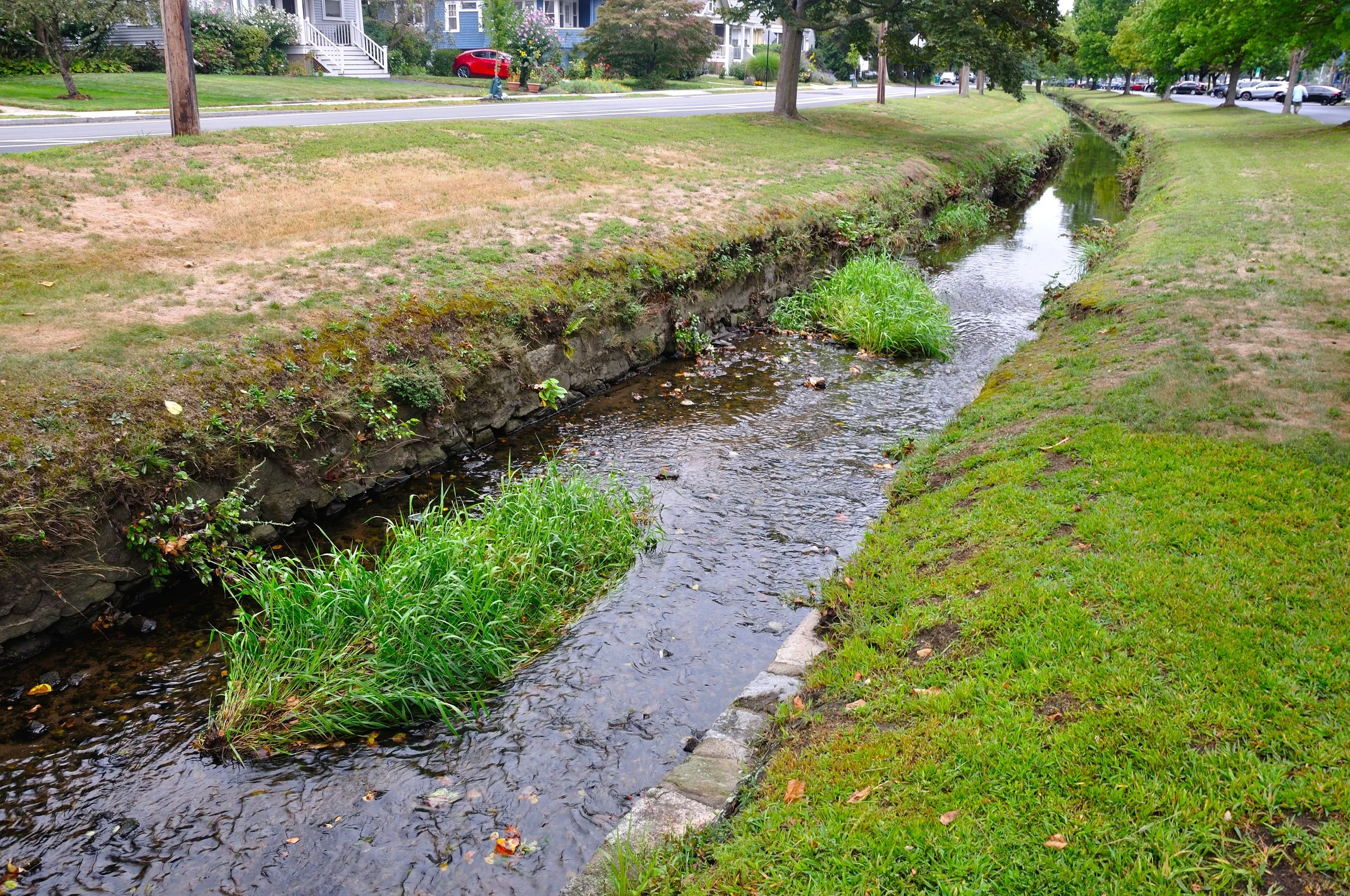
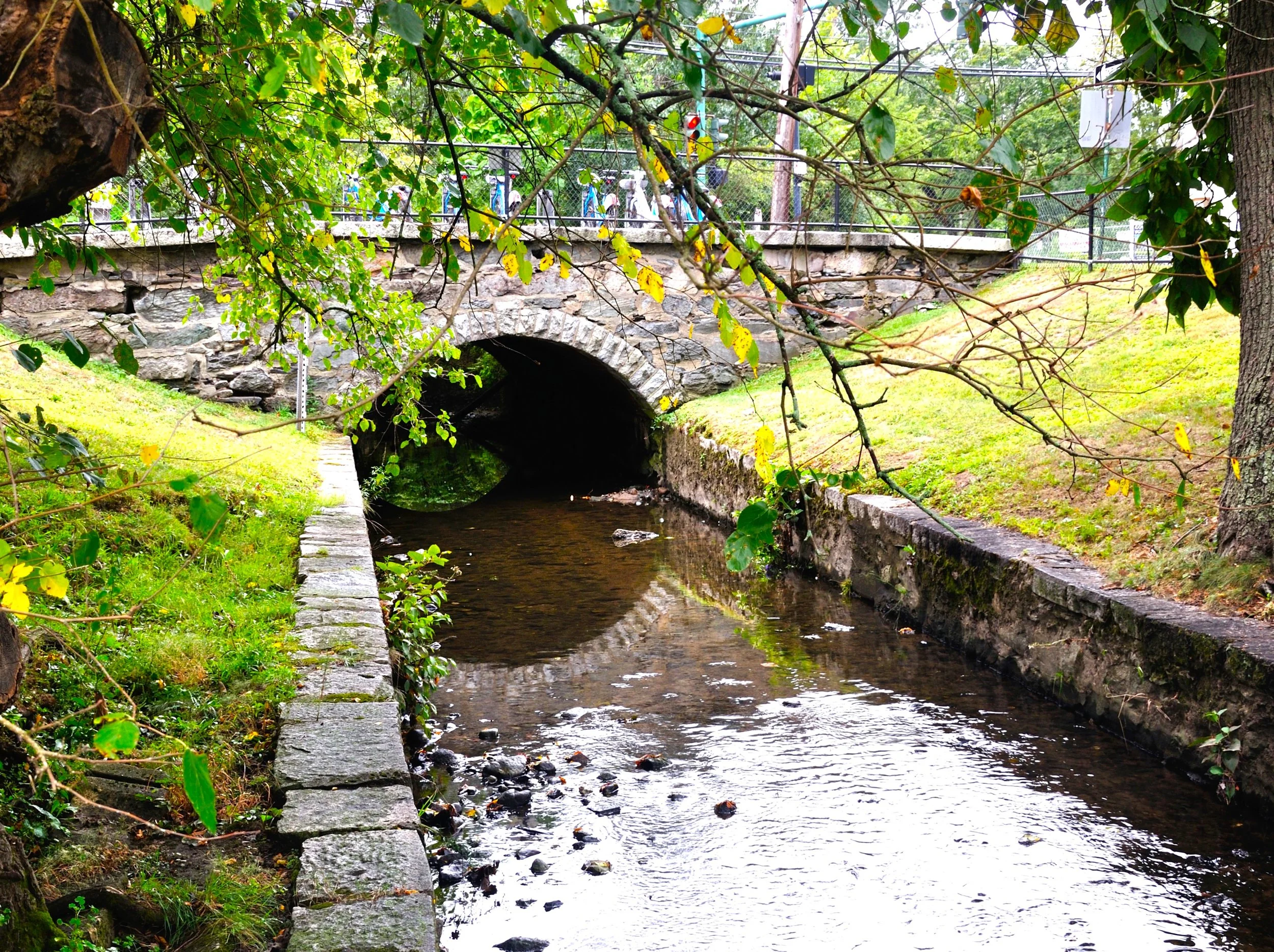

Imagine Cheesecake Brook with more streamside trees and bushes, in-stream structure, and aquatic vegation, and most importly, wild native fish…