Holistic Stream Assessment/Restoration: Laundry Brook - Newton, Massachusetts (Newton City Hall)...
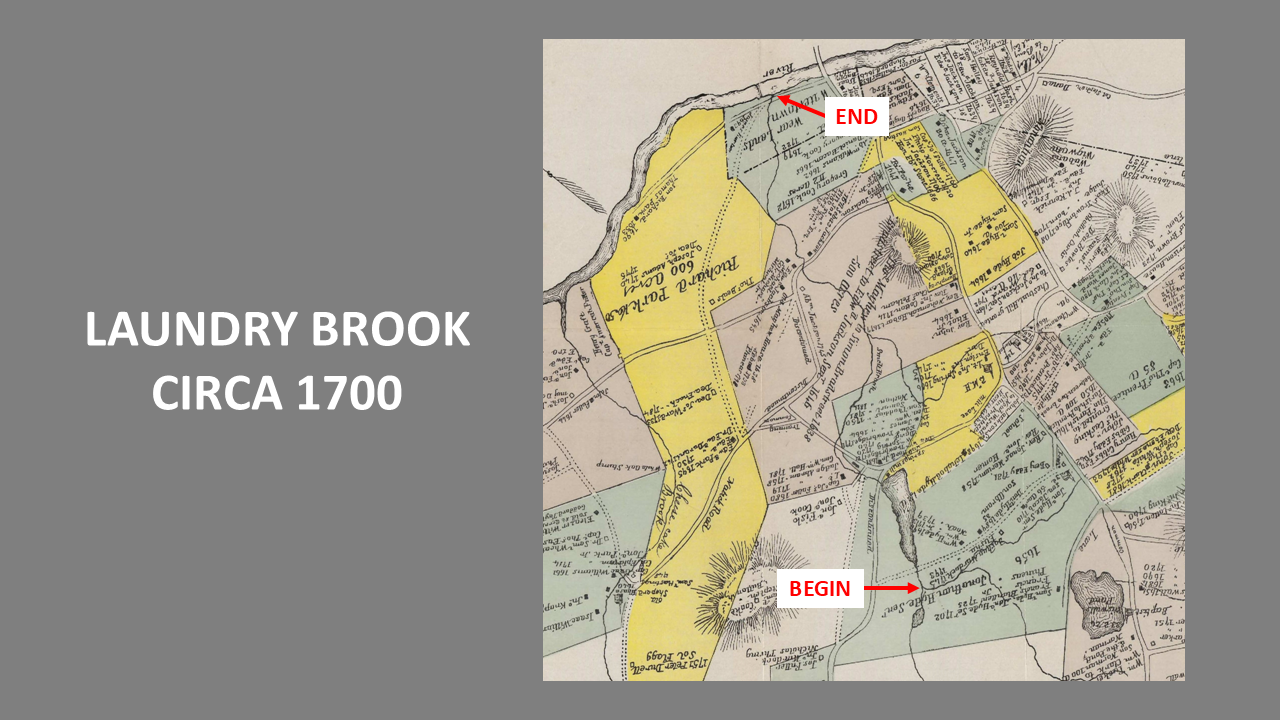
Laundry Brook is a tributary to the Charles River, the largest watershed wholly in Massachusetts. It empties into the river just downstream of Watertown Dam, a known impediment to fish passage. Laundry Brook was historically known as Smelt Brook, named after what was said to be robust spring spawning run of anadromous rainbow smelt. These fish are now remnant at best.
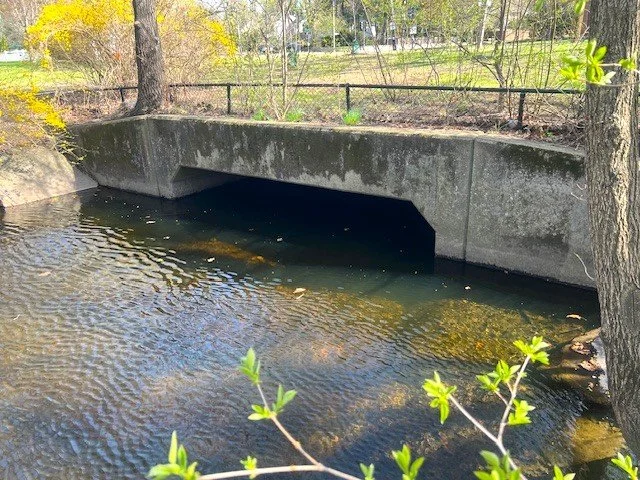
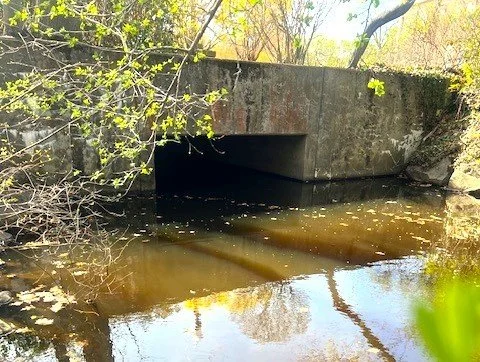
Laundry Brook is a suburban/urban stream. It historically began at the confluence of Hammond Brook and Cold Spring Brook in Newton Center. Today, Hammond Brook (above left) and Cold Spring Brook (above right), both of which are buried in their downstream reaches, empty into the west end of a shallow manmade impoundment located at Newton City Hall roughly 100 feet apart .
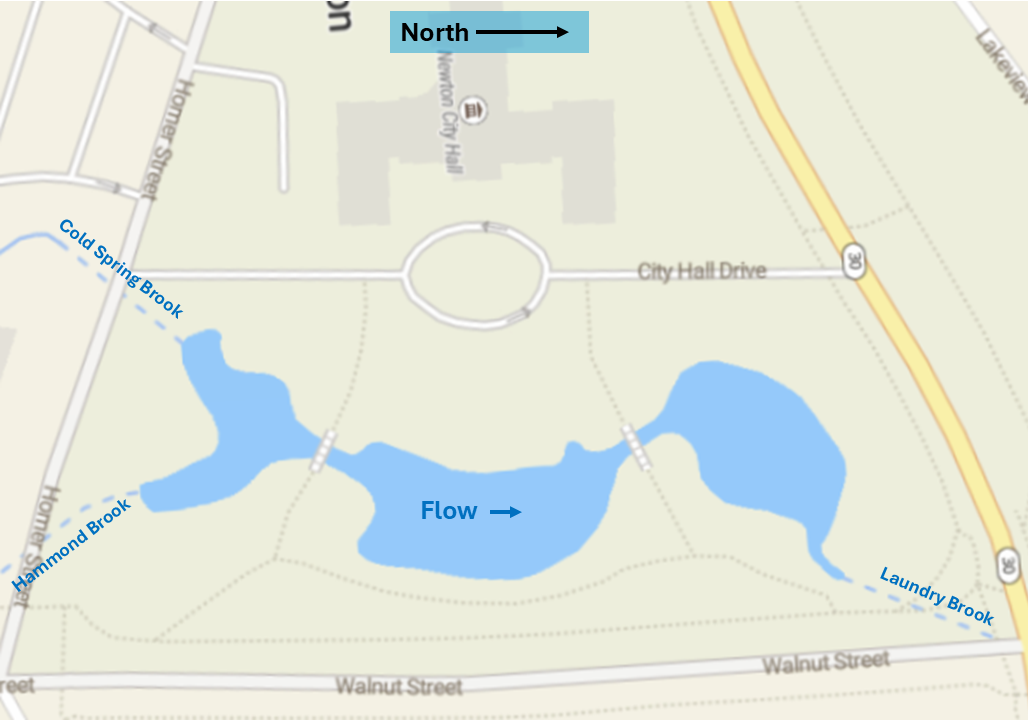
Cold Spring Brook, Hammond Brook, impoundment at Newton City Hall, and Laundry Brook. Broken blue lines denote buried stream…
While the impoundment at Newton City Hall looks like 3 distinct ponds, it is actually a single pond with short, narrow sections between the wide sections. The narrow sections are roughly the same depth as the wide sections. The three pond-like sections are referred to as "lobes.”
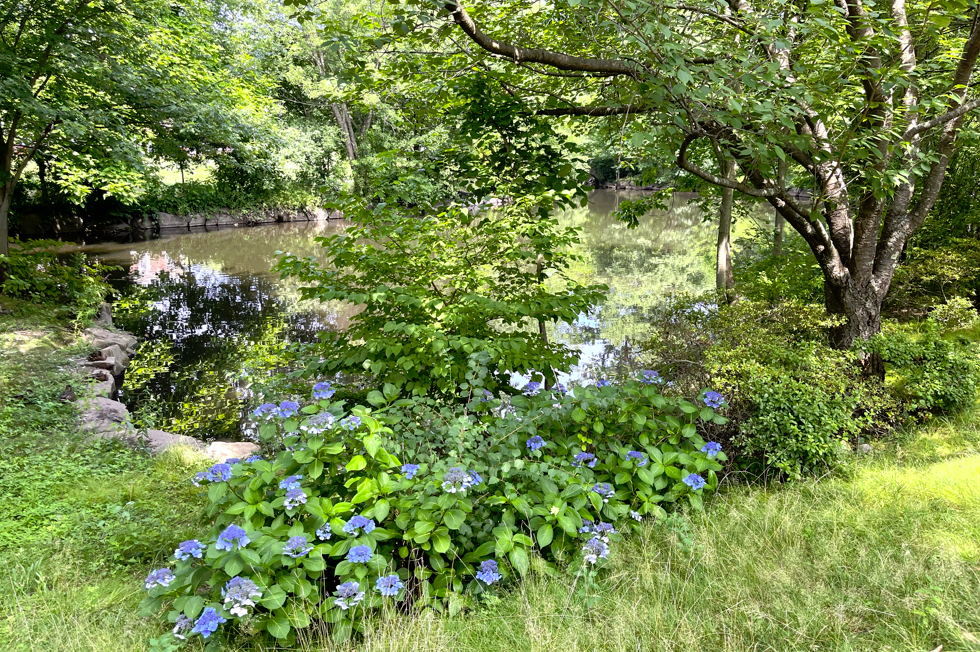
Impounded water on Laundry Brook at Newton City Hall…
The section of Laundry Brook at Newton City Hall includes roughly an acre of impounded water before going underground and into Bullough’s Pond, which was originally called Spring Pond and later Pearl Lake. Bullough’s Pond, another manmade impoundment, was created in 1664 power a grist mill. This roughly 7 acre shallow impoundment was also used to harvest ice at one time.
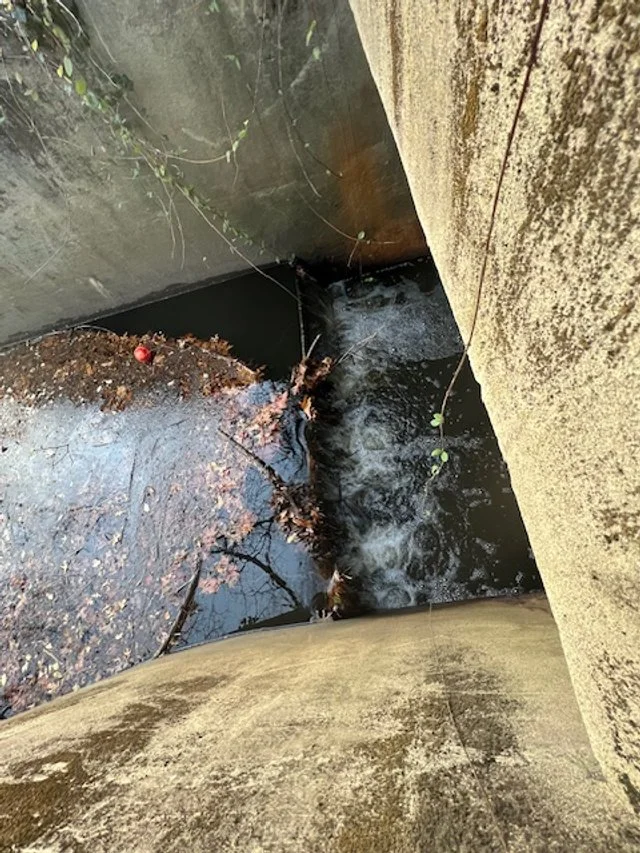
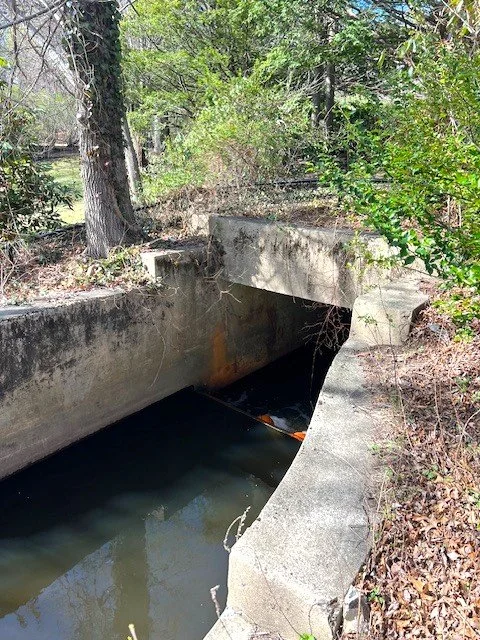
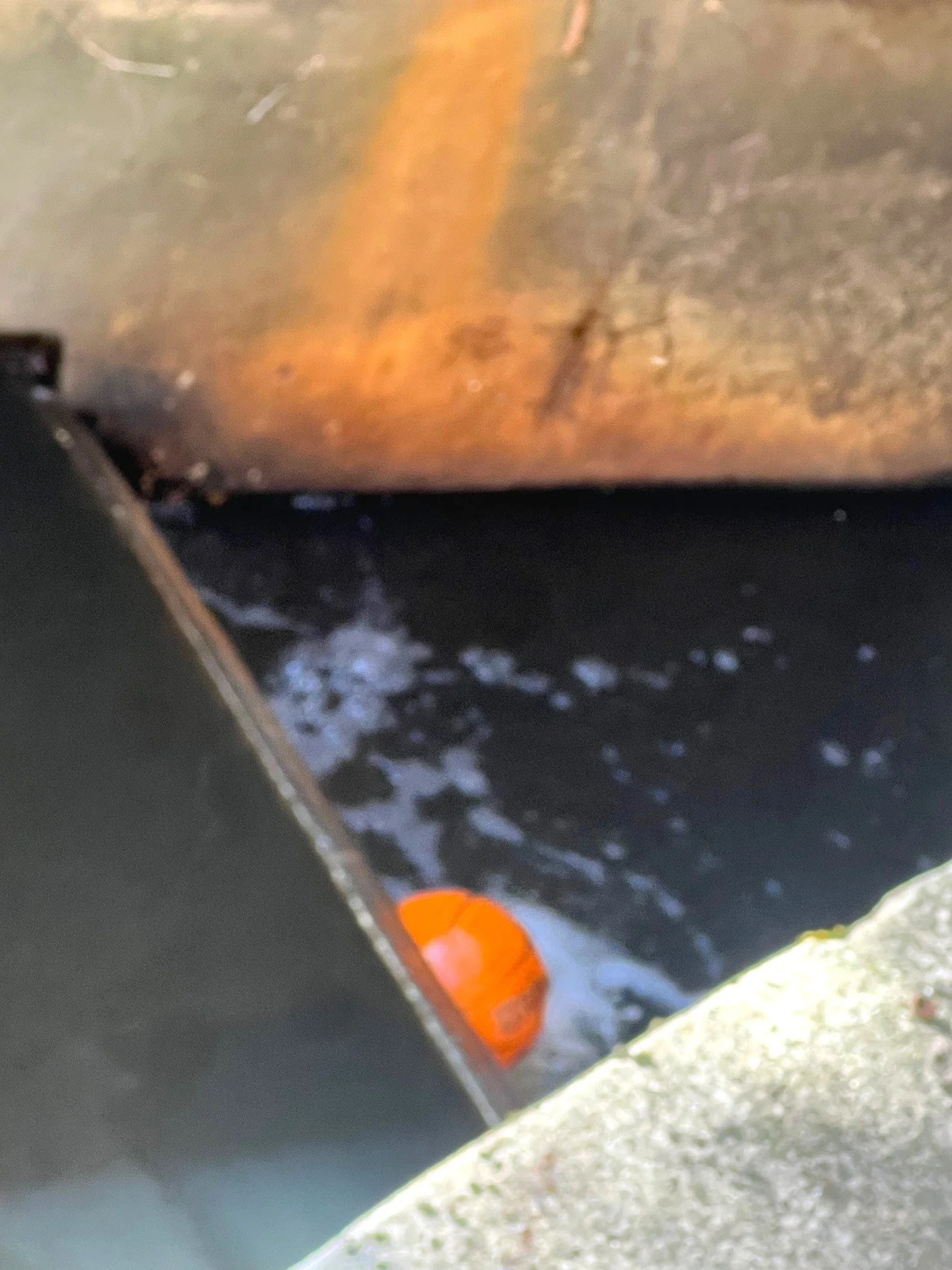
The outlet of Laundry Brook at Newton City Hall (see above) is a narrow cement box culvert with a 10-12” perched drop. The drop likely blocks most fish species from gaining access from downstream in all but the highest flows. The one known exception is catadromous American eels which have been confirmed upstream of Newton City Hall in Newton Cemetery and Arboretum and Cold Spring Park.
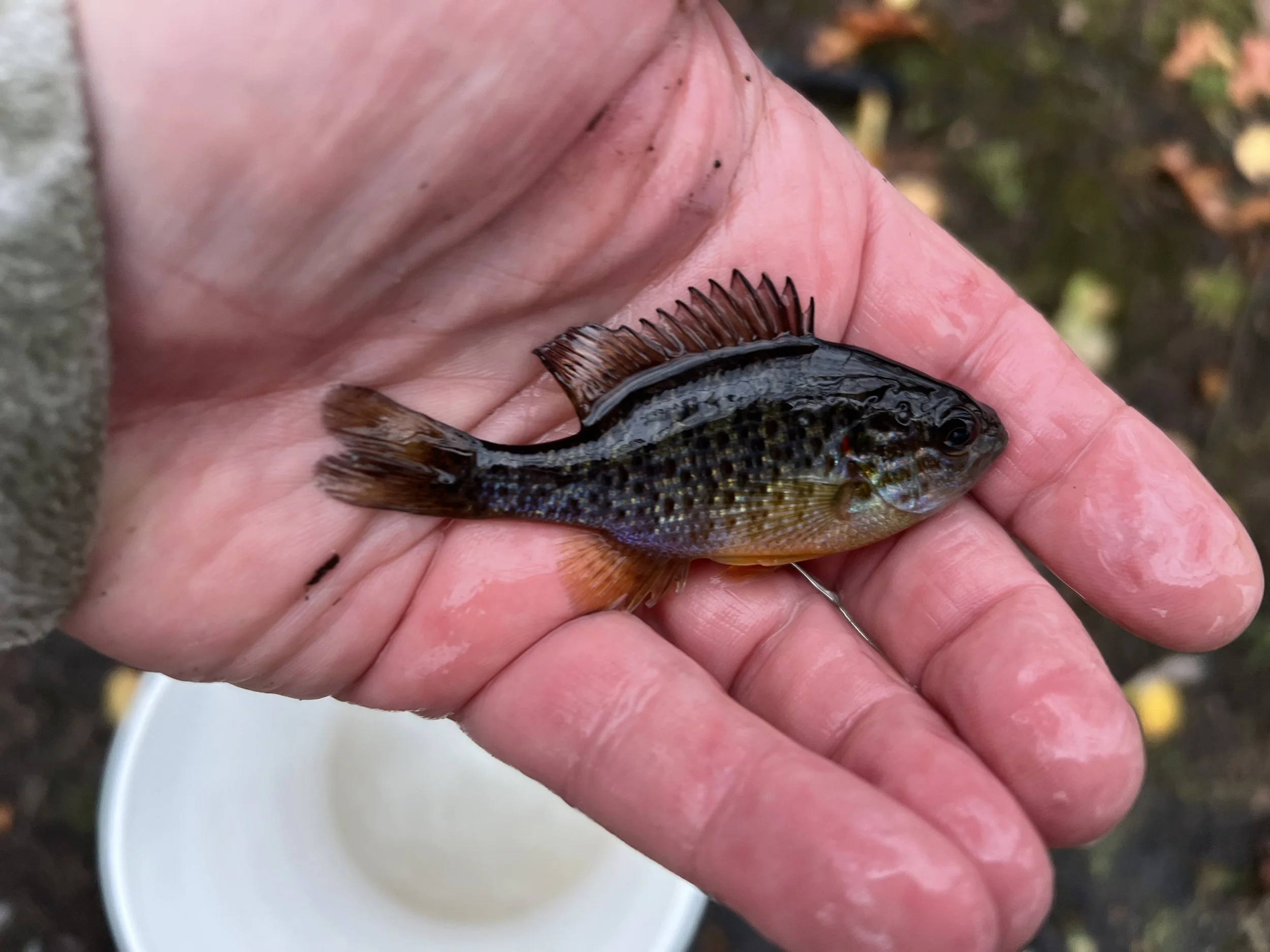
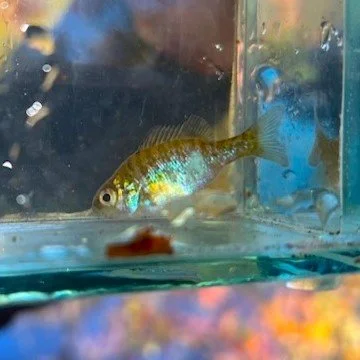
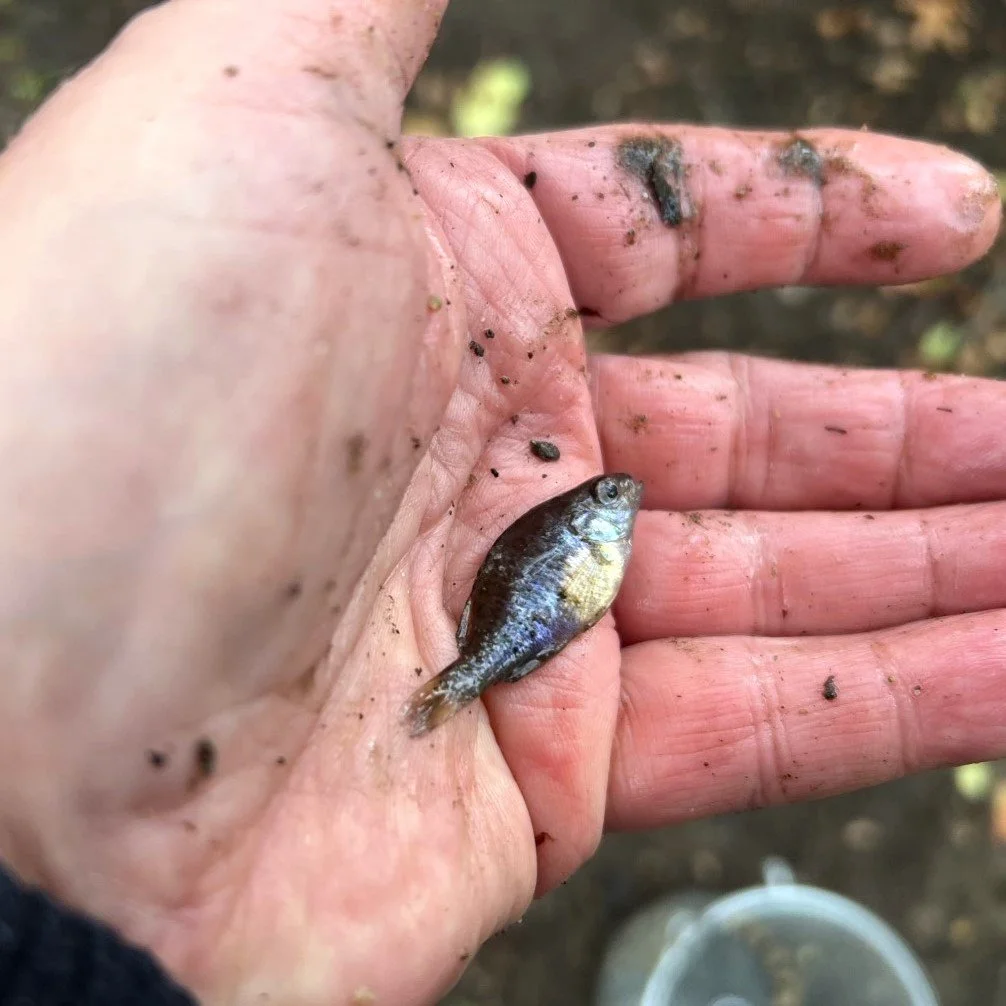
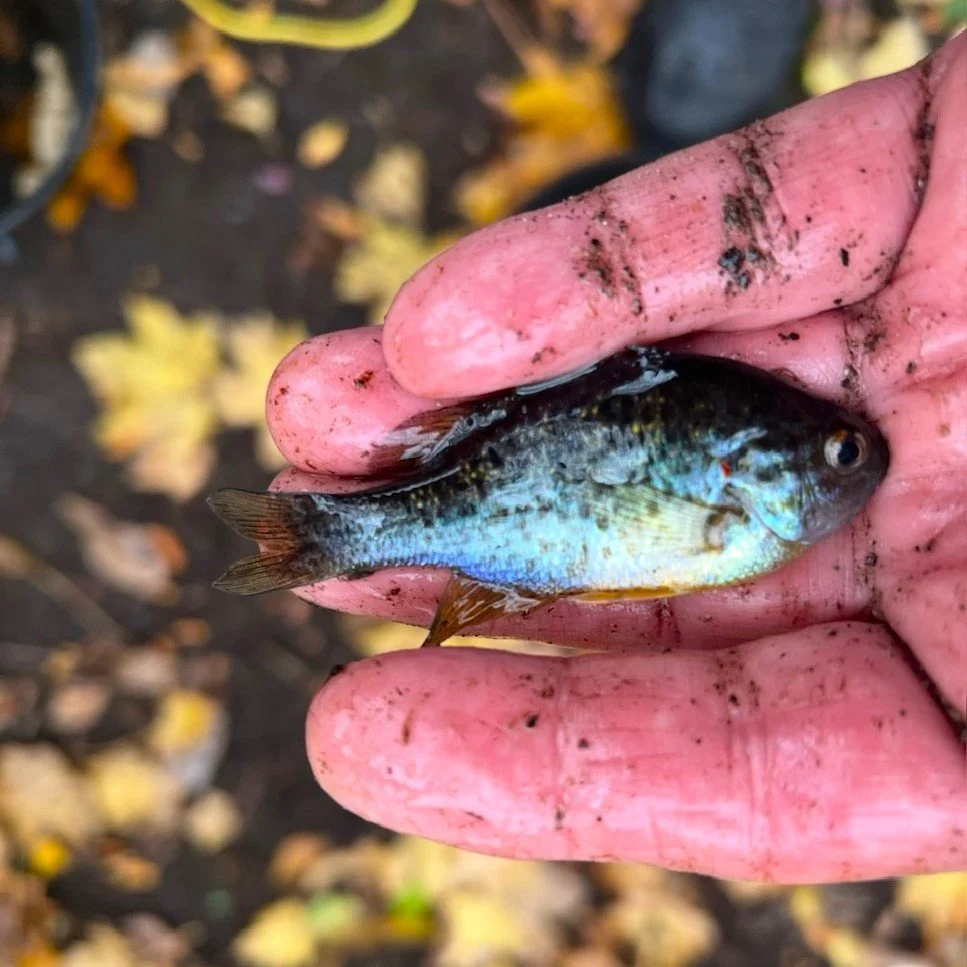
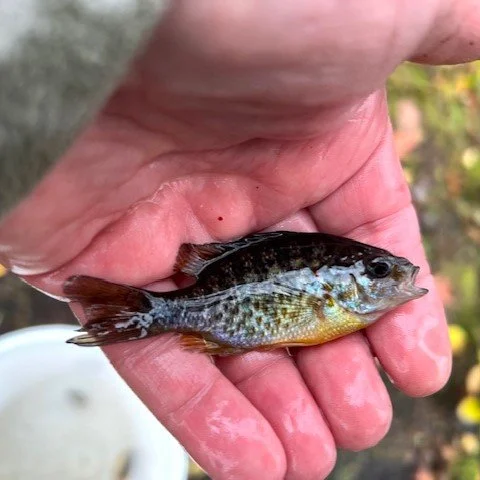
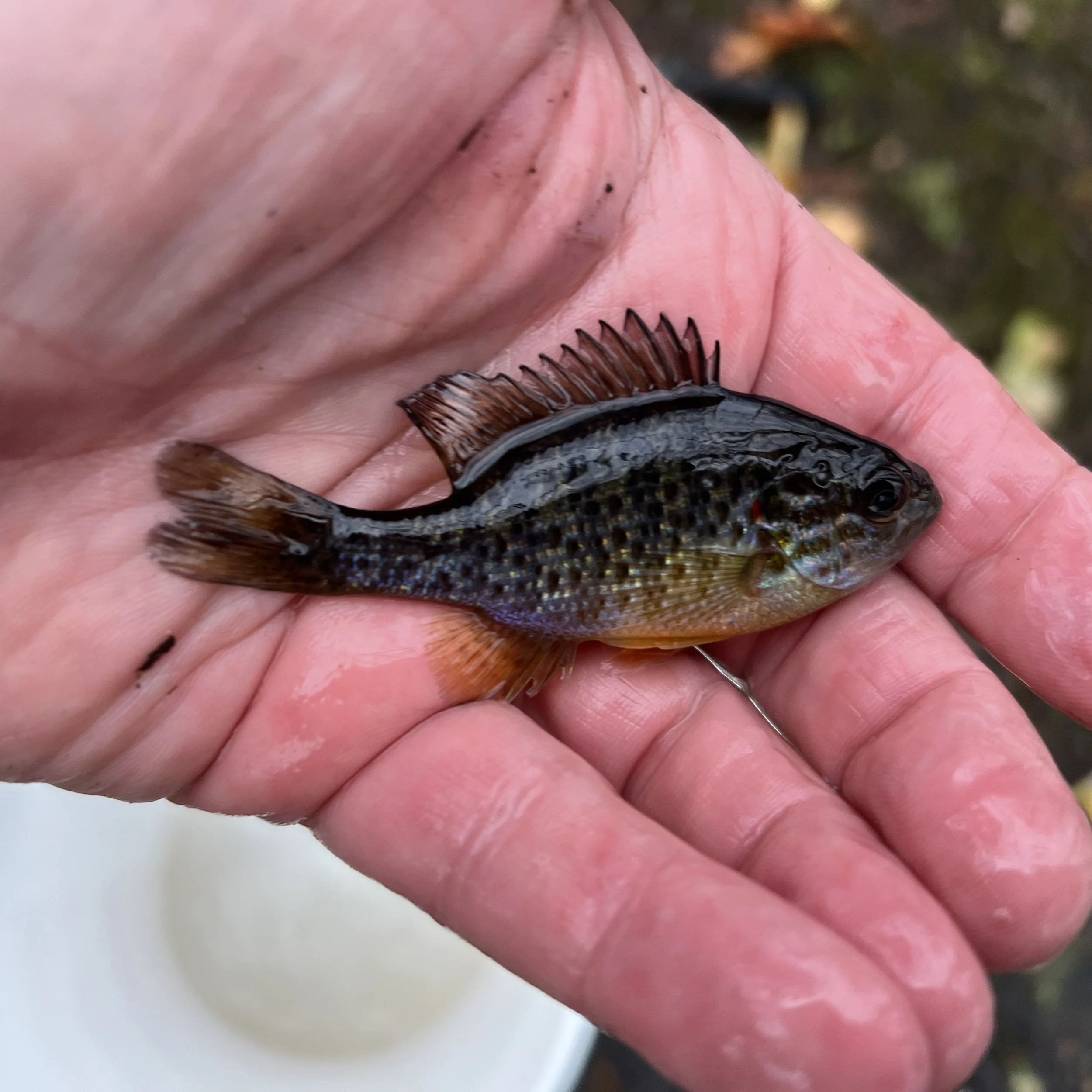
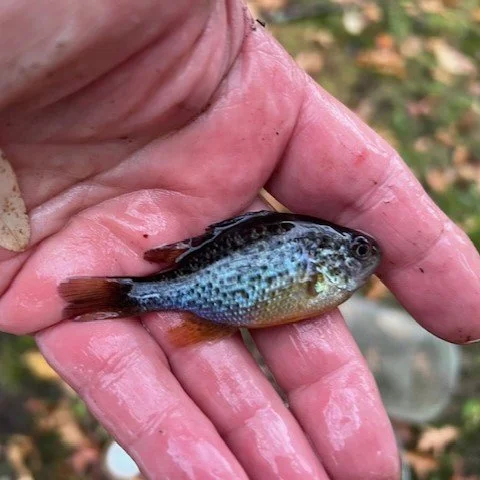
A wild native pumpkinseed sunfish, the only species of fish captured from Laundry Brook at Newton City Hall…
NFC has completed 2 Holistic Stream Assessment/Restoration projects upstream of Laundry brook on Cold Spring Brook: Cold Spring Park and Newton Cemetery and Arboretum. We performed a similar but smaller scale assessment of Laundry Brook at Newton City Hall to help better understand the sub-watershed as a whole.
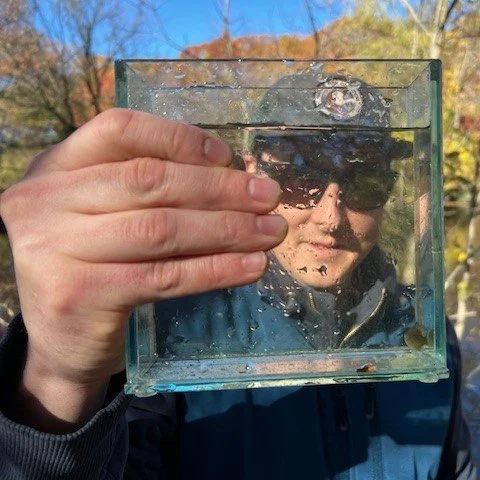
While notably smaller and far less complex than Cold Spring Brook in Cold Spring Park and Newton Cemetery and Arboretum, NFC performed some fish surveys using non-lethal minnow traps in Laundry Brook at Newton City Hall to see what species were there and at what level of abundance.
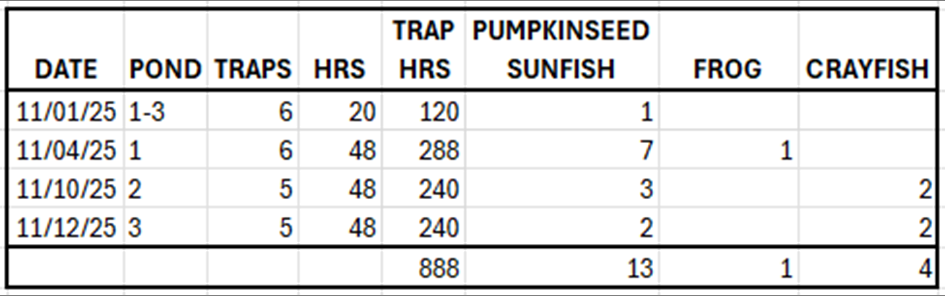
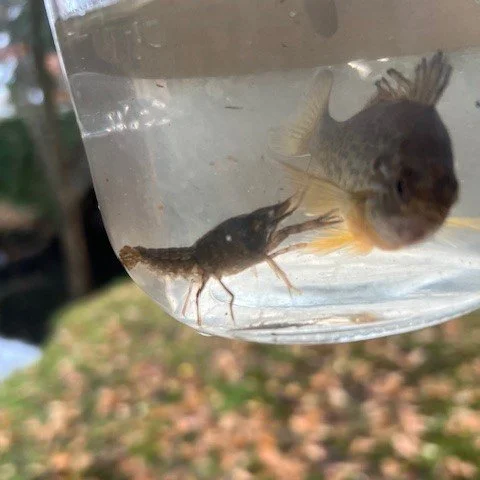
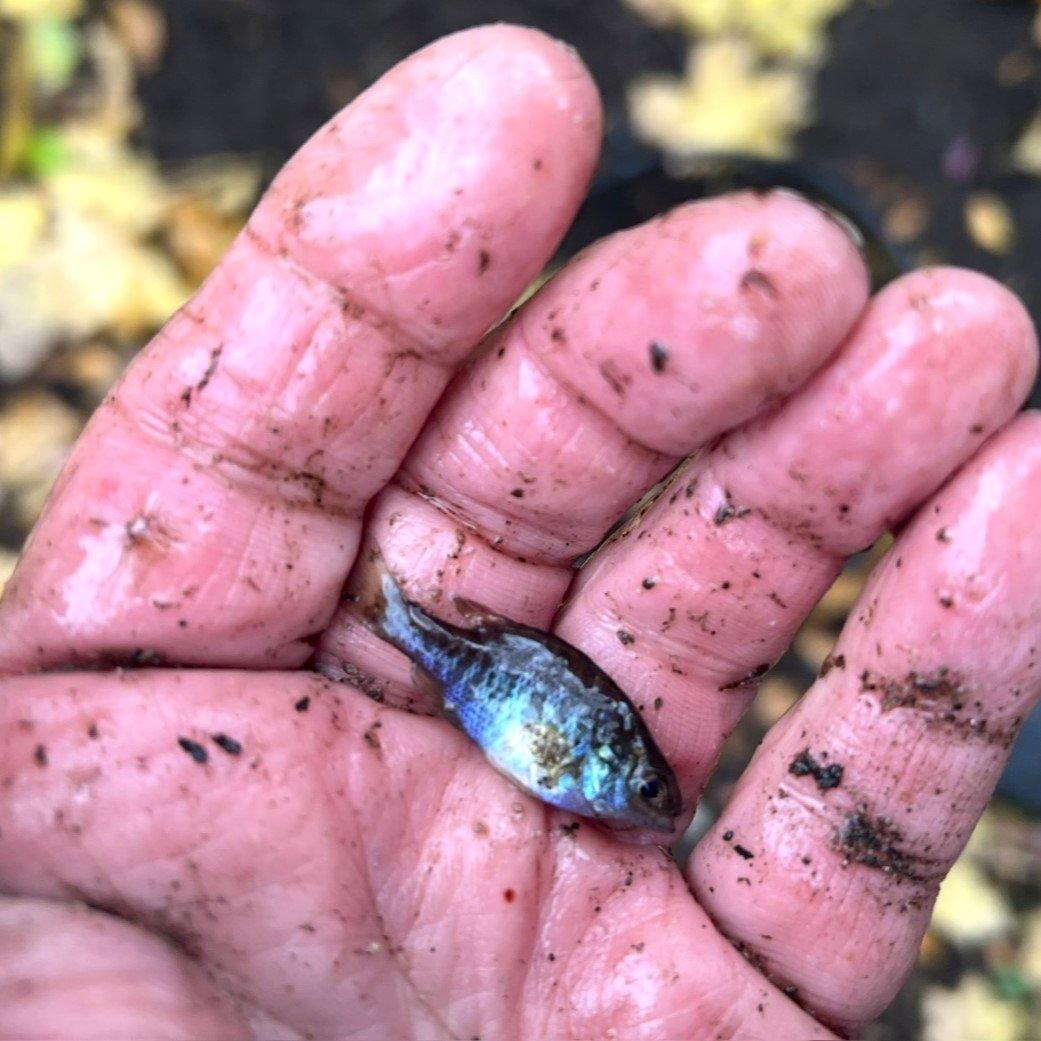
Unfortunately, both biodiversity and biomass are extremely low in Laundry Brook and Newton City Hall. NFC was only able to trap 13 fish in almost 900 hours of trapping. Only pumpkinseed sunfish, a species native to the Charles River watershed and abundant upstream were confirmed. And while not our focus, amphibian life seemed oddly low as well.
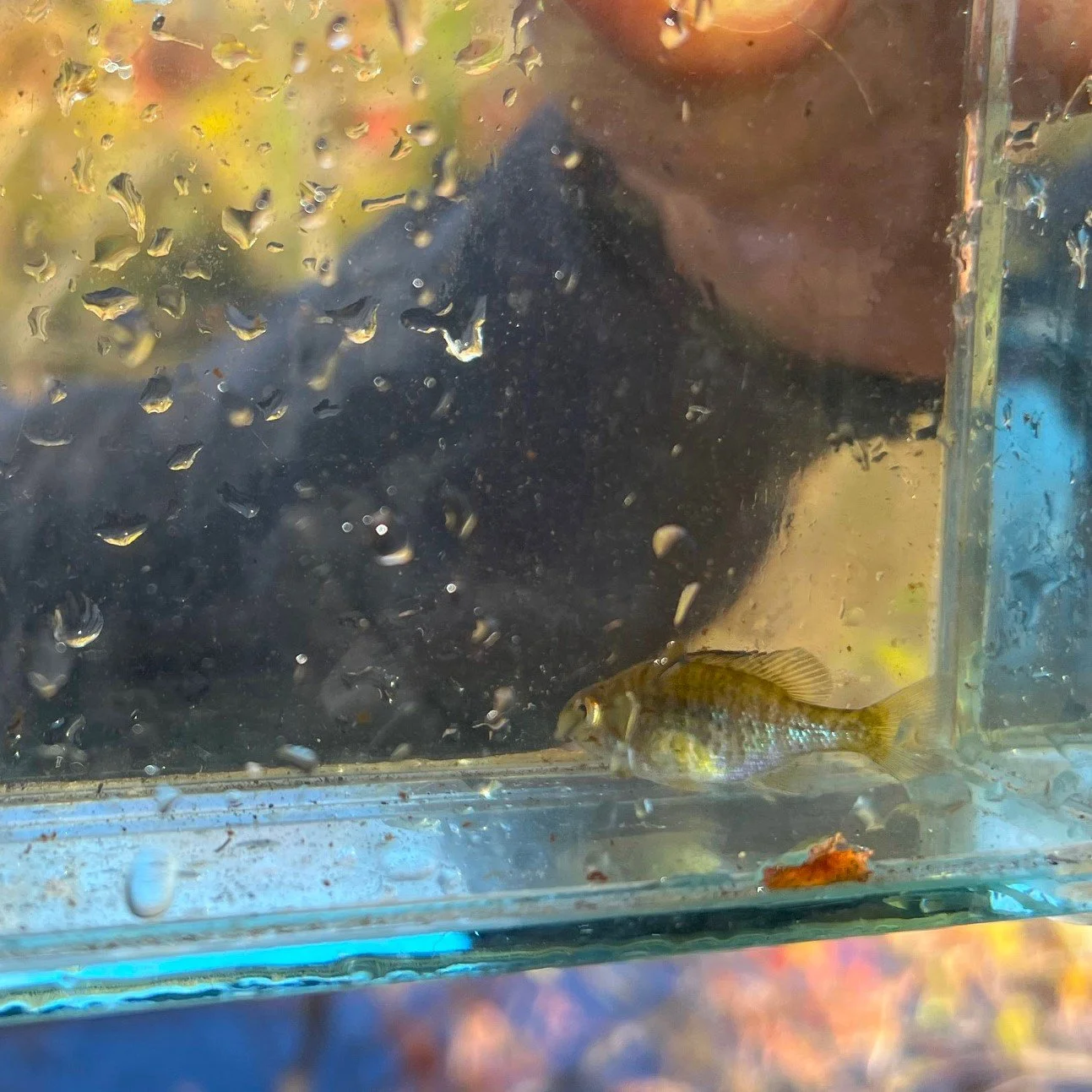
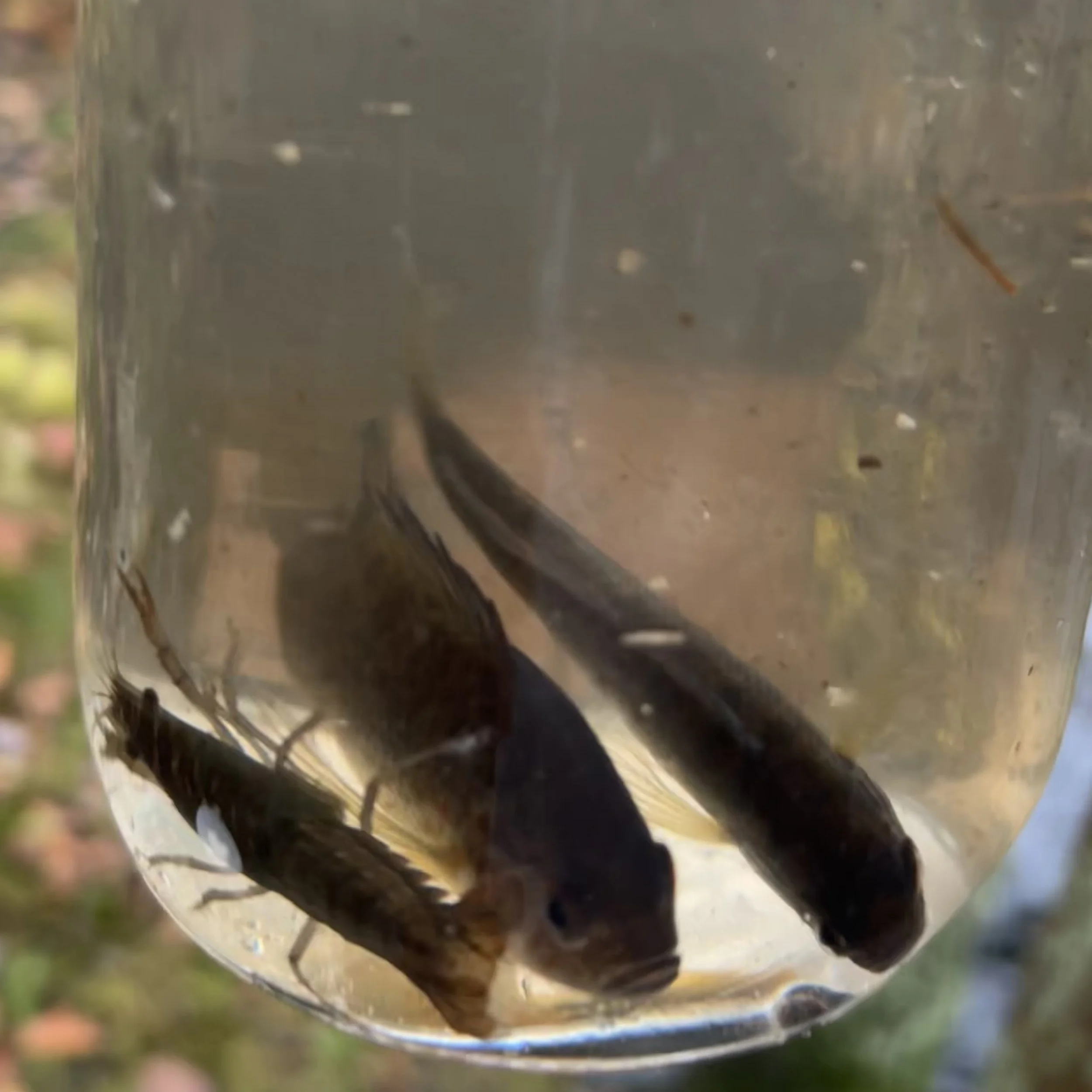
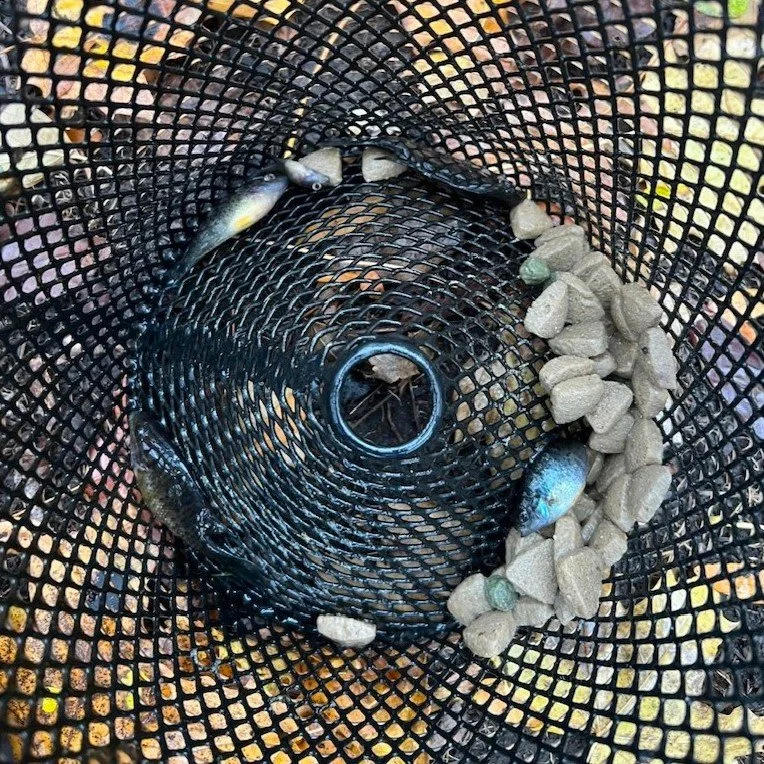
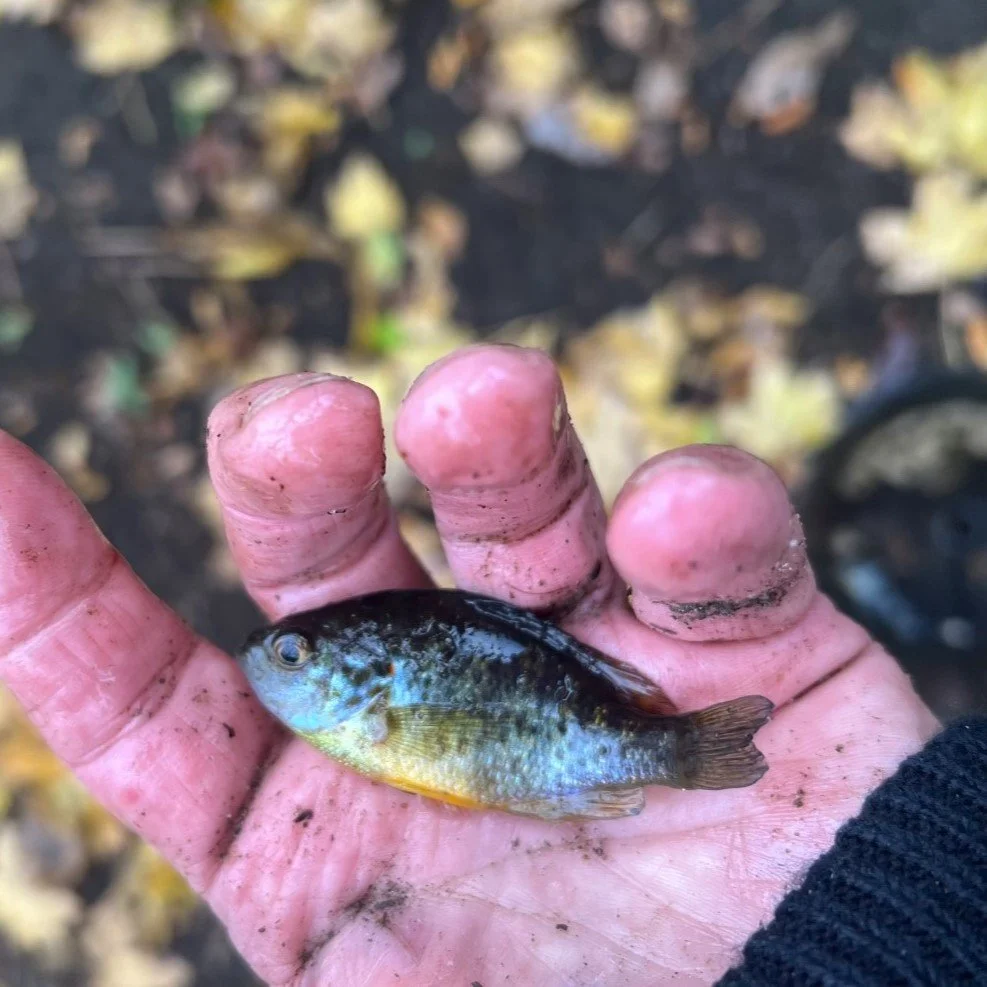
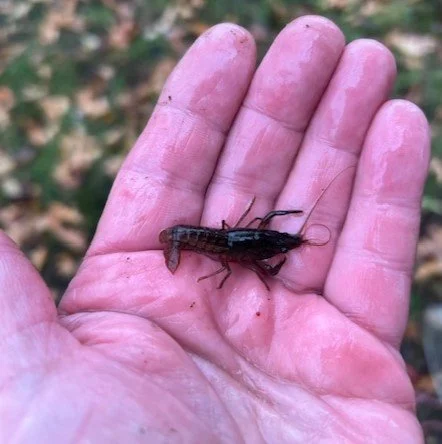
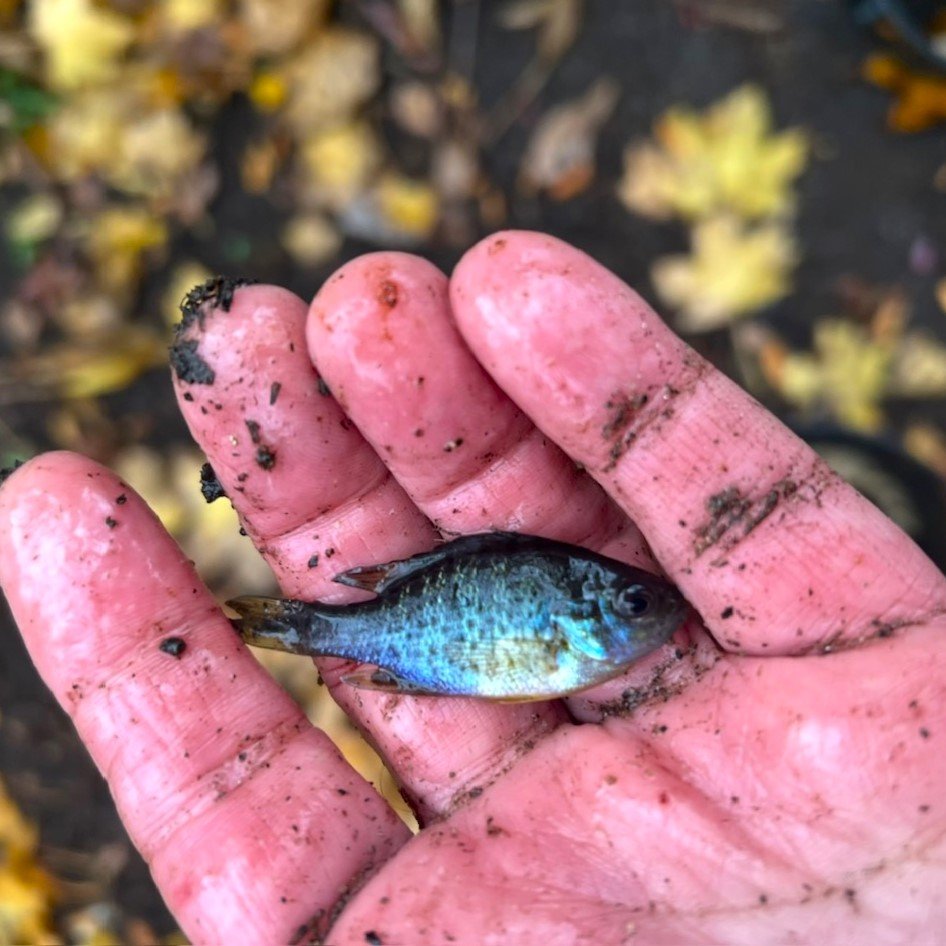
NFC initially assumed that the Newton City Hall ponds had suffered some sort of catastrophic failure related to non-point source pollution or possibly a deep freeze. After digging in a bit we learned that the ponds had been drained and dredged a year earlier to address sedimentation which is apparently an ongoing problem. This explains the near complete loss of fish and other aquatic life.
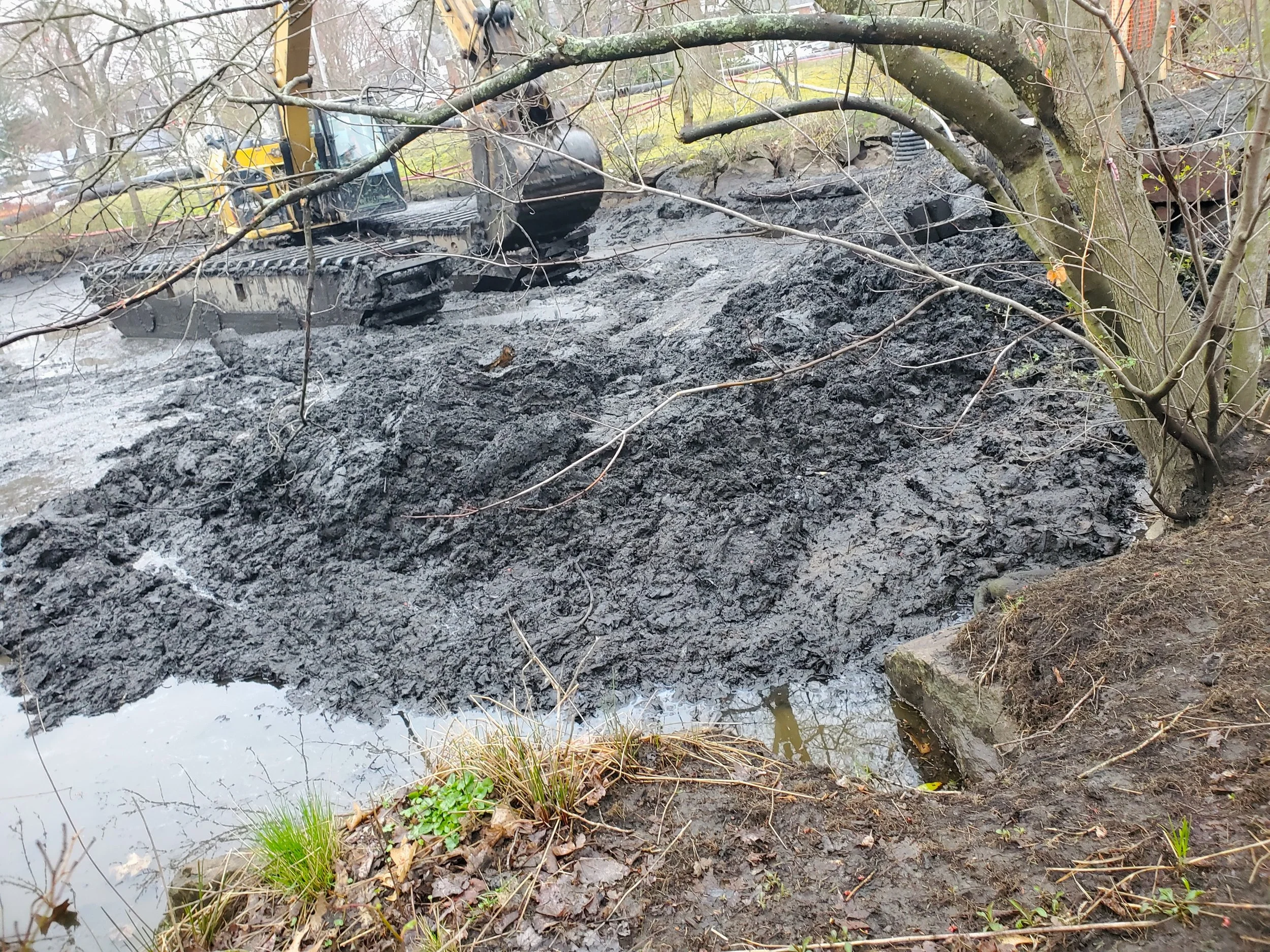
The 2024 drain-and-dredge operation at Newton City Hall… (Jennifer Steel)
status updates
As part of our recommendations resulting from our stream assessment, NFC proposed a project to repopulate fish in the City Hall ponds. When the ponds were drained, the fish were flushed into Bullough’s Pond roughly 400 feet downstream. NFC felt that we could trap fish from Bullough’s Pond to repopulate the City Hall ponds.
NFC first reached out to MassWildlife to see if they would be willing to issue a permit to translocate fish from Bullough’s Pond to the City Hall ponds. Our proposal was to use volunteers and minnow traps to collect fish from Bullough’s Pond to be transferred in aerated coolers for release in City Hall ponds.
Not only did MassWildlife issue NFC a permit to move fish from Bullough’s Pond to the City Hall ponds, but they also offered to send someone out to help when we are ready to do so. In addition they offered to bring a state truck with a live well to transport the fish.
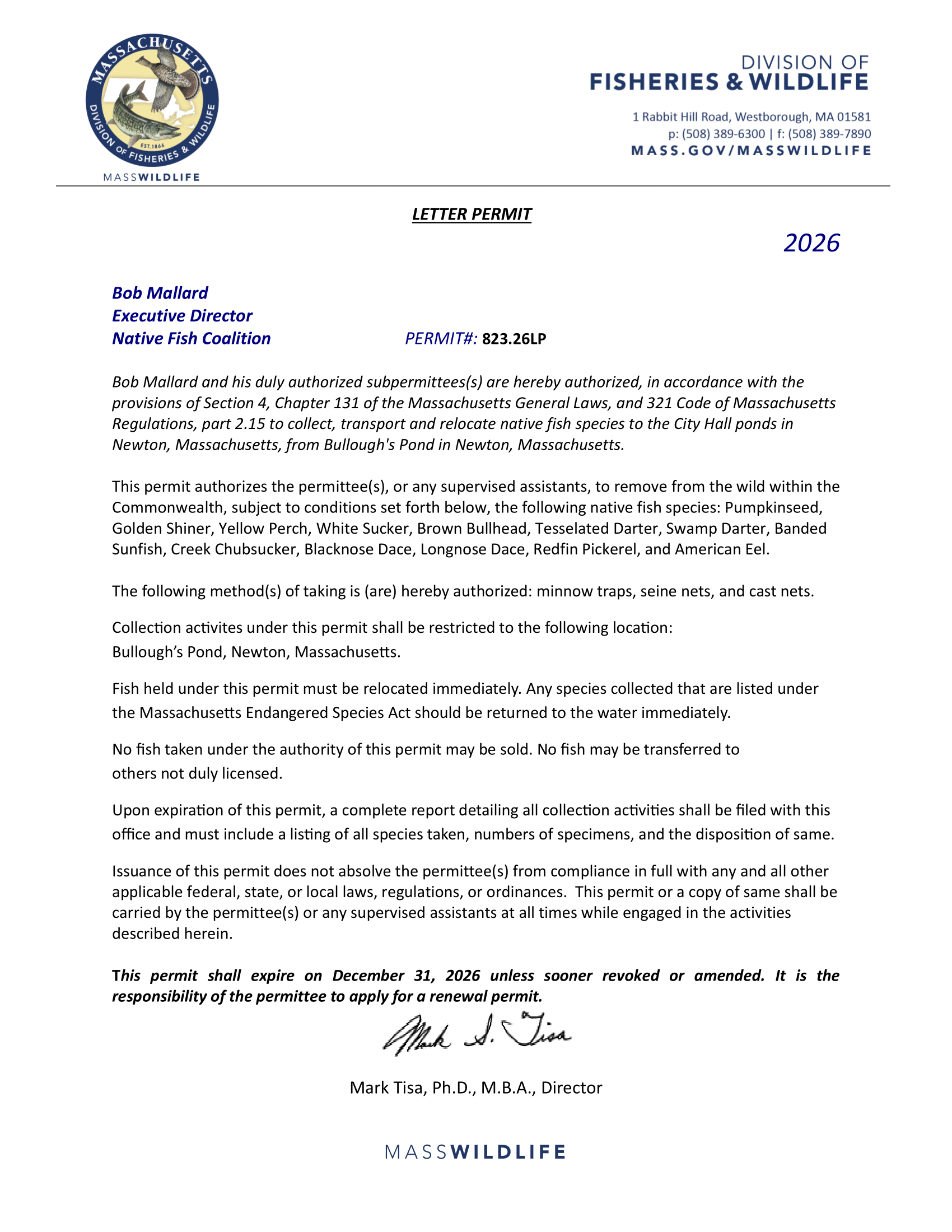
Soon after NFC received the permit from MassWildlife, we reached out to Newton Conservation Commission for permission and to see if any additional permits were required. The project proposal received unanimous approval from the commission.
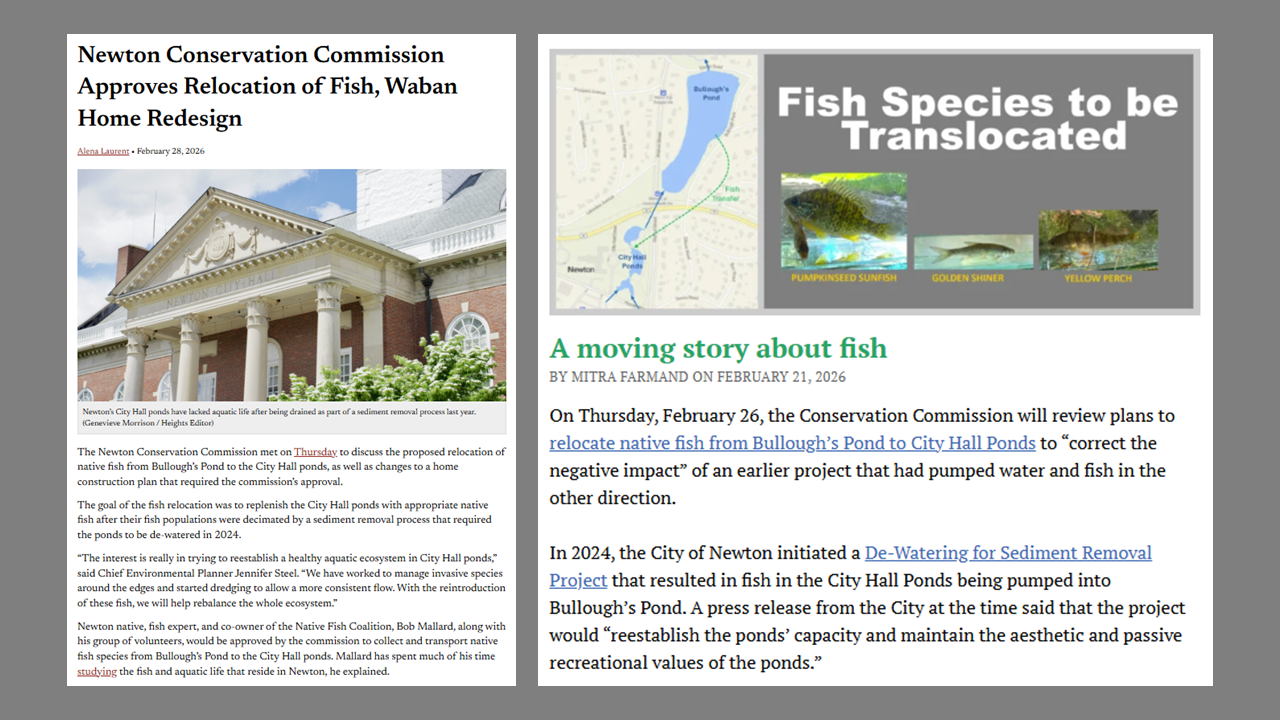
“The interest is really in trying to reestablish a healthy aquatic ecosystem in City Hall ponds. We have worked to manage invasive species around the edges and started dredging to allow a more consistent flow. With the reintroduction of these fish, we will help rebalance the whole ecosystem.”
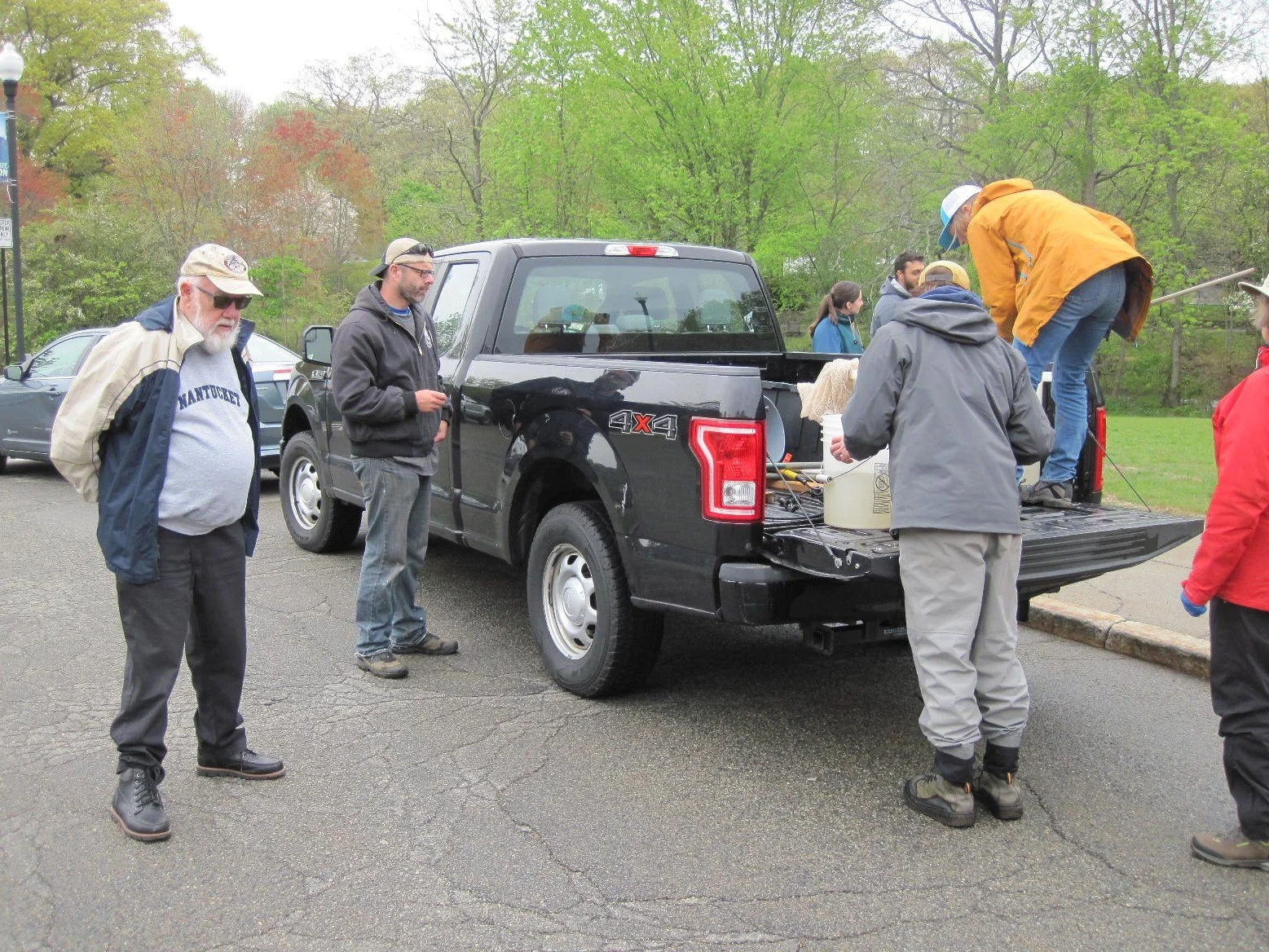
NFC members and volunteers getting ready to move fish captured from Bullough’s Pond into Laundry Brook at Newton City Hall…
On Saturday May 9th, members of MA NFC and National NFC along with MassWildlife, Newton Conservators, and other volunteers successfully captured wild native fish from Bullough’s Pond and transported them to the Newton City Hall ponds.
We plan on circling back in spring 2027 to see how the fish did, and determine if additional transfers are warranted. Assuming that all is well, the goal would be to increase biodiversity and biomass.