New Chapter Officer Onboarding
Goal
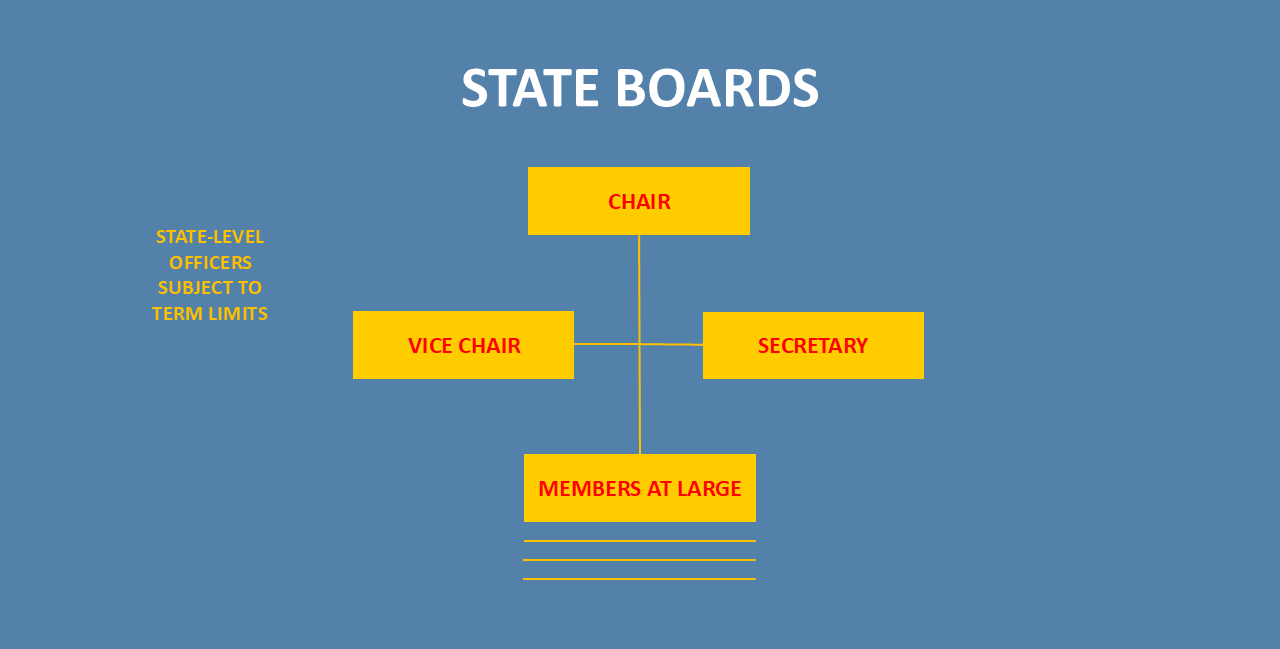
NFC state chapters are made up of 3 officers - Chair, Vice Chair, and Secretary - along with some number of members at large. Chapter officers serve based on approval and at the discretion of the National Board. While not absolute, chapter officers serve 2-year terms. NFC looks to help new chapter officers adapt to their new positions.
The goal of this document is to set clear expectations, provide essential information, tools, and resources, and foster a strong connection to the mission and policies of Native Fish Coalition to ensure long-term success and engagement at the state chapter level. This will help eliminate problems that can arise when transitioning state chapter officers.
Upon Confirmation
All Chapter Officers…
The applicable National Vice Chair, National Chair, Executive Director, and outgoing officer where possible will meet with new officers to discuss a general transition plan.
This can be a live or virtual, and is intended to answer any up front questions.
Where possible, the outgoing chapter chair will serve as a mentor to the incoming chair for a period of up to 3 months. If the outgoing chair is unavailable due to leaving NFC, National NFC will assign a temporary mentor to serve in their place. This person can be a National Board member or chair from another chapter. The mentor will provide general guidance and be available to answer any questions that may arise.
New chairs may reach out to their respective National Vice Chair at any time for advise, questions, issues, or concerns.
If a new chapter chair is unable to resolve whatever issue they have with the National Vice Chair, they should reach out to the National Chair.
If a new chair is unable to resolve whatever issue they have with the National Vice Chair or National Chair, they should reach out to the Executive Director.
New officers should make themselves familiar with the following documents to equip them for administrative readiness:
Located on NFC Website Home Page:
Mission Statement
Why are Native Fishes Important?
About Native Fish Coalition
Our Goal
Located on Internal NFC Webpage (Password: ArcticCharr)
Note: There are many documents on the internal page that explain how NFC conducts business. Please look here before reaching out to National NFC for help.
Chapter Chairs…
New Chairs will be provided with the following by National NFC:
Contact List:
National Board
State Chairs
Chapter Members
Chapter Show/Event Equipment List
Chair should confirm who has show/event equipment
Chapter Field Equipment List
Chair should confirm who has field equipment
Chapter Merchandise List
Chair should confirm who has merchandise
First 90 Days
Existing Chapters…
Incoming chapter Chairs should meet with each existing board member individually in person or via Zoom to understand who is who, what they can and can’t do, and how best to utilize them.
Incoming chapter Chairs should familiarize themselves with all open chapter projects and plug in wherever they can to help advance them.
New Chapters…
Incoming officers should meet with each existing board member individually in person or via Zoom to understand who is who, what they can and can’t do, and how best to utilize them.
New officers should focus on getting some easy inexpensive wins on the board early.
Signage Projects – Review the CAMPAIGNS tab on NFC website home page and INFORMATIONAL SIGNS tab under the MEDIA tab on the home page for ideas and general guidance. Signage projects are a great way to establish partnerships with other organizations and agencies, and involve chapter board members in boots-on-the-ground activities. NFC informational sign projects range from the 500+ sign/350+ water Maine State Heritage Fish signs, to the multiple-state Sea-Run Sturgeon signs, to smaller projects such as Maine’s rare Arctic Charr, Georgia’s Shoal Bass, New Hampshire’s extirpated Arctic charr, Alabama’s Vermillion Darters, etc. Informational signs are one of the easiest ways to get wins on the board that benefit the chapter, NFC as a whole, and the resource.
Work with your board and advisory board to identify species, subspecies, or unique life history strategies that would benefit by informational signage in regard to increasing public support. Issues worth looking at are limited range, low abundance, and threats from invasive species, pollution, angler exploitation, etc. Look for opportunities to work with public lands such as state parks, national parks, boat ramps, fishing access sites, and hiking trails.
Stream Clean-Ups – These are a great way to involve chapter board members and volunteers in boots-on-the-ground activities without any expenses.
Remove and discard trash and other debris.
Take pictures for blogging on social media.
Send unedited photos to National NFC for blogging.
Fish Seining/Trapping Events - These are a great way to involve chapter board members and the public at large in informational field activities without any expenses.
Ongoing
All Chapters…
Chapter chairs should schedule monthly one-on-one meetings with the applicable National Vice Chair.
Attend scheduled Chapter Chair meetings.
These meetings will be facilitated by the National Vice Chairs.
All chapter Chairs will be invited.
Identify opportunities for resource sharing and joint projects.
Discuss strategies and challenges.
Incoming chairs should work to identify large projects to keep board members engaged between small projects. Engagement is critical to maintaining interest.
Stream Monitoring – Review the CAMPAIGNS tab on NFC website home page for examples of stream monitoring projects. These projects typically involve season long data logging projects to monitor and report water temperature, light penetration, and or dryness or intermittency, as well as regular testing for dissolved oxygen (DO), salinity, and pH.
Holistic Stream Assessment – These top-to-bottom stream surveys are one of the things that separates NFC from the pack in regard to aquatic ecosystem and fish restoration. They include visual inspection, fish surveys (angling, seining, trapping, and e-fishing), eDNA sampling, temperature monitoring, etc. This is especially useful in waterways that are impacted by human disturbances such as dams, culverts, logging, mining, ATV crossings, agricultural/sediment pollution, etc.
Note: All projects must be approved by National NFC before taking any action, including blogging and discussing things with potential partners. .
Boards are encouraged to develop comradery by meeting in person from time to time. This includes hand-on field projects as well as fishing or even casual meetings at restaurants or pubs.
Schedule annual chapter outings where possible.
Group campsites associated with National Forest campgrounds are good candidates as they tend to be cheaper than private campgrounds.
Coordinate with abutting state chapters where possible.
Monitor state Board and Advisory Council for participation and effectiveness. While no one is expected to do everything, everyone is expected to do something. If a member is not participating, they should be contacted to gauge their interest in maintaining their position. If they do not get back to you or say they are no longer interested in being involved, thanks them for their support and notify the applicable National Vice Chair, National Chair, and Executive Director.
The ideal number of board members is 6-12. Any less than 6 will be hard to keep projects moving. Anything more than 12 often results in stagnation and a loss of interest unless the chapter has a lot of open projects.
In many cases 20% of the board members will do 80% of the work. This is often due to jobs, family, and personal interests and hobbies. As noted above, as long as people contribute where they can they should be allowed to do so.
In some cases, a new chair may inherit a stagnant board. This is often due to inactivity and poor communication. The best way to address this is to get some projects going as soon as possible and establish some projects to regenerate interest/involvement.
Involve your State Advisory Council in projects once you have a general plan. State Advisory Council’s are composed of subject matter experts or well-connected individuals that you utilize for technical advice as well as partnerships and promotion.
Recruit new Board and Advisory Council members to maintain the necessary critical mass to get the job done while bringing in fresh ideas and additional skill sets.
The best way to avoid problems with regard to complacence, disruption, etc., is to do a good job of vetting.
Identify local and state funding sources for projects and show/event and field equipment.
Develop or maintain chapter level tools, processes, and policies for managing state-specific information, data, charts and graphs, and photographs.